

Table of Contents:

Altitude Sickness on the Everest Three Passes Trek
AMS, HACE, and HAPE on Everest Three Passes Trek
Medical disclaimer: This guide is written for educational and trekking preparation purposes only. It does not replace advice from a qualified doctor. Freedom Adventures does not prescribe or recommend any medication. Consult your GP or a travel medicine specialist before taking any medication for altitude, including Diamox. Discuss your personal health history and altitude risk before departure.
You can train for six months, prepare every piece of gear, and arrive in Kathmandu in excellent physical condition. Altitude sickness on the Everest Three Passes trek can still find you. The Khumbu does not grade trekkers on their preparation. At 5,000m, atmospheric pressure is roughly half what it is at sea level, and that gap between what the body is used to and where you are standing is what altitude sickness is built from.
What does protect you is knowing what altitude sickness looks like on this specific circuit, how to score it accurately each day, when to stay and when to descend, and how to manage the particular problem that makes Three Passes medically different from every other major Nepal trek: on day 16 of this circuit, cumulative fatigue from 15 trekking days produces symptoms that are nearly identical to altitude illness, at the highest and most remote point of the entire route, with no teahouse in either direction for 10 to 12 hours.
This guide gives you the complete picture. Read it before the day-by-day breakdown here before you head out for the trek.
What Altitude Sickness is and Why It Happens on Everest Three Passes Trek?
Altitude sickness is not caused by thin air in the way most people imagine. The percentage of oxygen in the atmosphere is the same at Lukla as it is at sea level: 21%. What changes with elevation is atmospheric pressure. As pressure drops, each breath delivers fewer oxygen molecules to the lungs and bloodstream. At 5,000m, atmospheric pressure is roughly half what it is at sea level.
The body's response is to adapt: breathing rate increases, deeper ventilation is driven, and over days the body begins producing more red blood cells to carry available oxygen more efficiently. Altitude sickness happens when the ascent rate outpaces that adaptation process. You are climbing faster than your body can keep up.
On the Everest Three Passes trek, this matters in a specific way that shorter or lower treks do not create. You sleep above 4,000m for 8 to 10 consecutive nights. You cross 4 separate altitude events above 5,300m. From Lobuche onward, the body stops fully recovering overnight. Each day begins slightly more depleted than the last. That compounding effect is what separates the altitude medicine reality of this circuit from the Annapurna Base Camp trek, which reaches 4,130m and descends the same day, or the Manaslu Circuit's single crossing of Larkya La at 5,160m.
If you want to understand how altitude sickness presents on those routes, our Annapurna Base Camp altitude guide and Manaslu Circuit altitude guide cover the specific conditions of each.
Fitness does not protect against altitude sickness. A highly trained athlete and a less fit trekker on the same ascent profile develop AMS at similar rates. The belief that fitness provides protection is one of the most dangerous misconceptions on this circuit, because it leads fit, confident trekkers to dismiss symptoms that a less confident trekker would take seriously.
Why Everest Three Passes Trek is Medically Different From EBC?
| Everest Base Camp Trek | Everest Three Passes Trek |
Nights above 4,000m | 5 to 6 | 8 to 10 |
Events above 5,000m | 2 (Kala Patthar + EBC) | 4 (Renjo La, Cho La, Kala Patthar + EBC, Kongma La) |
Highest sleep elevation | Gorak Shep, 5,164m | Gorak Shep, 5,164m |
Unsupported high-altitude day | None | Kongma La: 10 to 12 hours, no teahouse |
Medical access at all stops | HRA Pheriche within 1 to 2 hours of most stops | Lungden and Thangnak are 6 to 8 hours from HRA Pheriche by foot |
Trekking days before hardest altitude events | Days 9 to 11 of trekking | Days 14 to 16 of trekking |
Acclimatization stops | Namche 2 nights (3,440m) | Namche 2 nights (3,440m) + Thame 2 nights (3,800m) |
The additional acclimatization stop at Thame (3,800m) is the most underappreciated safety advantage of this circuit. Two nights at Thame, 360m above Namche, before pushing to Lungden (4,380m) and Renjo La (5,360m), gives the body a meaningful extra step of altitude preparation. EBC trekkers going directly from Namche toward Tengboche have one acclimatization stop. Three Passes trekkers going clockwise have two. The difference in physiological preparation for the first pass crossing is real.
AMS, HACE, and HAPE: Three Different Conditions
These are not the same condition at different severity levels. They are 3 distinct medical situations affecting different parts of the body with different timelines and different levels of danger.
AMS: Acute Mountain Sickness
AMS is the warning. Your body signaling that acclimatization has fallen behind. Uncomfortable, sometimes significantly, but manageable with correct action.
Severity | Symptoms | What it means |
Mild | Headache (dull, persistent), mild nausea, reduced appetite, slight dizziness, fatigue beyond the day's effort | AMS is present. Stop ascending. Rest, hydrate, assess with the Lake Louise Score. |
Moderate | Worsening headache not relieved by ibuprofen, vomiting, significant fatigue, dizziness making walking difficult | Do not ascend further. Descend 300 to 500m if no improvement in 24 hours. |
Severe | Incapacitating headache, inability to stand without support, confusion, disorientation | Descend immediately. Medical emergency. |
Warning
A headache that responds to ibuprofen and then returns is AMS until proven otherwise. Do not take ibuprofen to enable continuing ascent while symptoms are present. Treating the headache is not treating the AMS.
HACE: High Altitude Cerebral Oedema
HACE is AMS that has progressed to the point where fluid accumulates around the brain. It is distinguished from severe AMS not by headache intensity but by neurological signs: loss of coordination and altered mental state.
Symptom | What it looks like in practice |
Ataxia | Cannot walk a straight-line heel-to-toe without losing balance. This is the definitive field sign. |
Confusion | Slowed responses, difficulty following a simple question, irrational or inappropriate behavior. |
Unusual drowsiness | Hard to wake, difficulty staying alert in conversation. |
Severe headache | Does not respond to ibuprofen. Worsens when lying down. |
Late stage | Loss of consciousness, coma possible within 12 to 24 hours of ataxia appearing. |
Danger: The Heel-to-Toe Test
Ask the person to walk 10 steps heel-to-toe in a straight line. A healthy person at altitude manages this with some difficulty. Inability to do it without stepping off the line is a positive sign for HACE. Descent must begin immediately. Do not wait until morning.
One critical detail: HACE impairs the judgment a person would normally use to recognize it. A trekker with early HACE may tell you clearly, they feel fine while failing the walk test. The walk test result outweighs the self-report. This is why your guide's independent observation matters as much as anything you say about how you feel.
HAPE: High Altitude Pulmonary Oedema
HAPE is the most dangerous of the three. Fluid builds in the lungs. Without treatment, the mortality rate reaches 50 percent. Unlike AMS or HACE, HAPE can develop without any preceding headache. A trekker with no AMS symptoms at all can develop HAPE overnight.
Stage | What it looks like |
Early | Unusual breathlessness on mild exertion, dry persistent cough, performance noticeably worse than others at the same effort level. |
Progressing | Breathlessness at rest, cough becoming wet, chest congestion or tightness. |
Severe | Gurgling or bubbling sound in the chest, blue tinge to lips or fingertips, inability to lie flat. |
Pattern | Worsens at night when lying down. Often dismissed as a chest cold or simple tiredness for one to two days before anyone acts. That delay is the danger. |
Danger: HAPE Can Arrive Without a Headache
HAPE can develop with no headache and no prior AMS symptoms. If someone in your group is unusually breathless on flat ground, has a worsening cough, and is performing significantly below their normal pace, assess for HAPE regardless of whether they have a headache or a high Lake Louise Score. HAPE is fatal within hours if not acted on.
The Lake Louise Score: How to Diagnose AMS on the Three Passes Trek
The Lake Louise Acute Mountain Sickness Score is the standard diagnostic tool used by guides and altitude medicine physicians on this route. It was first established in 1991 and last revised in 2018. The 2018 revision made one change most trekkers do not know about: sleep disturbance was removed from the scoring criteria.
Research showed that disturbed sleep above 4,000m is a normal physiological response to altitude hypoxia and correlates poorly with true AMS. Waking repeatedly at Lobuche or Gorak Shep is expected. It is not, by itself, an AMS signal. Use the four symptoms below only.
AMS requires a headache to be present. Without a headache, a high score across the other three symptoms does not meet the diagnostic criteria for AMS.
Symptom | 0 | 1 | 2 | 3 |
Headache | None | Mild | Moderate | Severe, incapacitating |
Nausea or GI disturbance | None | Poor appetite or mild nausea | Moderate nausea or vomiting | Severe nausea and vomiting |
Fatigue and weakness | None | Mild | Moderate | Severe, incapacitating |
Dizziness | None | Mild | Moderate | Severe, incapacitating |
Total score | Diagnosis | Action |
3 to 5 | Mild AMS | Stop ascending. Rest at current elevation. Hydrate. Ibuprofen 400mg for headache. Rescore in 12 to 24 hours. No ascent until score returns below 3. |
6 to 9 | Moderate AMS | Descend 300 to 500m immediately. This is not a rest-day decision. Descend. |
10 to 12 | Severe AMS | Descend as far and as fast as safely possible. Medical emergency. Activate emergency contact. |
Score yourself every evening above Namche, before dinner, after you have stopped walking and had water. Be honest. A mild headache (1) plus poor appetite (1) plus mild fatigue (1) is a total of 3 with a headache present. That is AMS, even though each symptom feels manageable individually. The score is what matters.
A score of 2 on day six that becomes 4 on day seven is a rising trend that requires action. A score of 4 that drops to 2 overnight with rest and hydration is improving. The trend across days tells you more than any single evening's number. Tell your guide the score, not just a general report of how you feel.
Why You Cannot Fully Trust Your Own Judgment Above 5,000m on This Trek?
Hypoxia at altitude affects cognitive function measurably. Reaction time slows, working memory contracts, complex reasoning becomes effortful, and judgment is impaired in ways that are not always obvious to the person experiencing them. At 5,364m at Everest Base Camp, cognitive effects are present and documented. At 5,535m on Kongma La, on day sixteen of the circuit, after fourteen trekking days of accumulated fatigue, those effects are compounded.
This creates a specific problem for self-assessment. A trekker with early HACE may genuinely believe they are fine while showing ataxia on the heel-to-toe test. A trekker with worsening AMS may feel that pushing through to Chukhung is a reasonable decision because their impaired judgment cannot access the full picture of how they are doing. The confidence a trekker feels in their own assessment above 5,000m is itself less reliable than the confidence they would feel at sea level, and they cannot perceive that difference.
Your guide is observing you from outside the impairment. They may notice changes in how you are moving, the quality of your answers, slowing in your responses, before you notice any of these things yourself. A guide's observation that something is off should be weighted at least equally with a trekker's insistence that they feel fine.
Tell your guide the Lake Louise Score honestly each evening. Not the number that makes the next morning's plan work, but the actual number.
AMS Risk Day by Day on the Everest Three Passes Trek
Days | Stage | Sleep elevation | Risk level | What to monitor |
Days 3 to 4 | Lukla to Namche | 2,610m to 3,440m | Low | AMS rare below 3,000m. Hydrate well. Headache on day four after the climb is possible and usually resolves with water and ibuprofen by morning. |
Days 5 to 7 | Namche and Thame acclimatization | 3,440m to 3,800m | Low to moderate | Key acclimatization window. Any headache that does not resolve overnight is worth reporting to your guide before moving on. Score the Lake Louise criteria from Namche onward. |
Day 8 | Lungden | 4,380m | Moderate | First significant AMS risk night. Score before sleeping. Any score above 2 means staying at Lungden and not attempting Renjo La the following morning. |
Days 9 to 10 | Renjo La and Gokyo Ri | 4,790m | High during crossings | First two events above 5,300m. Score the morning of Day 10 carefully. A high score here is a signal to rest at Gokyo rather than pushing to Thangnak. |
Day 11 | Thangnak | 4,700m | Moderate | Net descent from Gokyo. Monitor for any AMS symptoms that did not fully resolve after the Gokyo days. |
Day 12 | Cho La and Dzongla | 4,830m | High during crossing | Second event above 5,000m. Early start and cold conditions can mask early HAPE symptoms. Monitor breathlessness specifically. |
Day 13 | Lobuche | 4,940m | Moderate to high | Consecutive nights above 4,800m begin here. Score carefully after dinner. Symptoms that feel manageable at 2pm often feel worse by 9pm at this elevation. |
Days 14 to 15 | Gorak Shep and Kala Patthar | 5,164m to 4,940m | Very high | First night above 5,000m. HAPE risk increases significantly. Breathlessness at rest at Gorak Shep warrants assessment, not attribution to altitude generally. Score both the evening of arrival and the morning of Kala Patthar departure. |
Day 16 | Kongma La and Chukhung | 4,730m | Very high, uniquely complex | Fifteen days of accumulated trekking fatigue produces symptoms almost identical to mild AMS. Score the Lake Louise criteria and perform the ataxia test before leaving Lobuche. A score above 3 or a failed ataxia test means not departing. No exceptions. |
Days 17 to 19 | Descent to Lukla | 3,867m to 2,860m | Decreasing with each step | AMS risk drops with descent. Monitor for residual symptoms that do not resolve as elevation decreases. |
The Day 16 Problem: Fatigue Versus Altitude Illness on Kongma La
Day 16 of the Everest Three Passes trek is the most medically complex single day of the circuit and the one that most requires preparation in advance rather than judgment in the moment.
After fifteen trekking days that include Renjo La, Cho La, Everest Base Camp, and Kala Patthar, cumulative fatigue produces: headache, reduced appetite, disrupted sleep, and generalized weakness. The Lake Louise Score of a completely healthy trekker on day sixteen, experiencing only fatigue and no altitude illness whatsoever, might register 2 or 3. An early-AMS trekker on the same morning might register the same number. The difference is not obvious from the inside.
Two tools separate them.
The ataxia test:
Ask every member of the group to walk a straight-line heel-to-toe for 3 to 4 metres before leaving Lobuche. A trekker who is fatigued can do this. A trekker with HACE cannot, even at an early stage when they feel and sound fine. This test takes 20 seconds per person and is the definitive field distinction between the two states. Freedom Adventures guides perform this check as standard practice on this specific morning.
The Lake Louise Score in trend:
Compare the morning score to the scores from the previous two evenings. A stable or declining trend (3, 2, 2) suggests fatigue rather than progressing AMS. A rising trend (2, 3, 4) indicates AMS irrespective of how each individual day's number feels.
The temptation to attribute a score of 3 or 4 to fifteen days of trekking rather than to altitude illness is the specific psychological pressure that makes this day dangerous. A score is a score. Treat it accordingly.
Danger: No Retreat on Kongma La
Once committed to the Kongma La crossing from Lobuche, there is no safe retreat option if symptoms develop mid-crossing. Renjo La and Cho La both have teahouses reachable within a few hours in either direction. Kongma La does not. The decision to proceed or not must be made before departure, at Lobuche, using the Lake Louise Score and the ataxia test. Not at the halfway point of the pass.
The Remote Section Problem: Where Help is and Where It is Not
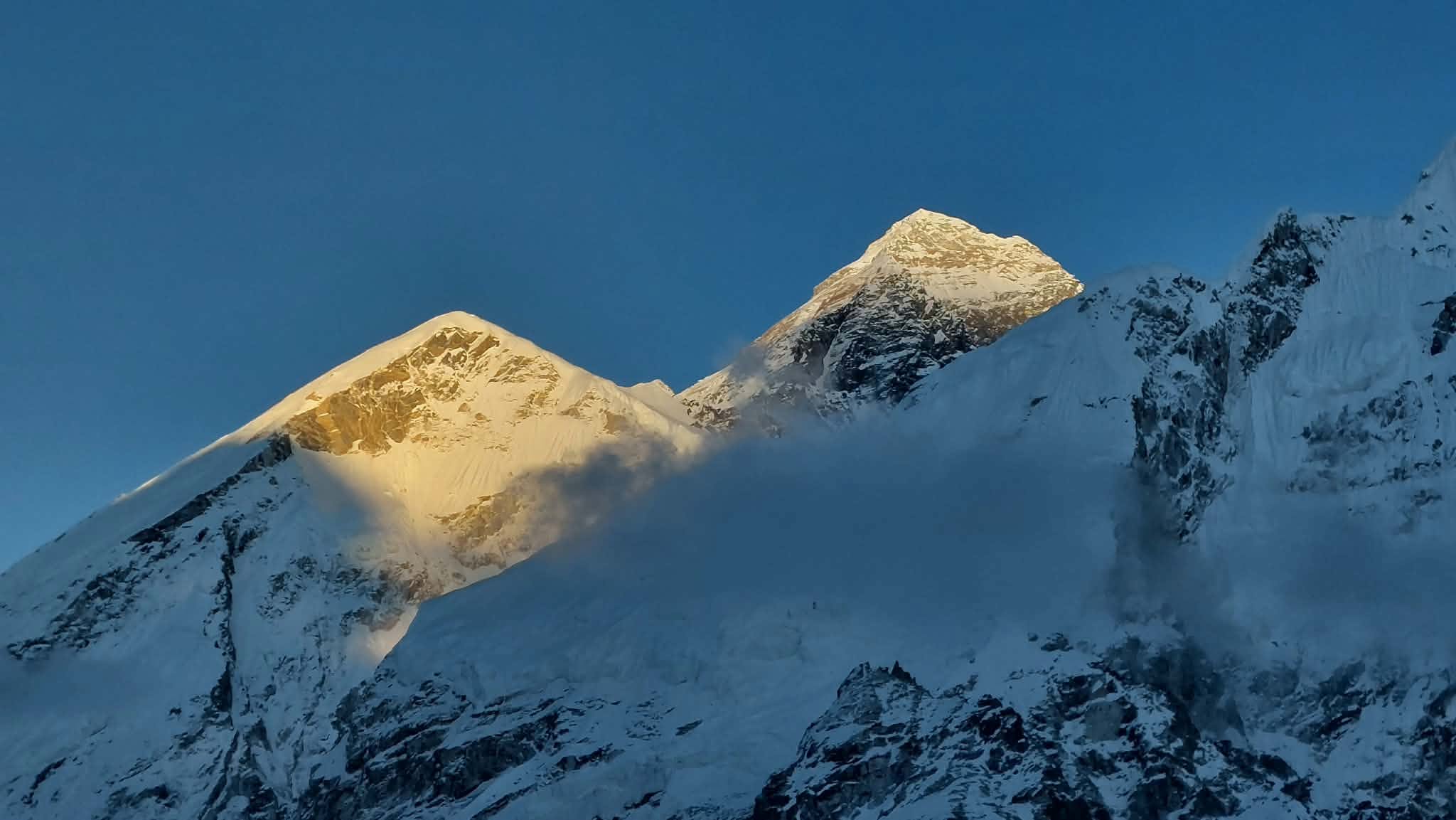
The Himalayan Rescue Association clinic at Pheriche (4,371m) has operated since 1973. It is staffed by qualified physicians during the main trekking seasons. The free daily altitude talks at the clinic are strongly recommended for all trekkers passing through the EBC corridor. The problem is that the remote sections of the Three Passes circuit, Lungden, Thangnak, and Gokyo, are on the western side of the Khumbu. Pheriche is on the eastern side. If you develop serious AMS at Lungden and cannot continue, the foot route to medical help runs through Thame and Namche, a two-day walk, not directly to Pheriche.
How to Prevent AMS on the Everest Three Passes Trek?
Prevention method | What it does on this circuit |
Follow the itinerary without shortcutting | The sleep elevation gains per night are calibrated around physiological adaptation. Shortcutting an acclimatization day removes the margin the pacing is built around. The Thame acclimatization stop is the most commonly skipped on competitor itineraries and the most valuable on this one. |
Climb high, sleep low | All three acclimatization hikes on this circuit apply this principle deliberately. Do not skip them in favour of resting at the teahouse. The Gokyo Ri hike to 5,357m returning to sleep at 4,790m is altitude preparation for Cho La, not an optional add-on. |
Hydrate consistently | 3 to 4 litres daily above 3,000m, including on acclimatization and rest days. Pale yellow urine is the field indicator. Dark means drink more immediately. |
Walk at the correct pace | Above 3,000m, the correct pace is slower than your fitness suggests. If you cannot hold a conversation while walking uphill, you are moving too fast. |
No sleeping pills at any elevation | Sleeping pills suppress respiration. At altitude, this is actively dangerous. No exceptions. |
No alcohol above 3,500m | Alcohol suppresses respiration during sleep, worsens dehydration, and interferes with the overnight recovery that drives acclimatization. The effect at altitude is meaningfully worse than at sea level. |
Diamox if prescribed | Accelerates acclimatization. Requires a doctor's prescription and prior medical consultation. See medication section below. Diamox assists the process but does not replace a correctly paced itinerary. |
What to Do If You Have AMS on Everest Three Passes Trek?
Mild AMS (Lake Louise Score 3 to 5): Stop ascending. Rest at current elevation. Drink 3 to 4 litres across the day. Take 400 to 600mg ibuprofen for headache. Rescore the Lake Louise criteria in 12 to 24 hours. If the score is improving and you are eating and sleeping, consider continuing the following day. If the score is the same or higher, descend 300 to 500m and reassess. Do not re-ascend until completely symptom-free for at least 24 hours.
Moderate AMS (Lake Louise Score 6 to 9): Descend immediately. Not to the next teahouse: descend until symptoms begin to clearly improve. Inform your guide. This is not a rest-day situation.
Severe AMS, HACE, or HAPE: Descend as far and as fast as safely possible. Administer dexamethasone for HACE or nifedipine for HAPE if your guide carries emergency medications, as a bridge to descent, not a substitute for it. Activate your emergency contact. Do not leave the person alone.
The Rule That Covers All Three Conditions
Never ascend to sleep at a higher elevation while experiencing any AMS symptoms. If symptoms worsen at the same altitude, descend. There is no version of this trek where pushing through worsening symptoms to reach a planned stop is the right decision. A person with HACE may insist they feel fine while failing the heel-to-toe test. Act on the test, not the verbal report.
Medications for Altitude Illness
All medication decisions must be discussed with your doctor before departure. The information below is educational only. Freedom Adventures does not prescribe or recommend medications.
Medication | Purpose | Dose | Notes |
Acetazolamide (Diamox) | AMS prevention and treatment. Stimulates deeper breathing, accelerating acclimatization. | 125mg twice daily for prevention, starting 24 hours before ascending above 2,500m. 250mg twice daily for established AMS. | Contraindicated for sulfa antibiotic allergy. Increases urination. Causes tingling in fingers and toes. Alters taste of carbonated drinks. Requires prescription. Does not replace acclimatization. |
Ibuprofen | AMS prevention and headache management. | 600mg three times daily with food for prevention above 3,000m. 400 to 600mg for altitude headache. | Treats headache but not the underlying AMS. A headache that responds and then returns is AMS until proven otherwise. No prescription required in most countries. |
Dexamethasone | HACE emergency treatment. Reduces cerebral oedema. | WMS 2024 guidelines: 8mg initial dose, then 4mg every 6 hours. | Treats symptoms but does not cure HACE. Buys time until descent is possible. Descent must still occur. Not for routine AMS prevention. |
Nifedipine | HAPE treatment when descent is delayed. | WMS 2024 guidelines: 30mg extended-release once, or 10mg immediate-release then 20mg extended-release. | Reduces pulmonary arterial pressure. Bridge to descent, not a replacement for it. Descent remains the primary treatment for HAPE. |
Diamox Does Not License a Faster Ascent
Some trekkers use Diamox to justify faster ascent rates, assuming they are protected. They are not. Diamox assists acclimatization but does not replace it. Ascending faster than the recommended rate while on Diamox still carries serious AMS risk. The medication works as a complement to a properly paced itinerary, not as a reason to skip acclimatization stops.
Hydration and Its Relationship to AMS on This Route
Dehydration and AMS share several symptoms: headache, fatigue, nausea, and reduced appetite. A trekker who is dehydrated and mildly altitude-sick may try to address what is actually altitude illness with water alone, while the AMS progresses. Staying consistently hydrated removes that overlap and makes the Lake Louise Score more reliable when you use it.
Drink 3 to 4 litres daily above 3,000m. Cold dry air at altitude drives significant fluid loss through breathing at an elevated rate, less visibly than sweat at sea level. Thirst signals are suppressed. Pale yellow urine is the field indicator of adequate hydration. Dark or amber means drink more immediately, regardless of thirst level. On acclimatization days, the target is the same as on walking days. The altitude dehydration mechanism does not pause because you are resting.
Sleep at Altitude: What is Normal and What is Not
Above 4,000m, most trekkers experience periodic breathing during sleep: a cycle of gradually deeper breaths, then shallower ones, sometimes a brief pause, then a sharper breath. This pattern is called Cheyne-Stokes respiration and it is normal physiology at altitude. It is driven by the CO2 balance disruption that underlies acclimatization. Waking with a sudden breath in the night at Lobuche or Gorak Shep is startling but not dangerous in an otherwise healthy person acclimatising normally.
The 2018 Lake Louise revision removed sleep disturbance from the AMS diagnostic criteria for exactly this reason. Disturbed sleep above 4,000m correlates poorly with true AMS. Waking repeatedly is expected. It is not, by itself, a signal.
What does matter is the quality of that waking. Waking with a gasp and settling quickly back to sleep is Cheyne-Stokes. Waking with breathlessness that does not ease when you sit up, a cough that is worsening, or tightness in the chest is different. Assess for HAPE before going back to sleep.
Your Complete AMS Framework for the Everest Three Passes Trek
Step | What to do | When |
Diagnose | Score the four Lake Louise criteria every evening above Namche. Headache plus any combination of GI disturbance, fatigue, or dizziness with a total score of 3 or more equals AMS. Be honest. Tell your guide the number, not the number that makes tomorrow's plan work. | Every evening from Namche onward |
Prevent | Follow the itinerary. Do not skip Thame or the Gokyo Ri hike. Drink 3 to 4 litres daily. Walk at a pace where conversation is possible. No alcohol above 3,500m. No sleeping pills. Take Diamox if prescribed and discussed with a doctor before departure. | From day one |
Treat | Mild AMS: stop ascending, rest, hydrate, ibuprofen, rescore in 12 to 24 hours. Moderate AMS: descend 300 to 500m immediately. Severe AMS, HACE, or HAPE: descend as far as possible immediately. | As soon as symptoms appear |
Act | Day 16 specifically: perform the ataxia test before departing Lobuche. If HACE symptoms appear: the heel-to-toe test overrides verbal self-report. If HAPE symptoms appear: assess for worsening breathlessness and wet cough. In any of these cases: descend and activate the emergency contact. Do not wait until morning. | Immediately, without delay |
Continue Reading All the Everest Three Passes Guides
Everest Three Passes Day-by-Day Breakdown
Every stage of the clockwise itinerary from Lukla to Lukla: terrain, conditions, and what each day demands.
Pass-by-pass physical demands, the hardest 72 hours on any teahouse trek, and the 14-week
What teahouses on this circuit actually provide, what to eat at altitude, and the Kongma La day logistics.
Season-by-season conditions, pass-specific timing, and the honest verdict.
What goes in the bag for glaciated terrain and multiple nights above 4,800m.
Altitude Guides for Other Nepal Treks
Compare the Altitude Profiles
Altitude Sickness on the Everest Base Camp Trek : The EBC altitude profile, day-by-day risk, and the full AMS framework for that route.
Altitude Sickness on the Annapurna Circuit Trek : Thorong La at 5,416m and how a single high-pass crossing differs from the Three Passes medical picture.
Altitude Sickness on the Manaslu Circuit Trek: Larkya La at 5,160m in a remote restricted permit zone with limited medical access en route.
KEEP EXPLORING
Uncover similar insights
Teahouse Facilities on the Manaslu Circuit Trek with Tsum Valley
Day-by-Day Demands, Training Plan, and Mental Grit