

Table of Contents:

Best Time to do the Everest Three Passes Trek
Month-by-Month Guide to do Everest Three Passes Challenge
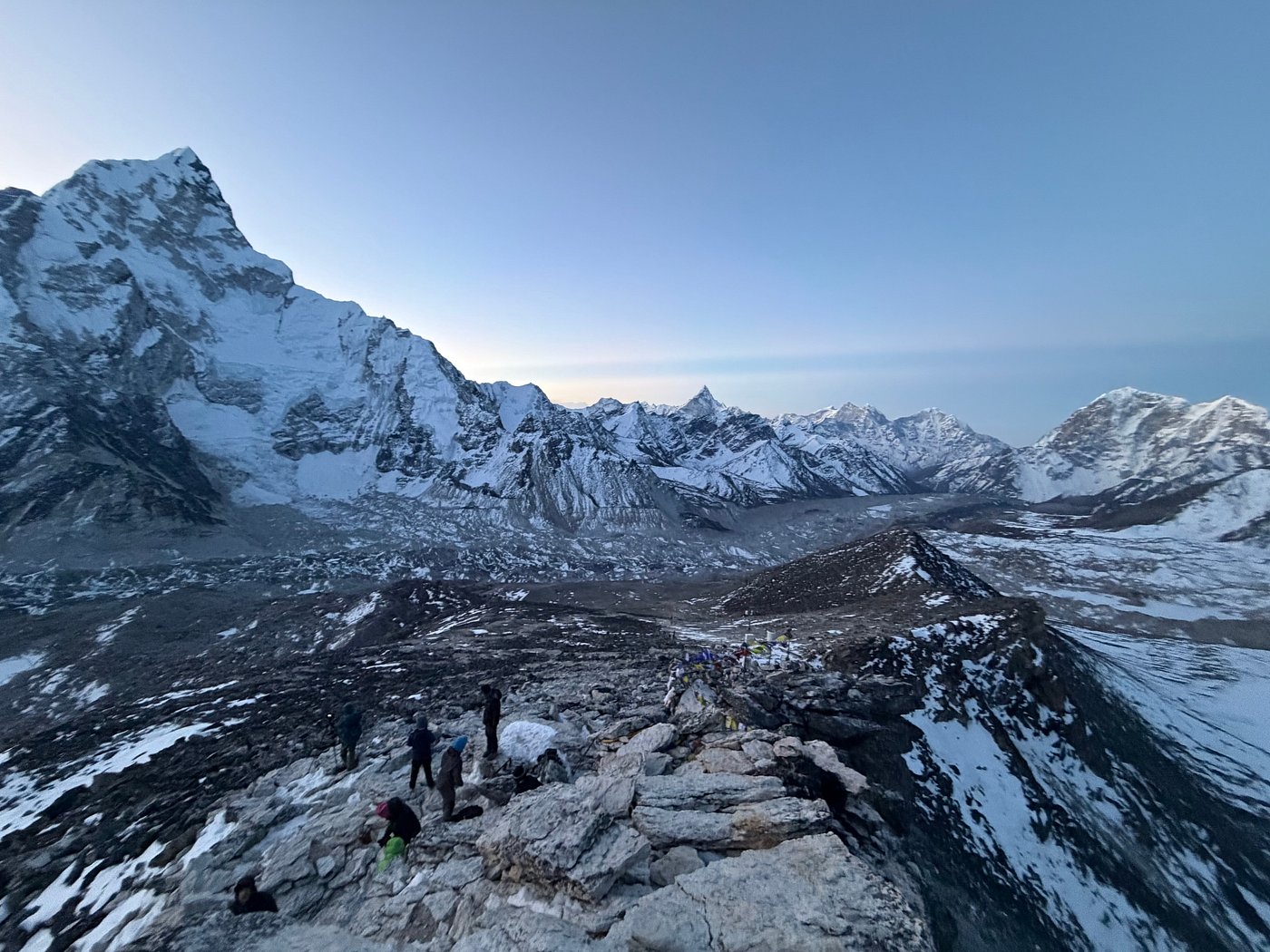
When is the Best Time to do the Everest Three Passes Trek?
On the standard Everest Base Camp trek, a bad weather day means a harder walk and a murkier view. On the Everest Three Passes trek, a bad weather day at the wrong point in the itinerary can mean Cho La's glacier becomes unsafe to cross, Kongma La becomes impassable, and you are sitting between passes with no good options.
This guide goes beyond "spring and autumn are best." It covers what each month actually delivers on this specific route, the pass-by-pass timing differences that most articles skip entirely, and a straight verdict on which window to choose and which months to avoid without hesitation.
Best Time for the Everest Three Passes Trek
Month | Season | Conditions | Rating |
January | Winter | Very cold, passes may be snow-blocked. Cho La glacier icy and dangerous. Very few trekkers. | Avoid |
February | Winter | Improving slowly. Cold. Cho La still risky. Not recommended for most trekkers. | Avoid |
March | Spring | Warming up. Residual snow on passes. Rhododendrons starting below 3,000m. Cold mornings. | Possible |
April | Spring | Peak spring. Stable weather, clear views, rhododendrons in full bloom, ideal Cho La conditions. | Best |
May | Spring | Good early May. Pre-monsoon cloud builds after mid-May. Earlier starts on passes essential. | Good |
June | Monsoon | Monsoon arrives. Slippery trails, unstable snow on glacier, leeches on lower trails. | Avoid |
July | Monsoon | Peak monsoon. Dangerous trail and pass conditions. Do not trek. | Do Not Trek |
August | Monsoon | Monsoon continues. No meaningful improvement until late August. | Do Not Trek |
September | Autumn | Monsoon clearing. Trails washing clean and green. Views improving by late September. | Possible |
October | Autumn | Peak autumn. Clearest skies of the year, dry trails, stable weather. Cho La in optimal state. | Best |
November | Autumn | Excellent early November. Gets colder fast. Cyclone risk some years from late October. | Good |
December | Winter | Cold sets in. Pass closures possible after snowfall. Not recommended. | Avoid |
Why Timing Matters More on Three Passes Than on EBC?
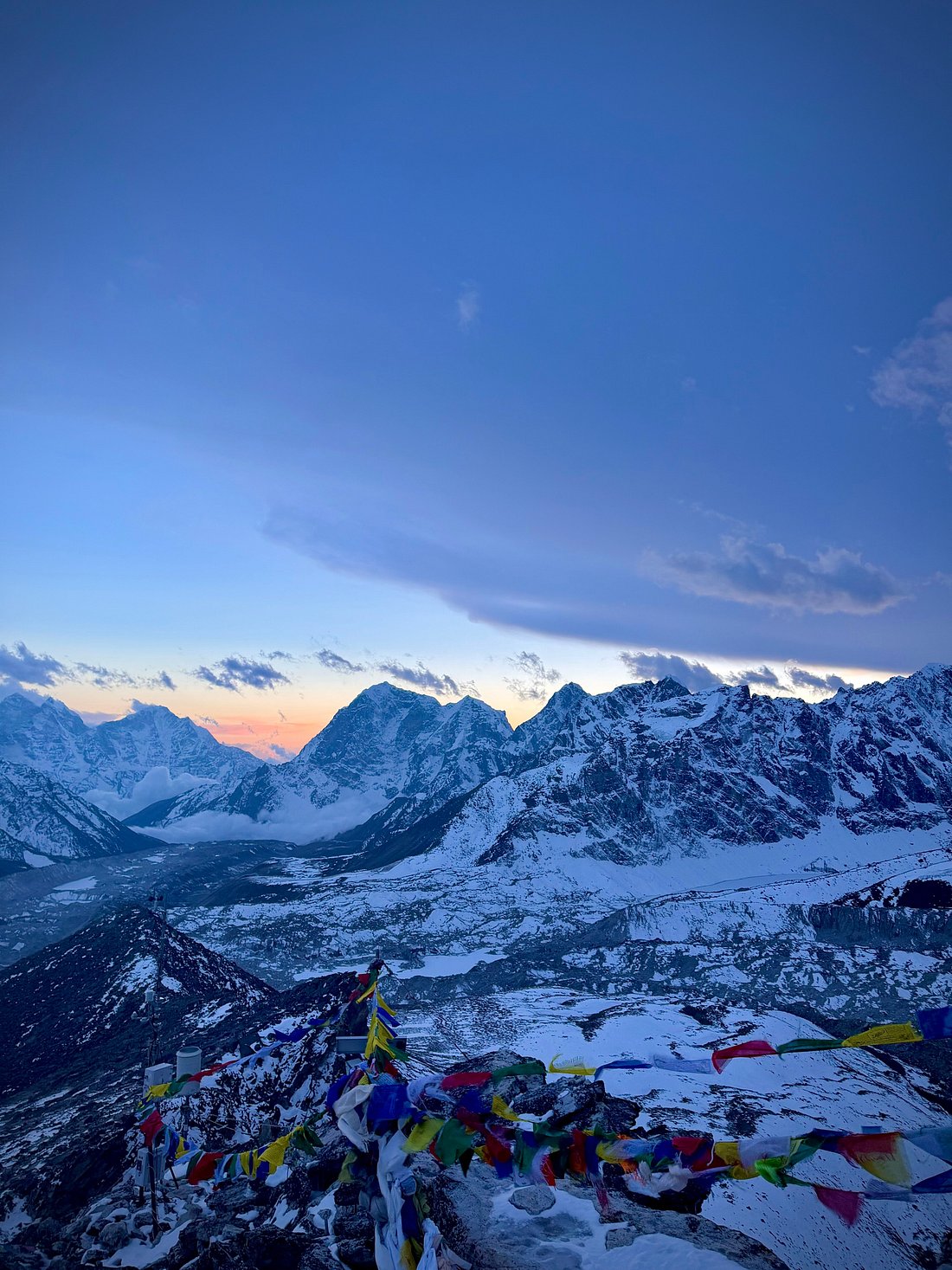
The standard Everest Base Camp trek follows one valley. If weather closes in, you slow down, take a rest day, and the route remains open. The Everest Three Passes trek crosses three high mountain passes that can physically close after snowfall. This is the fundamental difference, and it is why timing needs more explanation here.
Cho La at 5,420m has a glacier crossing. Fresh snow obscures the route markers and makes the ice surface unstable. A storm dropping 20cm on Cho La can make the crossing unsafe until conditions improve. On EBC, the same storm means a harder path and murkier views. On Three Passes, it means a forced wait at Thangnak with no alternative but the weather.
Kongma La at 5,535m is the most exposed and remote crossing on the route. There are no teahouses between Lobuche and Chukhung for 10 to 12 hours of walking. Being caught in deteriorating weather between the two is a significantly worse position than bad weather on the EBC corridor, where teahouses are never more than an hour apart.
How Everest Three Passes Trek Compares to Other Nepal Treks?
The Annapurna Circuit crosses Thorong La at 5,416m in one long day and descends quickly. A blocked Thorong La means a turnaround but the main circuit continues. The Manaslu Circuit crosses Larkya La at 5,160m, which is lower and carries less glacier risk than Cho La. On the Everest Three Passes trek, the route is defined by the passes: you cannot complete the circuit without all three. Timing is more consequential here than on either of those routes, and more consequential than on standard EBC.
The Four Seasons on the Everest Three Passes Trek
March to May
Spring: Colour, Rhododendrons, and the Pre-Monsoon Window
Spring is one of the two recommended seasons and for most months it delivers excellent conditions. Daytime temperatures at Namche (3,440m) range from around 7°C in March to 13°C in May. At the passes, expect crossing temperatures between -5°C and -10°C in the early morning, warming through the day. Nights at Lobuche and Gorak Shep stay below freezing throughout spring.
The defining feature of spring in the Khumbu is the rhododendron bloom. Below 3,500m, the forest between Phakding and Namche turns red and pink from late March through April. The contrast between flowering forest and snowy peaks above makes spring trekking visually distinct from anything autumn offers. April is when this is at its peak.
The passes in March carry residual winter snow. By April the consolidation is typically sufficient for a safe Cho La glacier crossing with microspikes. May is warmer and the snow largely cleared, but afternoon clouds begin building from the south by mid-May as pre-monsoon moisture moves in. Early starts on pass days become more important in May than at any other time of year.
Spring is also the Everest climbing season. April and May bring expedition teams to the EBC corridor, and Namche, Lobuche, and Gorak Shep fill quickly. The Gokyo and Thame sections of the Three Passes route are notably quieter. Book teahouses on the EBC corridor well in advance for peak expedition weeks.
June to August
Monsoon: The Season to Avoid on This Route
The southwest monsoon arrives in the Khumbu in early to mid-June and stays through August. For the Three Passes trek specifically, the monsoon is not just an inconvenience. It creates genuine safety concerns at the pass level that simply do not exist in spring and autumn.
On the lower trail, rain makes stone paths slippery and leeches appear in the forest sections between Lukla and Namche. Above Namche, rainfall at altitude often deposits fresh snow on the passes, making Cho La's glacier wet and unpredictable. Cloud cover is persistent and mountain views are largely obscured for weeks at a stretch.
The Khumbu sits in a rain shadow compared to the Annapurna range, so the monsoon here is less severe than on the Annapurna Circuit in some years. But the risk-to-reward calculation for a route requiring three high-pass crossings in stable conditions is unfavorable. Do not plan the Three Passes trek in monsoon.
Monsoon snowfall on Cho La's glacier creates surface conditions that cannot be reliably assessed from below. A glacier that looks crossable from Thangnak can have a compromised snow bridge above the visible section. Do not attempt Cho La in monsoon conditions regardless of how it appears on the morning of departure.
September to November
Autumn: The Clearest Skies and Most Reliable Conditions
Autumn is the most popular trekking season in Nepal for a reason. After the monsoon clears in late September, the air is washed clean. Visibility in October is typically the best of the entire year: sharp, dry, and cold. The Khumbu peaks appear in full detail from the passes and ridgelines. The Gokyo Lakes reflect the sky without the haze that can accompany spring.
Daytime temperatures at Namche in October average around 11°C, dropping to -6°C at night. At the passes, crossing temperatures in the early morning run from -5°C to -15°C depending on altitude and exposure, warming through the morning. The trails are dry. The passes are clear of monsoon snow by October and have not yet accumulated winter snowfall. This combination makes October the single most reliable month for the crossing.
November is excellent in the first two weeks and becomes cold and unpredictable in the second half. Temperatures drop sharply and the first significant winter snowfall can arrive any time after mid-November. Book early November departures with the understanding that weather windows in the Khumbu are shorter than October's.
Autumn is also festival season in Nepal. Dashain and Tihar, the two biggest Nepali festivals, fall in October and early November. Mani Rimdu, the three-day masked dance ceremony at Tengboche Monastery, takes place in November and is one of the most significant Buddhist cultural events in the entire Khumbu. If your dates overlap with it, it is worth arranging.
December to February
Winter: High Risk, High Reward for the Right Trekker
Winter trekking in the Khumbu is possible and a small number of very well-equipped, experienced trekkers complete the Three Passes route in December. The rewards are real: near-empty trails, exceptional air clarity, and dramatic snow-covered landscapes. The risks on this specific route, however, are considerably higher than on EBC.
Temperatures at Gorak Shep in January can fall to -25°C at night. At the passes, early morning crossing temperatures with wind chill can go below -20°C. Cho La's glacier in deep winter is heavily iced and requires crampons rather than microspikes, along with cold-weather experience that goes beyond standard high-altitude trekking. The teahouses at Thangnak and Dzongla, which are the staging points for Cho La, may be closed entirely in January and February.
December is possible with strong preparation and a professional guide who knows current conditions. January and February are not recommended for the Three Passes route for any trekker without mountaineering experience.
Pass-by-Pass Timing: What Each Crossing Actually Needs
The three passes have genuinely different timing sensitivities. Most articles treat them as a single problem with one answer. They are not.
1. Renjo La (5,360m): The Most Forgiving of the Three
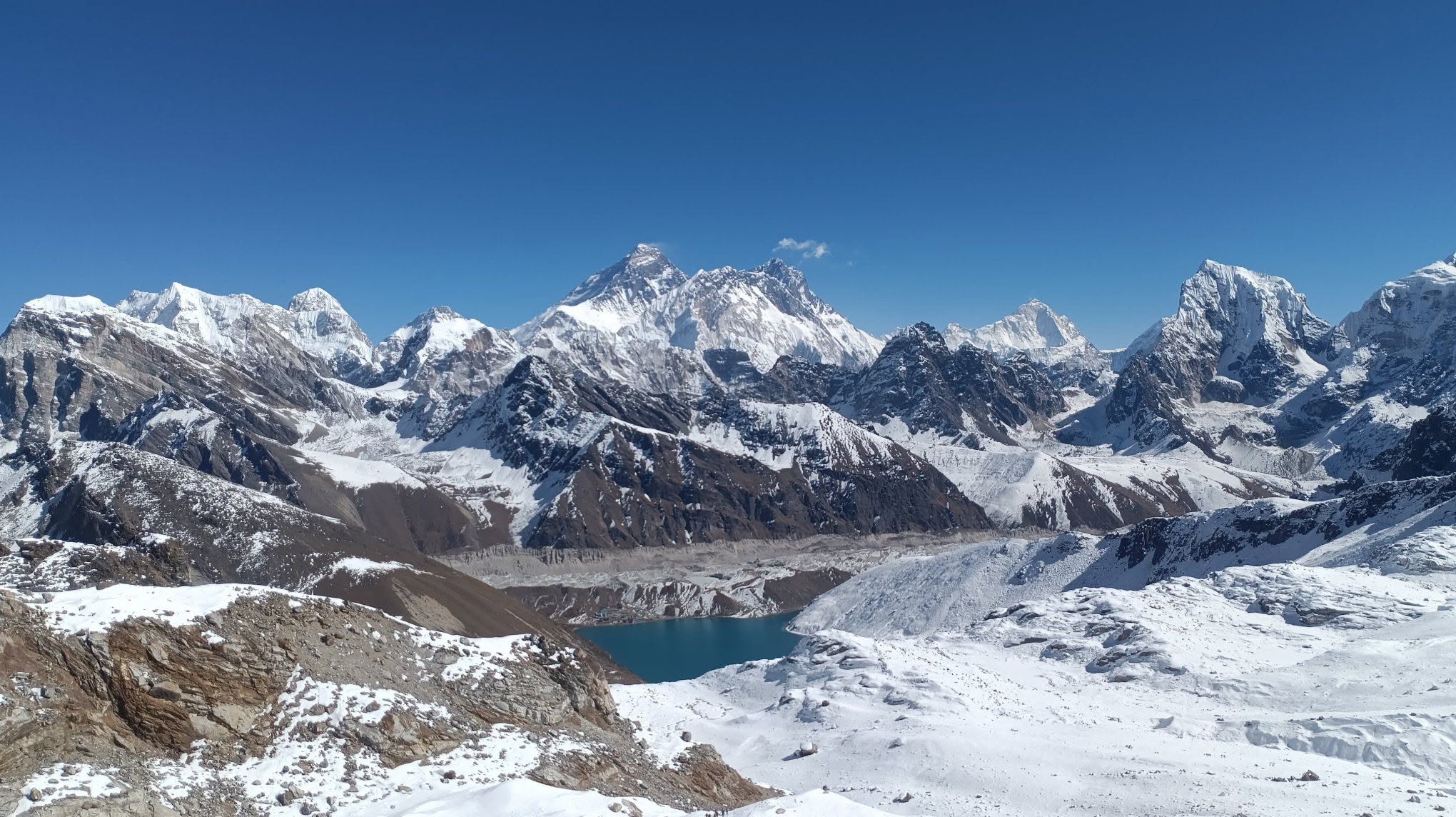
Renjo La is non-glaciated. The crossing is steep and rocky on both sides with significant elevation gain on loose rock, but there is no glacier section that creates a weather-dependent safety variable in the way Cho La does. Snow on Renjo La adds difficulty and slows the crossing but does not close it the way fresh snow on Cho La can.
Renjo La is crossable throughout spring and autumn and in many winter months with adequate preparation. Of the three passes, it is the least timing-sensitive and the most likely to be completed successfully even if conditions deteriorate slightly during the crossing window.
2. Cho La (5,420m): The Weather-Sensitive Glacier Crossing
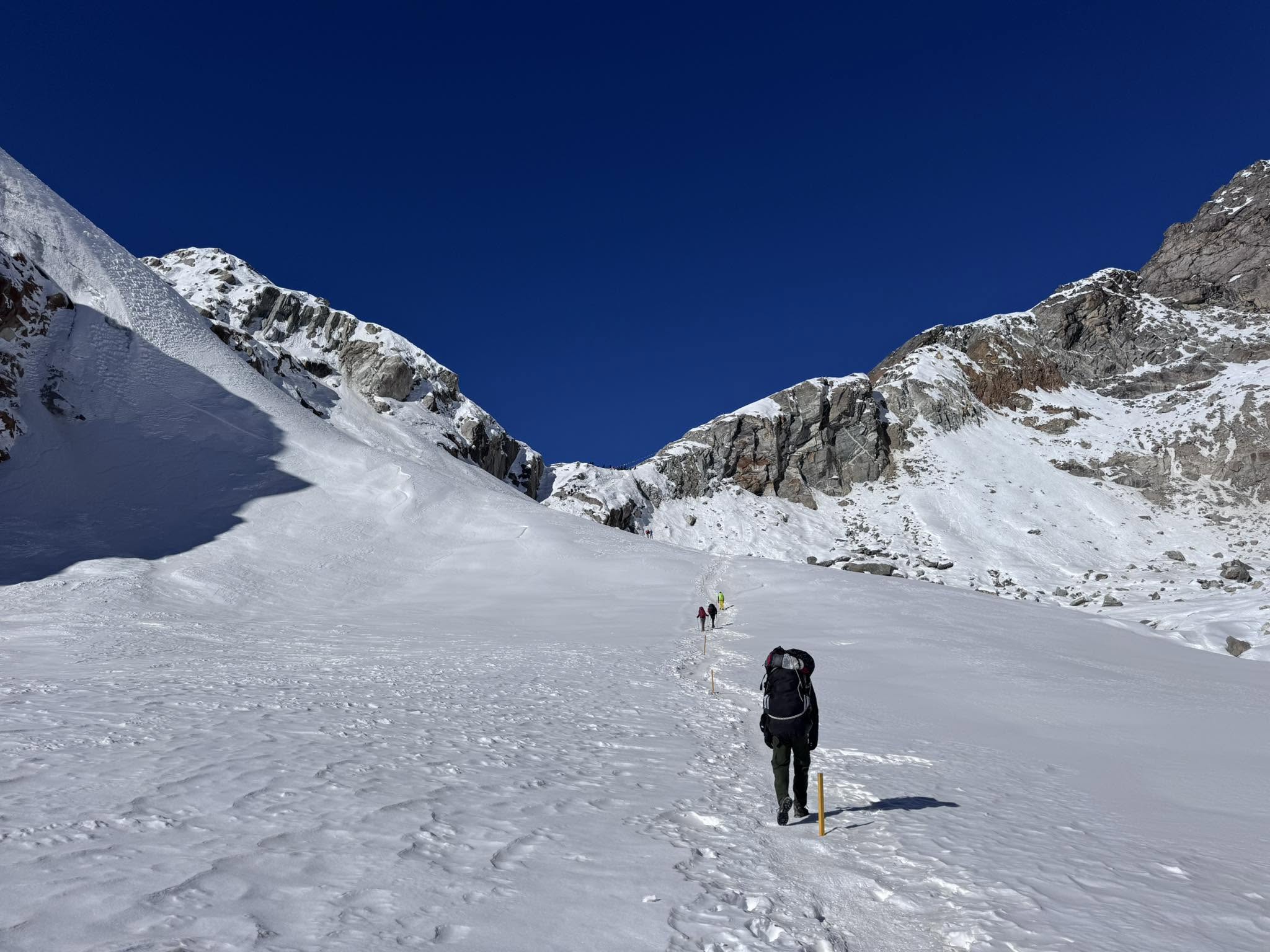
Cho La is where timing matters most. The 680-metre glacier crossing requires frozen, consolidated snow to be safe. In autumn, the glacier is typically in its best condition: the monsoon snow has settled and firmed, morning temperatures keep the surface crunchy for the early crossing window, and the route is well-tracked from previous trekkers. This is the primary reason October is the strongest month for the whole route.
The critical variable is always whether a recent storm has deposited fresh snow. Fresh snow on the glacier obscures the metal stake markers and creates an unstable surface above older ice. Your guide makes the call on conditions on the morning of the crossing. This is not a decision to override based on how the glacier looks from below at Thangnak.
In spring, the glacier carries residual winter ice into April. Microspikes are essential and crampons may be needed in March and early April. By late April and May the consolidation is typically sufficient, but afternoon snowmelt can create slushy conditions by midday, making the early start non-negotiable.
October and April are consistently the two most reliable months for the Cho La glacier crossing, confirmed by guides who work this route across multiple seasons. October because monsoon snow has consolidated and winter snowfall has not yet arrived. April because spring warming has firmed the snow surface without yet producing the afternoon slush of May.
3. Kongma La (5,535m): The Highest, Most Remote, Most Exposed
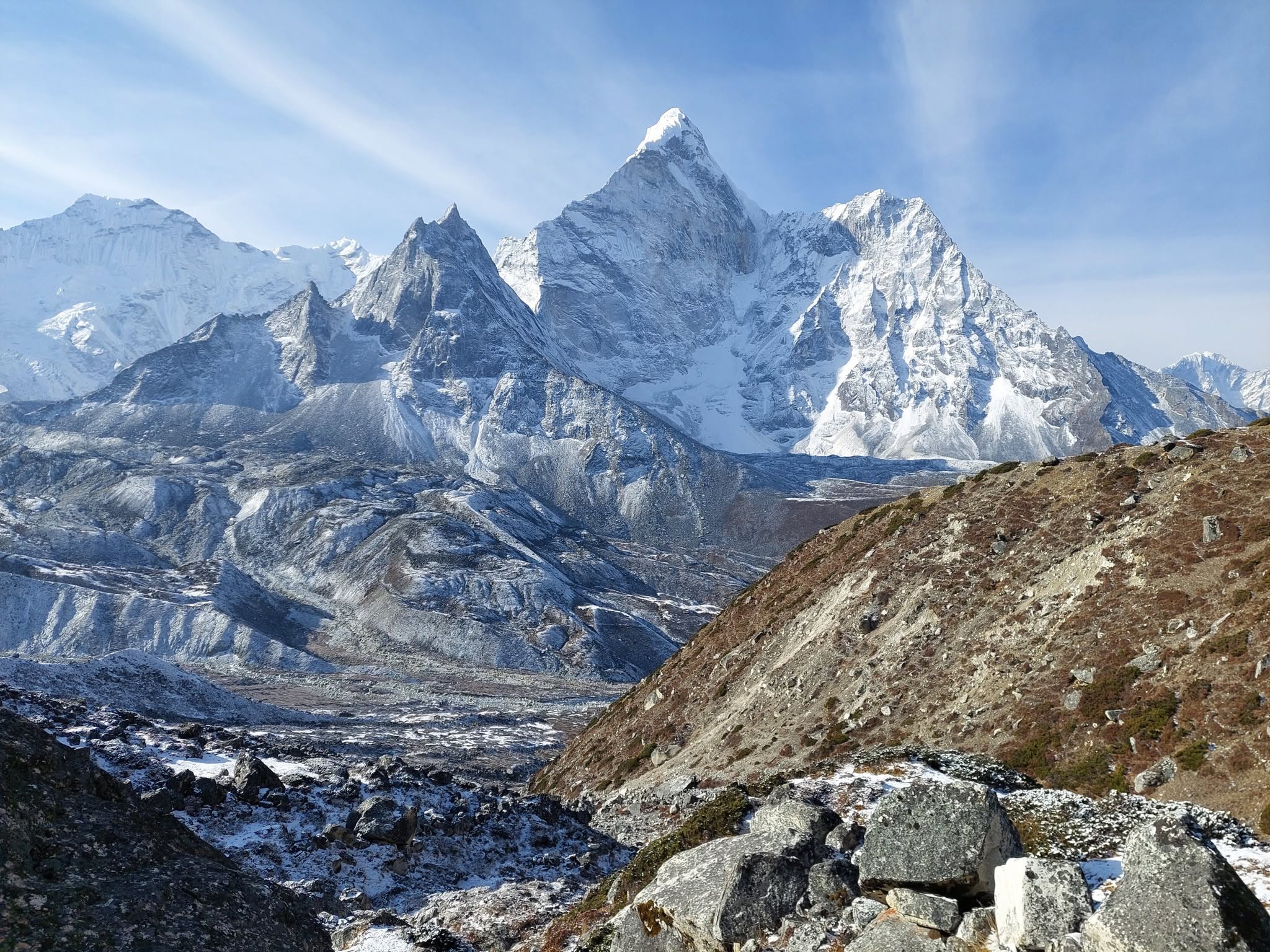
Kongma La is the highest pass and, in the Freedom Adventures clockwise direction, the last one. Its timing sensitivity differs from Cho La: it is not glacier-dependent, but it is the most exposed and remote crossing on the route with no infrastructure for the full 10 to 12 hour day between Lobuche and Chukhung.
Snow on Kongma La significantly complicates both the steep western ascent and the descent to the Khumbu Glacier. In autumn it is typically clear through October and into early November. In spring, March crossings may encounter firm snow on the western face. The remoteness means any weather change during the crossing has more serious consequences than on the supported sections of the route.
Month-by-Month Temperature and Conditions on Everest Three Pass Trek
Month | Namche Day | Namche Night | Pass Conditions | Views | Crowds |
January | 3°C | -15°C | Heavy snow risk. Cho La glacier icy and dangerous. | Clear but very cold | Very few |
February | 4°C | -12°C | Improving slowly. Cho La still risky for most. | Clear | Very few |
March | 7°C | -8°C | Residual winter snow on passes. Microspikes and possibly crampons needed. | Good, some haze | Moderate, building |
April | 10°C | -4°C | Ideal. Snow consolidated. Microspikes for Cho La. Rhododendrons in bloom below Namche. | Excellent | Busy |
May | 13°C | 0°C | Good early May. Pre-monsoon cloud builds after mid-May. Early starts essential on pass days. | Good to excellent early, declining late May | Busy to very busy |
June | 16°C | 2°C | Monsoon. Slippery trails, unstable glacier snow, poor visibility. | Poor | Few |
July | 15°C | 2°C | Peak monsoon. Do not trek. | Very poor | Very few |
August | 15°C | 2°C | Monsoon continues. No improvement until late August. | Very poor | Very few |
September | 14°C | 1°C | Clearing late September. Trails washing clean. Some unsettled weather early in the month. | Improving, some cloud | Moderate, building fast |
October | 11°C | -6°C | Peak conditions. Dry, stable, clear. Cho La in best state of the year. | Best of the year | Very busy |
November | 8°C | -10°C | Excellent early November. Cools quickly. Winter snow possible after mid-month. Cyclone risk some years. | Excellent to good | Moderate, dropping |
December | 6°C | -14°C | Cold. Pass closures possible after snowfall. Not recommended for most. | Clear but cold | Few |
Warning: The Late October Cyclone Risk
In some years, cyclones forming in the Bay of Bengal after the monsoon track northwest and bring heavy snowfall to the high passes in late October or early November. Cyclone Hudhud in 2014 caused significant fatalities on the Annapurna Circuit. The remnants of Cyclone Montha in late October 2025 brought similar disruption to the Khumbu. This is not a reason to avoid autumn trekking, but it is a reason to build flexibility into your return dates and ensure your travel insurance covers disruption to the itinerary. Freedom Adventures monitors field conditions throughout the season and communicates with guides in real time.
How Everest Three Passes Timing Compares to Other Nepal Treks?
The Khumbu shares its broad seasonal pattern with the rest of Nepal, but the pass-specific timing requirements of the Three Passes route make it distinctly more season-sensitive than most comparable treks.
Trek | Best months | Worst months | Key timing factor |
October, April | June to August, January to February | Cho La glacier condition. All three passes must be crossable. No bypass if one closes. | |
October, April and May | June to August | No technical timing dependency. Route remains open in all seasons with appropriate preparation. | |
October, November, March to May | June to August | Thorong La susceptible to early November snowfall and cyclone events. More forgiving than Cho La in most years. | |
Manaslu Circuit Trek | October, November, March to May | June to August | Larkya La at 5,160m is lower than any Three Passes crossing. Less glacier risk but remoter infrastructure in bad weather. |
October to November, April to May | December to February, June to August | Summit day is weather-dependent. Approach mirrors EBC seasonal sensitivity with added mountaineering variables above high camp. |
If you are considering the Three Passes as an extension of or alternative to the standard Everest Base Camp
trek, October is the month where both routes are at their best simultaneously, making it the simplest seasonal choice. For trekkers who have done EBC in spring and are considering the Manaslu Circuit Trek or Annapurna Circuit before returning for Three Passes, the autumn season offers comparable conditions across all three routes. For those thinking about Mera Peak as the next step after Three Passes, the same October and April windows apply.
Crowds and Teahouse Availability by Season in Everest Three Passes Trek
The Three Passes route is significantly quieter than the main EBC trail on the sections through Thame, Lungden, Gokyo, and Thangnak. The EBC corridor from Lobuche onward, which this route joins, carries the full crowd of the Khumbu's peak season.
In October, teahouses at Namche, Lobuche, and Gorak Shep fill quickly and booking a few days ahead is essential. The smaller settlements on the quieter sections, Thangnak and Dzongla in particular, have limited capacity regardless of season. Confirming availability with your guide before arrival is worth doing.
March, late September, and early November offer the best combination of good conditions and manageable crowds. These are the months experienced Khumbu trekkers often choose for exactly this reason, and they are worth considering if you have flexibility on dates.
Continue Reading: Everest Three Passes Trek
On This Trek
Everest Three Passes Day-by-Day Breakdown — Every stage of the route covered in full: terrain, conditions, and what to expect at each stop.
Altitude Sickness on the Everest Three Passes Trek — AMS, HACE, HAPE, the Lake Louise Score, and where risk concentrates on this specific route.
Everest Three Passes Difficulty and Fitness Guide — What each pass physically demands and how to train for the crossings, descents, and consecutive high-altitude days.
Everest Three Passes Food and Accommodation Guide — What teahouses actually look like at each stop, and where facilities drop off sharply above Lungden and Thangnak.
Everest Three Passes Packing List — What goes in the bag for a route with glaciated terrain, multiple nights above 4,800m, and a full unsupported day on Kongma La.
Seasonal Comparisons and Related Treks
Best Time for the Everest Base Camp Trek — How EBC seasonal patterns compare to the Three Passes route.
Best Time for the Annapurna Circuit Trek — Thorong La timing versus Cho La: what is different and what is the same.
A guide to Manaslu Circuit Trek — Nepal's most remote high-pass circuit and how its timing compares to the Khumbu.
The Everest Three Passes trek rewards careful timing more than almost any other route in Nepal. Get the season right and the passes are at their most manageable, the views are at their clearest, and the circuit comes together the way it is supposed to. Get it wrong and the route does not forgive easily.
October and April are the anchors. Everything else is a trade-off worth understanding before you commit to dates.
If you could only choose one, would you take the rhododendrons of spring or the crystal skies of autumn, and what is pulling you toward that answer?
Not sure which season works for your dates? The Freedom Adventures team knows this route across every month of the year.
KEEP EXPLORING
Uncover similar insights
Day-by-Day Demands, Training Plan, and Mental Grit
Month-by-Month Guide to Manaslu Circuit Trek with Tsum Valley