

Table of Contents:

Altitude Sickness on the Everest Base Camp Trek
AMS, HACE, and HAPE: Symptoms, Prevention & Treatment
Medical disclaimer: This guide is written for educational and trekking preparation purposes only. It does not replace advice from a qualified doctor. Freedom Adventures does not prescribe or recommend any medication. Consult your GP or a travel medicine specialist before taking any medication for altitude, including Diamox. Discuss your personal health history and altitude risk before departure.
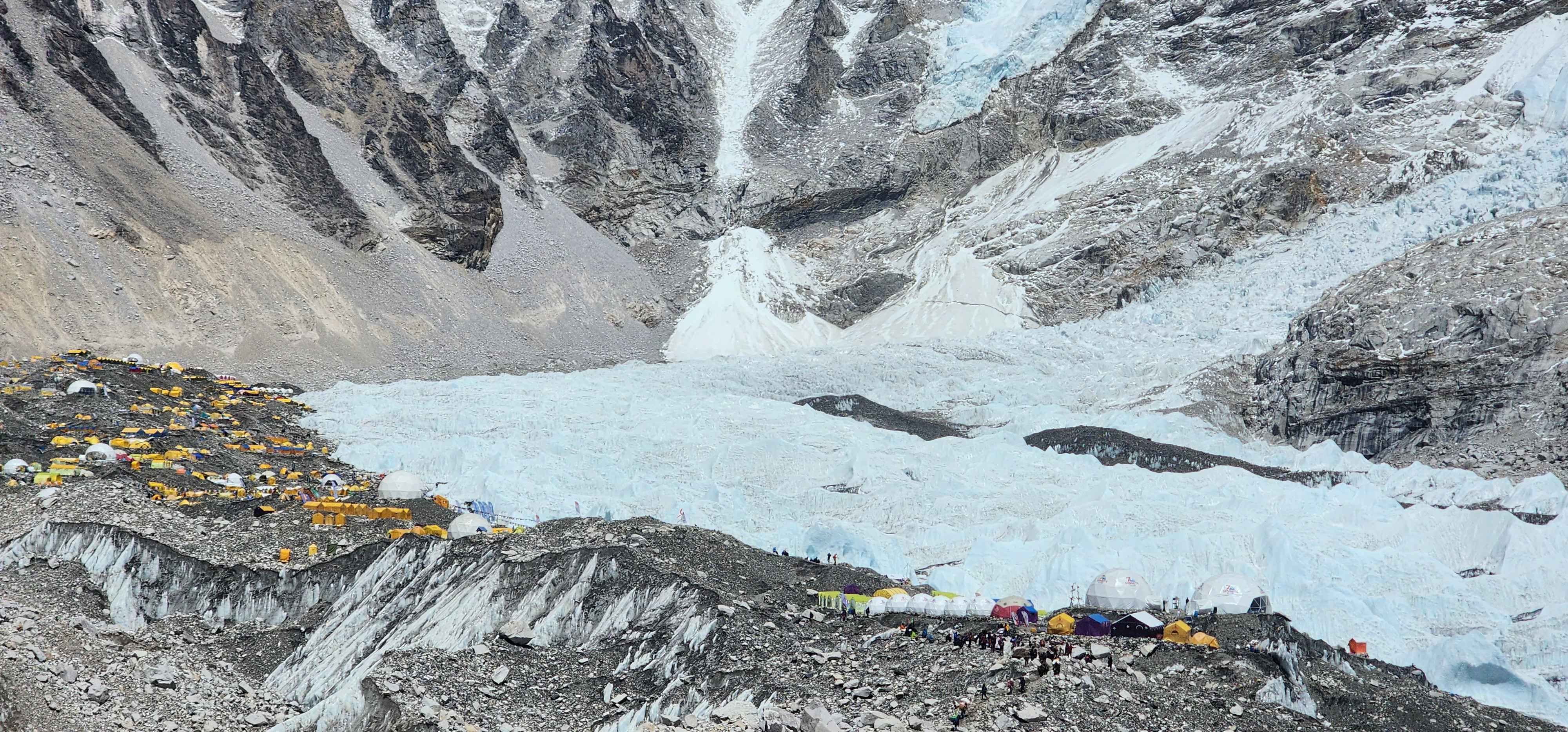
You can train for months, hire the right gear, and arrive in Kathmandu in the best shape of your life. Altitude sickness on the Everest Base Camp trek still might find you. Not because you did something wrong. Because your body is crossing into elevations where the air pressure drops significantly, and no amount of preparation in a gym fully prepares your physiology for what happens above 4,000m.
What does protect you is knowing exactly what altitude sickness looks like on this route, how to score it accurately, when to rest, and when to descend. Most people who have a serious altitude incident on EBC knew something was off. They just didn't know what to do with that information.
This guide gives you that.
What is Altitude Sickness and Why Does It Happen on the EBC Trek?
Altitude sickness is not caused by thin air in the way most people imagine. The percentage of oxygen in the air is the same at Lukla as it is at sea level, 21%. What changes with elevation is atmospheric pressure. As pressure drops, each breath delivers fewer oxygen molecules to your lungs and bloodstream. The higher you go, the wider that gap becomes.
Your body's response is to adapt: it breathes faster, drives deeper ventilation, and over days and weeks begins producing more red blood cells to carry what oxygen is available more efficiently. Altitude sickness happens when your ascent rate outpaces that adaptation. You are climbing faster than your body can keep up.
On the EBC trek, this matters in a specific way that shorter treks don't create. You sleep above 4,000m for five or more consecutive nights. You push to 5,545m at Kala Patthar. From Dingboche onward, the body stops fully recovering overnight. Each day begins slightly more depleted than the last. That compounding effect is what makes EBC medically different from a trek like Annapurna Base Camp, which reaches 4,130m and descends the same day. If you are also considering the Annapurna Base Camp trek and want to understand how altitude sickness presents on a shorter, lower route, our Altitude Sickness Guide for the Annapurna Base Camp trek, covers the same conditions with the specific context of that route.
AMS can affect anyone regardless of age, gender, or fitness level. A study of trekkers in the Solu-Khumbu region found AMS incidence climbs sharply above 4,500m, affecting close to half of all trekkers at that elevation range.
How to Recognize AMS, HACE, and HAPE on the EBC Trek?
These are not the same condition at different severity levels. They are three distinct medical situations affecting different parts of the body with different timelines and different levels of danger.
AMS: Acute Mountain Sickness
AMS is the warning. Your body signaling that acclimatization has fallen behind. Uncomfortable, sometimes significantly, but manageable with correct action.
Severity | Symptoms | What it means |
Mild | Headache (dull, persistent), mild nausea, reduced appetite, slight dizziness on standing, fatigue beyond the day's effort | AMS is present. Stop ascending. Rest, hydrate, assess with the Lake Louise Score. |
Moderate | Worsening headache not relieved by ibuprofen, vomiting, significant fatigue, dizziness making walking difficult | Do not ascend further. Descend 300 to 500m if no improvement in 24 hours. |
Severe | Incapacitating headache, inability to stand without support, confusion, disorientation | Descend immediately. This is a medical emergency. |
WARNING: A headache that responds to ibuprofen and then returns is AMS until proven otherwise. Do not take ibuprofen to enable continuing ascent while symptoms are present.
HACE: High Altitude Cerebral Edema
HACE is AMS that has progressed to the point where fluid accumulates around the brain. It is distinguished from severe AMS not by headache intensity but by neurological signs, specifically loss of coordination and altered mental state.
Symptom | What it looks like in practice |
Ataxia | Cannot walk a straight-line heel-to-toe without losing balance |
Confusion | Slowed responses, difficulty following a simple question, irrational behavior |
Unusual drowsiness | Hard to wake, difficulty staying alert in conversation |
Severe headache | Does not respond to ibuprofen, worsens with lying down |
Vomiting | Often accompanying the above |
Late stage | Loss of consciousness, coma possible within 12 to 24 hours of ataxia appearing |
DANGER: The heel-to-toe field test. Ask the person to walk 10 steps heel-to-toe in a straight line. A healthy person at altitude manages this with some difficulty. Inability to do it without stepping off the line is a positive sign for HACE. Descent must begin immediately. Do not wait until morning.
One critical detail about HACE that most miss: the condition impairs the judgment you would normally use to recognize it. A trekker with early HACE may tell you clearly, they feel fine while failing the walk test. The walk test result outweighs the self-report. This is why your guide's independent observation matters as much as anything you say about how you feel.
HAPE: High Altitude Pulmonary Edema
HAPE is the most dangerous of the three. Fluid builds in the lungs. Without treatment, the mortality rate reaches 50%. And unlike AMS or HACE, HAPE can arrive without any preceding headache. A trekker with no altitude sickness symptoms at all can develop HAPE overnight.
Symptom | What it looks like |
Early | Unusual breathlessness on mild exertion, dry persistent cough, performance noticeably worse than others at the same effort |
Progressing | Breathlessness at rest, cough becoming wet, chest congestion or tightness |
Severe | Gurgling or bubbling sound in the chest, blue tinge to lips or fingertips, inability to lie flat |
Pattern | Worsens at night when lying down. Often dismissed as a chest cold or simple tiredness for 1 to 2 days before anyone acts. That delay is the danger. |
DANGER: HAPE can develop with no headache and no prior AMS symptoms. If someone in your group is unusually breathless on flat ground, has a worsening cough, and is performing significantly below everyone else, assess for HAPE regardless of whether they have a headache.
The Lake Louise Score: How to Diagnose AMS on the EBC Trek?
The Lake Louise Acute Mountain Sickness Score is the standard diagnostic tool guides and altitude medicine physicians use on this route. It was first established in 1991 and last revised in 2018. The 2018 revision made one change most trekkers don't know about: sleep disturbance was removed from the scoring criteria.
Research showed that disturbed sleep above 4,000m is a normal physiological response to altitude hypoxia and correlates poorly with true AMS. Waking repeatedly at Lobuche is expected. It is not, by itself, an AMS signal. Use the four symptoms below.
AMS requires a headache to be present. Without a headache, a high score across the other symptoms does not meet diagnostic criteria.
Symptom | 0 | 1 | 2 | 3 |
Headache | None | Mild | Moderate | Severe, incapacitating |
Nausea or GI disturbance | None | Poor appetite or mild nausea | Moderate nausea or vomiting | Severe nausea and vomiting |
Fatigue and weakness | None | Mild | Moderate | Severe, incapacitating |
Dizziness | None | Mild | Moderate | Severe, incapacitating |
Total score of 3 to 5 = Mild AMS. Score of 6 to 9 = Moderate AMS. Score of 10 to 12 = Severe AMS.
How to use it practically: Score yourself every evening above Namche, before dinner, after you've stopped walking and had water. Be honest. A mild headache (1) plus poor appetite (1) plus mild fatigue (1) is a total of 3 with a headache present. That is AMS, even though each symptom feels manageable individually. The score is what matters, not how any single symptom feels.
Track your score across days, not just in isolation. A score of 2 on day six that becomes 4 on day seven is a rising trend. A score of 4 that drops to 2 overnight with rest and hydration is improving. The trend tells you more than any single evening's number.
Why You Cannot Fully Trust Your Own Judgment Above 5,000m on the EBC Trek?
Hypoxia at altitude affects cognitive function measurably. Reaction time slows, working memory contracts, complex reasoning becomes effortful, and judgment is impaired in ways that are not always obvious to the person experiencing them. At 5,364m, cognitive effects are present and documented.
This creates a specific problem for self-assessment. A trekker with early HACE may genuinely believe they are fine while showing ataxia on the heel-to-toe test. A trekker with worsening AMS may feel that pushing through to the next stop is a reasonable decision because their impaired judgment cannot access the full picture of how they are doing. The confidence a trekker feels in their own assessment above 5,000m is itself slightly less reliable than the confidence they would feel at sea level.
Your trekking partner or your guide is observing you from outside the impairment. They may notice the change in how you are moving, the quality of your answers, the slowing in your responses, before you notice any of these things yourself. A guide's observation that something is off should be weighted at least equally with a trekker's insistence that they feel fine.
Tell your guide your Lake Louise Score honestly each evening. Not the number that makes the morning's plan work, but the actual number.
From Which Day on the EBC Trek Can You Experience AMS Symptoms?
AMS typically doesn't develop below 2,500m. On the EBC trek, the first meaningful risk begins at Namche Bazaar on day two. Here is where the risk sits across the route, specific to the Freedom Adventures itinerary.
Day | Stage | Sleep elevation | AMS risk | What to monitor |
Day 1 | Lukla to Phakding | 2,610m | Very low | No altitude concern. Hydrate well. Rest fully. |
Day 2 | Phakding to Namche | 3,440m | Low to moderate | First night above 3,000m. A mild headache this evening is possible. Score at dinner. If it responds to water and ibuprofen and is gone by morning, it is not AMS. |
Day 3 | Acclimatization, Namche | 3,440m (hike to 3,880m) | Moderate on hike | Any symptoms from day two that have not resolved by morning should be flagged with your guide before the group moves on. |
Day 4 | Namche to Tengboche | 3,867m | Moderate | Research in the Khumbu found roughly 25 percent of trekkers at this elevation met criteria for manifest AMS. A headache that does not respond to ibuprofen by dinner is a signal. |
Day 5 | Tengboche to Dingboche | 4,410m | Moderate to high | Crossing 4,000m for the first time. Wind and cold mask early AMS signals here. Eat fully, drink more than you feel you need. |
Day 6 | Acclimatization, Dingboche | 4,410m (hike to 5,083m) | High on hike | The most critical acclimatization day on the route. Note how your body responds to the high point before returning to sleep low. Sleep quality tonight is diagnostic. Report it honestly in the morning. |
Day 7 | Dingboche to Lobuche | 4,940m | High | From this night onward, overnight recovery becomes partial. Symptoms that feel manageable at 2pm often feel worse by 9pm. Score carefully after dinner. |
Day 8 | Lobuche to Gorak Shep, EBC | 5,164m | Very high | Breathlessness at rest at Gorak Shep is normal physiology. A worsening cough, chest tightness, or breathlessness dramatically beyond your companions is not. |
Day 9 | Kala Patthar, descent to Pheriche | 5,545m high point | Very high then dropping | Accumulated altitude effect is at its peak. Confusion, inability to walk straight, breathlessness at rest are emergency signals at any hour of the day or night. |
Days 10 to 12 | Pheriche to Lukla | Dropping to 2,860m | Rapidly decreasing | AMS risk drops with every metre of descent. Symptoms that have not clearly improved by Namche on the way down need attention. |
INSIGHT: The Himalayan Rescue Association has operated an aid post at Pheriche (4,250m) since 1973. It is staffed twice yearly by volunteer doctors and runs free altitude illness awareness talks for trekkers during season. Attending one takes 45 minutes and is one of the most useful things you can do on this route. Above Pheriche, the medical infrastructure thins sharply. Lobuche has a seasonal post. Gorak Shep has nothing.
For the full day-by-day breakdown of what each stage demands physically, including elevation profiles and walking times, read our EBC day-by-day itinerary guide.
Why Are Acclimatization Days on the EBC Trek Non-Negotiable?
The two rest days built into the itinerary, at Namche Bazaar and Dingboche, are not recovery days in the conventional sense. They are not there because the walking is too hard to do consecutively. They are there because without them, the ascent rate would be faster than most bodies can safely adapt to.
The principle behind both days is the same: climb high during the day, sleep low at night. At Namche, the acclimatization hike to 3,880m exposes the body to a higher altitude stimulus before returning to sleep at 3,440m. At Dingboche, the hike to Nangkartshang ridge at 5,083m is the first time most trekkers cross 5,000m, and how the body responds there gives useful information about what's coming above Lobuche.
Spending the acclimatization day resting in the teahouse instead of doing the hike keeps you at the lower sleep elevation but removes the altitude stimulus that drives adaptation. You get half the benefit. Trekkers who do this consistently report more difficulty above 4,500m than those who completed the hikes as intended.
Skipping an acclimatization day to save time is the single most common decision that ends EBC treks early.
This is also why the itinerary matters. If you are evaluating different EBC operators, the number of acclimatization days and the sleep elevation each night are the most important numbers in the schedule.
How Likely is It to Get AMS on the EBC Trek Compared to Other Nepal Treks?
EBC's altitude risk is genuinely different from most other popular Nepal treks, and not just because it goes higher.
Trek | Max altitude | Nights above 3,500m | AMS likelihood | What makes it distinct |
5,545m (Kala Patthar) | 5 to 6 | High | Five or more consecutive nights above 4,000m. Body never fully recovers overnight from Dingboche onward. This duration is what separates EBC from almost everything else in Nepal. | |
3,210m | 0 to 1 | Low | Never sleeps high enough for AMS to be a significant concern for most trekkers. | |
4,130m | 1 to 2 | Moderate | One night at the high point. AMS risk is real but short in duration. Descent the next day resolves most symptoms quickly. | |
Langtang Valley | 3,870m | 2 to 3 | Moderate | Sustained moderate altitude but doesn't push above 4,000m for sleep. |
5,416m (Thorong La) | 3 to 4 | High | Similar overall altitude but the challenge is concentrated in one long, cold pass rather than sustained high-altitude residence. | |
5,535m | 7 to 9 | Very high | EBC's altitude profile plus three high passes and more technical terrain. |
The relevant variable on EBC is not just peak altitude. It is how many consecutive nights the body spends above 4,000m without dropping below it. That duration is what makes this route physiologically distinct, and it's what most quick comparisons between treks miss.
If I Am Fit, Will I Still Get AMS on the EBC Trek?
Yes, you might. And this is one of the most important things to understand before you fly to Lukla.
AMS is not caused by lack of fitness. It is caused by ascent rate outpacing your body's ability to adapt to lower oxygen pressure. That process happens at roughly the same speed in a trained athlete as in someone who has never been inside a gym. Research conducted in the Solu-Khumbu region consistently finds no significant association between physical fitness and AMS incidence. Elite runners have been evacuated from the Khumbu. Sedentary trekkers who walked the correct pace made it to Base Camp without incident the same season.
What fitness gives you on EBC is not protection from AMS. It gives you:
A cardiovascular system that recovers more efficiently overnight
Stronger appetite under sustained exertion
Higher tolerance for the physical discomfort of early acclimatization
The endurance to walk at the correct, slow pace for 13 consecutive days without pushing beyond it
That last point matters most. Fit trekkers who ascend faster than the itinerary intends, because they feel strong and the pace seems too slow, are at higher AMS risk than less fit trekkers who walk the correct pace. Pace is the protection on this route. Fitness is what allows you to maintain that pace comfortably.
The physical challenge of EBC and the altitude challenge are separate problems. Being prepared for one doesn't mean you're prepared for the other. Our [EBC difficulty and fitness guide] covers the physical demands day by day and what a realistic training plan looks like, separate from the altitude medicine covered here. The season you trek also affects how the altitude challenge presents. Cold air in October and November makes acclimatization harder than the warmer spring window.
Our Best Time to Trek Everest Base Camp Guide breaks down how season changes both trail conditions and altitude risk month by month.
How Much Water Do I Need Each Day on the EBC Trek?
Drink 3 to 4 liters of fluid daily above 3,000m. This is not a guideline you adjust based on how thirsty you feel.
At altitude, the cold dry air means every exhaled breath carries more moisture than it would at sea level. Your respiratory rate is elevated throughout the day, and a meaningful amount of daily fluid loss happens simply through breathing, not through sweat or exertion. Thirst at altitude is not a reliable early indicator of dehydration because this loss is so gradual and the air so dry that you often do not feel thirsty until you are already behind.
Dehydration and AMS share several symptoms: headache, fatigue, nausea, and reduced appetite. A trekker who is dehydrated and mildly AMS may spend the afternoon trying to resolve what is actually altitude illness with water alone, while the AMS progresses quietly. Staying consistently hydrated removes that overlap and makes your Lake Louise Score more reliable when you use it.
Pale yellow urine is the field indicator of adequate hydration.
Dark or amber means drink more immediately, regardless of thirst.
On acclimatization days, the target is the same as on walking days. The altitude dehydration mechanism doesn't pause because you are not on the trail.
For water sources at each teahouse, what to ask for, what to avoid, and how to treat water on the upper route above Lobuche where options are limited, our [EBC food and accommodation guide] covers every stop from Phakding to Gorak Shep.
Avoid alcohol above 3,500m. Alcohol suppresses respiration during sleep, worsens dehydration, and interferes with the overnight recovery that drives acclimatization. The effect at altitude is meaningfully worse than at sea level.
How to Prevent AMS on the EBC Trek?
No single measure prevents AMS independently of ascent rate. The measures below reduce risk significantly when used together with a correctly paced itinerary.
Prevention method | What it does on this route |
Follow the itinerary without shortcutting | The sleep elevation gains per night are calibrated specifically around physiological adaptation. Modifying the schedule to save a day removes the margin the pacing is built around. |
Climb high, sleep low | Both acclimatization hikes apply this principle deliberately. Do not skip them in favor of resting in the teahouse. |
Hydrate consistently | 3 to 4 liters daily above 3,000m. Pale yellow urine is your daily check. |
Walk at the correct pace | Above 3,000m, the correct pace is slower than your fitness suggests. If you cannot hold a conversation while walking uphill, you are moving too fast. |
No sleeping pills at any elevation | Sleeping pills suppress respiration. At altitude, this is actively dangerous. |
No alcohol above 3,500m | See hydration section above. |
Diamox if prescribed | Accelerates acclimatization. Requires a doctor's prescription and prior medical consultation. See medication section below. |
What Should I Do If I Have AMS on the EBC Trek?
Mild AMS (Lake Louise Score 3 to 5):
Stop ascending. Rest at the current elevation. Drink 3 to 4 liters of fluid across the day. Take 400 to 600mg ibuprofen for headache. Rescore the Lake Louise criteria in 12 to 24 hours. If the score is improving and you are eating and sleeping, you may consider continuing the following day. If the score is the same or higher, descend 300 to 500m and reassess.
Do not re-ascend until you have been completely symptom-free for at least 24 hours.
Moderate AMS (Lake Louise Score 6 to 9):
Descend immediately. Not to the next teahouse: descend until symptoms begin to clearly improve. Inform your guide. This is not a rest day situation.
Severe AMS, HACE, or HAPE (Lake Louise Score 10 or higher, or neurological signs, or respiratory symptoms):
Descend as far and as fast as safely possible. Administer dexamethasone for HACE (8mg initial dose, then 4mg every 6 hours per WMS 2024 guidelines) or nifedipine for HAPE (30mg extended-release per WMS 2024 guidelines) if your guide carries emergency medications. Activate your emergency contact. Do not leave the person alone.
WARNING: The descent decision for HACE and HAPE is a rule, not a judgment call made fresh each time. A person with HACE may insist they feel fine while failing the heel-to-toe walk test. Act on the walk test, not the verbal report.
The one rule that covers all three conditions:
Never ascend to sleep at a higher elevation while experiencing any AMS symptoms. If symptoms worsen at the same altitude, descend. There is no version of this trek where pushing through worsening symptoms to reach a planned stop is the right decision.
Sleep at Altitude on the EBC Trek: What is Normal and What is Not?
Above 4,000m, most trekkers experience periodic breathing during sleep: a cycle of gradually deeper breaths, then shallower ones, sometimes a brief pause, then a sharper breath. This pattern has a name, Cheyne-Stokes respiration, and it is normal physiology at altitude, not a sign of AMS or approaching HAPE.
It is driven by the same CO2 balance disruption that underlies the rest of the acclimatization process. The body is managing a shifting equilibrium between oxygen uptake and carbon dioxide clearance, and during sleep, when conscious breathing control is reduced, that management becomes irregular and cyclic. Waking with a sudden breath in the night is startling but not dangerous in an otherwise healthy person who is acclimatizing normally.
The 2018 Lake Louise revision removed sleep disturbance from the AMS diagnostic criteria for exactly this reason. Research showed that disturbed sleep above 4,000m is primarily a response to altitude hypoxia itself and correlates poorly with true AMS. Waking repeatedly at Lobuche is expected. It is not, by itself, an AMS signal.
What does matter is the quality of the waking. Waking with a gasp and settling back to sleep quickly is Cheyne-Stokes. Waking with breathlessness that does not ease when you sit up, a cough that is worsening, or a feeling of tightness in the chest is different. That warrants assessment before going back to sleep.
Can I Take Medication for AMS on the EBC Trek?
All medication decisions must be discussed with your doctor before departure. The information below is educational only. Freedom Adventures does not prescribe or recommend medications.
Acetazolamide | |
Diamox: carbonic anhydrase inhibitor | |
Purpose | AMS prevention and treatment. Stimulates deeper breathing, accelerating acclimatization. |
Dose (prevention) | 125mg twice daily. Start 24 hours before ascending above 2,500m. |
Dose (treatment) | 250mg twice daily for established AMS. |
Side effects | Increased urination, tingling in fingers and toes, altered taste of carbonated drinks. Generally, well tolerated. |
Caution | Contraindicated for sulfa antibiotic allergy. Requires prescription. Discuss with your doctor before departure. |
Does not | Prevent AMS in every case. Mask HAPE or HACE. Replace descent when symptoms are serious. |
Ibuprofen |
NSAID: analgesic and anti-inflammatory
Purpose | AMS prevention and symptom management. |
Dose (prevention) | 600mg three times daily, taken with food, starting before ascending above 3,000m. |
Dose (symptoms) | 400 to 600mg for altitude headache. Reassess symptoms after 2 hours. |
Important note | Ibuprofen treats headache but does not treat the underlying AMS. A headache that responds to ibuprofen and then returns is AMS until proven otherwise. Do not take ibuprofen to enable ascending with symptoms. |
Advantage | No prescription required in most countries. Available in Kathmandu and Pokhara. A practical option for those who cannot take Diamox. |
Dexamethasone | |
Corticosteroid: HACE emergency treatment | |
Purpose | Primary treatment for HACE when descent is not immediately possible. Reduces cerebral oedema. Per WMS 2024 guidelines: 8mg initial dose, then 4mg every 6 hours. |
Important | Dexamethasone treats symptoms but does not cure HACE. It buys time until descent is possible. Descent must still occur as quickly as possible. |
Do not use | For AMS prophylaxis in routine trekking. Its use is reserved for HACE or severe AMS where descent is not immediately available. |
Nifedipine | |
Calcium channel blocker: HAPE treatment | |
Purpose | HAPE treatment when descent is delayed or impossible. Reduces pulmonary arterial pressure. WMS 2024 recommended dose: 30mg extended-release once or 10mg immediate-release initially then 20mg extended-release. |
Important | Like dexamethasone for HACE, nifedipine is a bridge to descent, not a replacement for it. Descent is still the primary treatment for HAPE. |
Warning: Diamox can mask symptoms if misused
Diamox reduces AMS incidence and can make early acclimatization more comfortable. Some trekkers use this to justify faster ascent rates, assuming they are protected. They are not. Diamox assists the acclimatization process but does not replace it. Ascending faster than the recommended rate while on Diamox still carries serious AMS risk. The medication works best as a complement to a properly paced itinerary, not as a license to rush on
FACT: Garlic soup and ginger tea are well-established parts of Khumbu trekking culture and genuinely worth drinking regularly above 3,500m. Neither treats AMS. A headache that worsens despite rest, hydration, and ibuprofen is a medical signal requiring action, not a different hot drink.
Diagnose, Prevent, Treat, Act: Your Full AMS Framework for the EBC Trek
Step | What to do | When |
Diagnose | Score the four Lake Louise criteria every evening above 3,440m. Headache plus any combination of GI disturbance, fatigue, or dizziness with a total score of 3 or more equals AMS. Be honest. Tell your guide the number. | Every evening from Namche onward |
Prevent | Follow the itinerary. Do not skip acclimatization days. Drink 3 to 4 liters daily. Walk at a pace where conversation is possible. No alcohol above 3,500m. No sleeping pills. Take Diamox if prescribed. | From day one |
Treat | Mild AMS: stop ascending, rest, hydrate, ibuprofen. Reassess in 12 to 24 hours. Moderate AMS: descend 300 to 500m immediately. Severe AMS or HACE or HAPE: descend as far as possible immediately. | As soon as symptoms appear |
Act | If HACE symptoms appear: perform heel-to-toe walk test. If HAPE symptoms appear: assess for worsening breathlessness and wet cough. In either case, do not wait until morning, do not wait for the person to agree, do not wait for conditions to improve. Descend and activate emergency contact. | Immediately, without delay |
Most people who trek to Everest Base Camp do not have a serious altitude incident. They walk the correct pace, take the acclimatization days seriously, drink enough water, and tell their guide honestly how they are feeling each evening. That combination, unglamorous as it sounds, is what gets people to Kala Patthar and back safely.
Altitude sickness is not something to fear on this route. It is something to understand. There is a difference.
The trekkers who struggle are rarely the least prepared. They are usually the ones who noticed something changing, decided to see how tomorrow felt, and said nothing. That silence, made at dinner somewhere above 4,000m, is where most altitude incidents quietly begin.
When you are sitting in a teahouse at Dingboche, headlamp on, the wind outside, and your body is telling you something you are not sure how to read, will you know the difference between a hard day and a warning?
KEEP EXPLORING
Uncover similar insights
Day-by-Day Demands, Training Plan, and Mental Grit
Month-by-Month Guide to do Everest Three Passes Challenge