

Table of Contents:

How Hard is the Everest Three Passes Trek?
Day-by-Day Demands, Training Plan, and Mental Grit
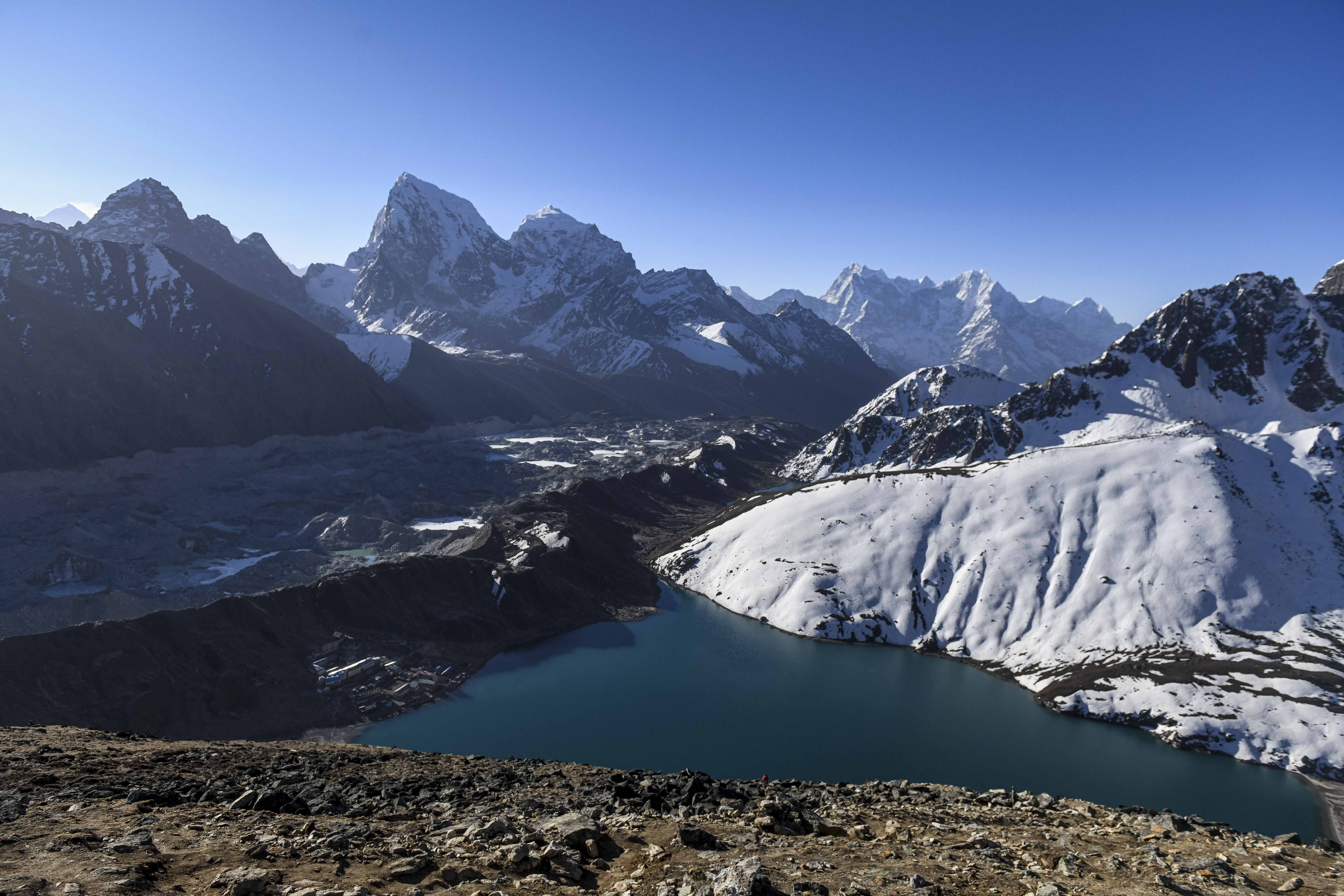
The Everest Three Passes trek is not the Everest Base Camp trek with extra days added on. It is a different physical undertaking entirely. Everest Base Camp Trek asks you to go high and come back down the same way. Three Passes asks you to go high, cross a glacier, go higher, stay there for several more days, then cross the highest and most remote pass of the three on day 16, after everything that came before it.
Understanding exactly where the difficulty lives on this route, which days ask the most, what the passes specifically demand from your body, and how to train for those specific demands rather than just "getting fit," is what separates trekkers who complete this route comfortably from those who struggle through it or do not finish.
How Hard is the Everest Three Passes Trek?
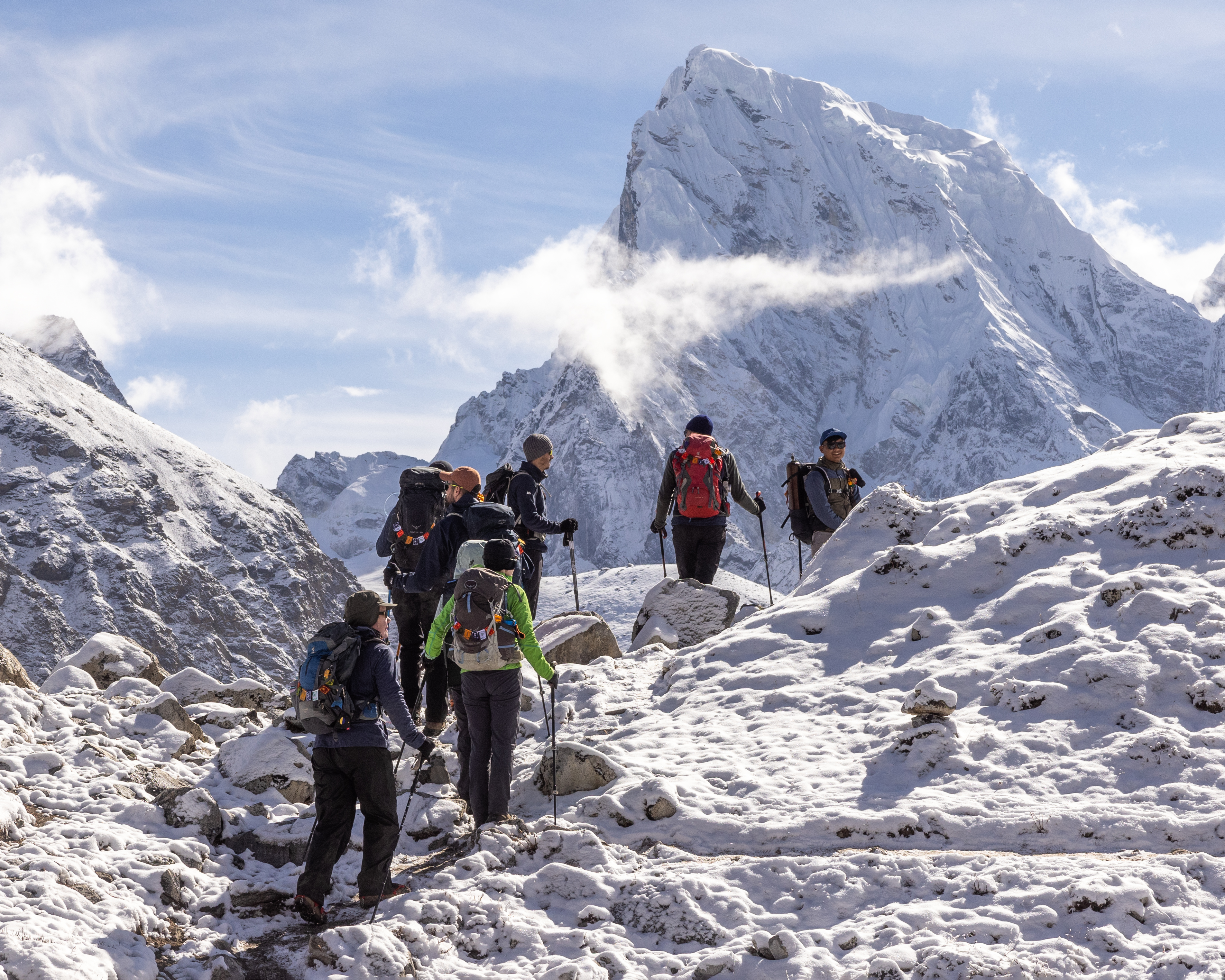
The Everest Three Passes trek is graded strenuous to very strenuous. That is not a single day's rating. It is the cumulative reality of 16 consecutive trekking days that include three high-pass crossings above 5,300m, 5 or more nights above 4,000m, two nights at 5,164m (Gorak Shep), a glaciated terrain section on Cho La, and the hardest consecutive three-day sequence on any teahouse trek in Nepal.
The difficulty is not evenly spread. Several days on this route are genuinely moderate, and the quieter valley sections through Thame and Gokyo are among the most enjoyable walking in the Khumbu. The difficulty concentrates in specific, predictable places, and knowing where those places are in advance changes how you approach the whole route.
The Everest Base Camp trek involves approximately 1,800m of cumulative net descent across its return journey. The Everest Three Passes trek involves approximately 3,400m of cumulative descent spread across the full circuit. That difference lands directly on the knees and is the single most commonly underprepared element of this route.
Day-by-Day Physical Difficulty on the Everest Three Passes Trek
Day | Stage | Hours | Difficulty | What Makes It Hard |
Day 3 | Lukla to Phakding | 3 to 4 | Easy | Gentle descent. Introductory walking. Nepali flat. |
Day 4 | Phakding to Namche | 5 to 6 | Hard | 600m steep climb at end of day. Always harder than expected. |
Day 5 | Acclimatization hike, Namche | 3 to 4 | Moderate | 400m hike to 3,880m, return to sleep lower. Active rest. |
Day 6 | Namche to Thame | 3 to 4 | Easy | Gradual climb on good trail. Short and pleasant. |
Day 7 | Rest at Thame | Optional hike | Easy | Acclimatization. Gentle movement above village. |
Day 8 | Thame to Lungden | 3 to 4 | Moderate | 580m gain. Steady but not steep. Short day. |
Day 9 | Lungden to Gokyo via Renjo La | 7 to 8 | Hard | Nearly 1,000m ascent to 5,360m. Long scree descent. First big pass day. |
Day 10 | Acclimatization hike, Gokyo Ri | 3 to 4 | Moderate | Steep but short. |
Day 11 | Gokyo to Thangnak | 4 to 5 | Moderate | Rough moraine terrain. Slow going, not steep. |
Day 12 | Thangnak to Dzongla via Cho La | 7 to 9 | Very Hard | Glacier crossing, fixed ropes, steep rocky descent. Most technically demanding day. |
Day 13 | Dzongla to Lobuche | 3 to 4 | Easy | Gradual contour. Welcome recovery before the EBC section. |
Day 14 | Lobuche to Gorak Shep and EBC | 6 to 7 | Hard | 6 to 7 hours above 5,000m. Uneven moraine terrain. Long return to Gorak Shep. |
Day 15 | Kala Patthar, return to Lobuche | 6 to 7 | Very Hard | Pre-dawn ascent on legs already worked from Day 14. 381m on steep loose scree at 5,164m base. |
Day 16 | Lobuche to Chukhung via Kongma La | 10 to 12 | Hardest Day | 10 to 12 hours, no support, no retreat option. Highest pass, steep ascent in reverse direction, Khumbu Glacier crossing. Comes after Days 14 and 15. |
Day 17 | Chukhung to Tengboche | 6 to 7 | Hard on Legs | 870m net descent the day after Kongma La. Knees carry the load here. |
Day 18 | Tengboche to Namche | 4 to 5 | Moderate | Descent with Dudh Koshi crossing. Trail known, body tired. |
Day 19 | Namche to Lukla | 6 to 7 | Hard on Knees | 18 to 19km. Longest day. Day 17 of trekking. Cumulative descent load on already-fatigued joints. |
What the Everest Three Passes Trek Physically Asks of You?
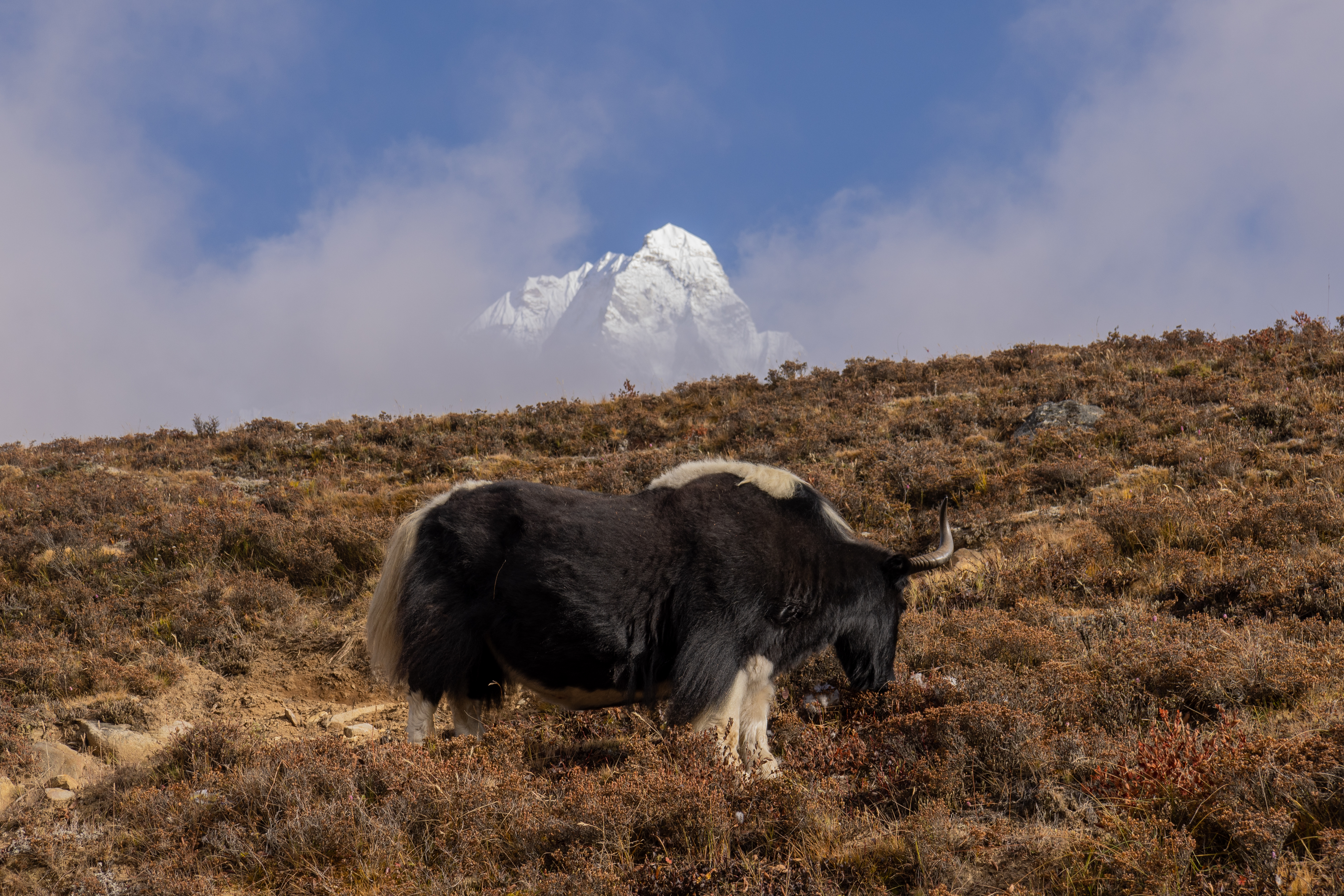
Cardiovascular Endurance: Sustained Effort, Not Peak Effort
The Everest Three Passes trek does not require explosive athletic ability. It requires the capacity to walk at a moderate pace for 6 to 10 hours, day after day, for 16 consecutive days at altitudes that reduce effective oxygen availability at the passes.
The useful self-test: can you hike for 6 hours on hilly terrain with a 6 to 8kg pack without stopping frequently, and then do it again the next morning without needing two days of recovery? If the answer is no, cardiovascular endurance is the gap to address first. A single strong day is not the problem on this trek. The accumulation of sixteen of them is.
Leg Strength for Descent: The Most Underestimated Gap
Walking uphill tests your cardiovascular system. Walking downhill on rocky terrain for hours tests muscular strength and joint control in a completely different way. The Everest Three Passes trek involves approximately 3,400m of cumulative net descent across the full circuit. For comparison, the standard EBC out-and-back involves roughly 1,800m. The difference is almost entirely in the extended descent from Chukhung through Tengboche, Namche, and back to Lukla across days 17 to 19.
The useful self-test: descend a steep hill or staircase repeatedly for 20 to 25 minutes. If the knees ache or burn by the end, this needs direct attention before the trek. The two conditions to prepare specifically for are patellofemoral pain syndrome (pain around the kneecap that worsens on descent) and IT band syndrome (sharp pain on the outer knee). Both respond to targeted strength training. Neither responds to hoping.
Technical Terrain and Upper Body Stability: What Cho La Specifically Asks
Most articles about this trek describe Cho La as a glacier crossing that requires microspikes. That is correct but incomplete. The section immediately above the glacier involves a near-vertical rocky face with a fixed metal rope anchored into the rock. Ascending this section requires gripping the rope with loaded arms while stepping upward on loose rock at 5,400m. On the descent, the same rope is used to lower yourself down the most exposed section.
This is not mountaineering. But it is the one section of the entire route where arm strength, grip, and upper body stability matter in a way they do not on any other day. Trekkers who have only trained legs and cardio find this section more demanding than the elevation numbers suggest. Including pull movements, grip work, and core training in the preparation plan specifically addresses this.
Altitude Adaptation: Duration is the Variable EBC Doesn't Prepare You For
The Everest Base Camp trek keeps you above 4,000m for 5 to 6 nights. The Three Passes trek keeps you above 4,000m for 7 to 9 nights. From day 7 onward, the body stops fully recovering overnight. This is not a fitness failure. It is the physiological limit of what acclimatization can achieve at these elevations within the time the itinerary provides.
What this means practically: symptoms that felt mild and manageable at Namche feel more significant by Lobuche, not because they have worsened but because the body's reserve for compensating has been reduced by a week of incomplete overnight recovery. Prior time above 4,000m, ideally on the EBC trek, gives your body a physiological reference point it draws on above Dingboche. There is no substitute for this.
For the full altitude sickness guide specific to this route, including how to score your Lake Louise criteria and what to do with the result, read our Everest Three Passes altitude sickness guide.
Recovery Between Consecutive Days
A single hard day is rarely where Three Passes trekkers struggle. The demand that catches people is consecutive hard days with incomplete recovery between them, particularly the three days from Day 14 through Day 16. Most trekkers who under-prepare test their fitness on single long hikes and assume they are ready. The preparation they miss is what two demanding days back-to-back at altitude actually feels like on the third morning.
The useful self-test: complete two strenuous hikes on consecutive days with a full pack, then assess honestly how you feel on the second morning. If the second day is significantly harder than the first, your recovery capacity needs training, not just your fitness.
The Hardest 72 Hours on Everest Three Passes
Day 14: Lobuche to Gorak Shep and Everest Base Camp. 6 to 7 hours above 5,000m on rocky moraine terrain. The body at this point has already done 13 trekking days. Breathlessness at rest at Gorak Shep is normal. The afternoon push to EBC and back adds real distance on ice-polished stone. Most trekkers are exhausted by the time they return to Gorak Shep to sleep.
Day 15: Kala Patthar before dawn, return to Lobuche. You leave Gorak Shep before sunrise on legs that have just done Day 14. The climb to 5,545m gains 381m on steep, loose scree in the dark and cold, roughly 90 minutes of hard effort at the highest altitude of the entire trek. Then the descent to Lobuche. The day is extraordinary but it comes at a point when the body has nothing spare.
Day 16: Lobuche to Chukhung via Kongma La. 10 to 12 hours. No teahouses. No retreat option. The highest pass at 5,535m, crossed in reverse direction on this itinerary so the steep scree face is the ascent. Then the Khumbu Glacier crossing. Then the long boulder trail to Chukhung. This is the hardest day of the route and it comes the morning after the hardest two days of the route.
Warning
Days 14 to 16 must be treated as a connected sequence in your preparation, not three separate challenges. The body going into Day 16 is carrying everything from the previous 2 days plus 11 days of accumulated trekking. Trekkers who arrive at this sequence in poor condition from earlier stages, whether from illness, inadequate acclimatization, or underprepared fitness, face it at the worst possible time. This is the section that most separates adequately prepared trekkers from underprepared ones.
Pass-by-Pass Physical Breakdown: Renjo La, Cho La, and Kongma La
Renjo La (5,360m): Sustained Climbing and False Summit Fatigue
Renjo La gains nearly 1,000m from Lungden at 4,380m to the pass at 5,360m. The ascent is steep and sustained on rocky, open moraine terrain. The primary physical challenge is the combination of sustained cardiovascular effort at altitude with the morale cost of false summits that look convincingly like the top from below. At this elevation, every unnecessary expenditure of energy from misreading the route costs more than it would lower down.
The descent from Renjo La to Gokyo loses roughly 570m on loose scree. This is the first sustained descent on the entire route and the first indication of how the knees are going to respond to the kind of downhill terrain that characterizes the final days. Pay attention to what you feel on this descent. It is a preview.
Cho La (5,420m): Technical Terrain and the Fixed Rope Sections
Cho La is the most technically demanding day on the route. Three distinct physical sections create the demand:
The glacier crossing (680m): Microspikes provide traction on consolidated snow. The physical demand is controlled, deliberate movement with full concentration on footing at 5,300m. Panic or rushing is the main risk here. Slow and steady is the technique.
The fixed rope ascent: Near-vertical rocky face above the glacier. Grip the rope, step upward on loose rock. This is where upper body and grip strength matter. Trekkers with weak arms find this section significantly harder than the glacier below it.
The eastern descent (250m): Steep and rocky, with a second fixed rope on the most exposed section. Quad and glute engagement on controlled downhill. The same muscles that protect the knee on all other descents are working hard here.
Early start is the physical strategy on Cho La. Cold, firm snow in the morning is the condition all the technique above works best in. Soft afternoon snow changes the calculation.
Kongma La (5,535m): The Long Unsupported Day in Reverse
Kongma La is the highest and longest crossing. In this clockwise itinerary, the steep western scree face is the ascent, which means the most demanding section of the pass comes first, before the long boulder terrain and the Khumbu Glacier crossing on the far side. The 10 to 12 hour duration without teahouse support means energy management across the full day matters as much as fitness level. Starting too fast on the ascent costs more by the glacier crossing than the time saved.
The Khumbu Glacier crossing below Kongma La's eastern side is not the glaciated technical crossing that Cho La is. It is a relatively flat glacier surface marked by cairns. The physical demand here is navigation attention and careful footing, not technical skill. But it comes at hour 8 or 9 of a 12-hour day on already exhausted legs. That context changes what it asks of you.
The Cumulative Fatigue Curve on the Everest Three Passes Trek
From roughly day 7 or 8, the body on this route stops fully recovering overnight. This is not unusual at these elevations. It is the physiological reality of sustained altitude. What matters is understanding how that accumulation changes the experience of each subsequent day.
A 600m climb on day 4 feels different from a 600m climb on day fourteen for three reasons:
accumulated muscle fatigue,
reduced overnight recovery, and
the progressive physiological load of altitude.
The body at day 14 is working harder to produce the same output as day 4, and it cannot fully repair that output gap in the hours available.
This is why the Three Passes trek is meaningfully harder than EBC for trekkers of equivalent fitness, even though the maximum altitude is the same. EBC gives the body a return journey that is mostly downhill and descending altitude. Three Passes keeps the body at altitude for longer and asks three of its hardest days at the very end of the circuit, when cumulative fatigue is at its peak.
Trekkers who have done the Annapurna Circuit or the Manaslu Circuit Trek before Three Passes carry a useful advantage: experience with multi-week back-to-back trekking at altitude, and some understanding of how their body responds when recovery becomes partial rather than complete. Neither route fully replicates Three Passes, but the cumulative fatigue pattern is comparable. If you have done either, your body has reference data for what day twelve of consecutive high-altitude trekking actually feels like.
Myths About Fitness and the Everest Three Passes Trek
"I did EBC so I know what to expect."
EBC is excellent preparation and it is the recommended prior experience for this route. But EBC and Three Passes are not the same challenge scaled differently. EBC has no glacier crossing. It has no fixed rope sections. It asks no day equivalent to Kongma La at the end of a 16-day trek. And it involves roughly half the cumulative descent that Three Passes does. Completing EBC tells you how your body responds to sustained altitude on a well-supported, single-valley route. Three Passes tells you something different.
"I am very fit, so altitude won't be a problem."
Altitude sickness does not respond to fitness. A trained athlete and a sedentary trekker on the same ascent profile develop AMS at similar rates. What fitness gives you is a better base to work from: faster overnight recovery, stronger appetite, and higher tolerance for the discomfort of early acclimatization. It does not change the rate at which your body produces additional red blood cells, and it does not grant permission to ascend faster than the itinerary allows. Read the Everest Three Passes altitude sickness guide for the full picture.
"The hardest day is whichever pass has the most elevation gain."
Renjo La gains nearly 1,000m from Lungden. Kongma La's western ascent is shorter. By every objective metric of elevation gain, Renjo La should be harder. By the experience of trekkers who have done both, Kongma La is consistently described as harder. The reason is where each one falls in the itinerary. Renjo La comes on day 9, after two acclimatization stops, with fresh legs relative to what follows. Kongma La comes on day 16, after EBC and Kala Patthar. The mountain is the same. The body is not.
"Porters carry the heavy bag so fitness doesn't matter as much."
Porters carry the duffel. You carry the daypack every step of every day. On a route with three pass crossings, that daypack carries water, food for the full day on Kongma La, warm and rain layers, a headtorch, a first aid kit, microspikes, and emergency gear. Loaded to 5 to 7kg, it is heavier than the EBC daypack. Training with the actual loaded pack from week four onward is not optional preparation on this route.
How to prepare for Everest Three Pass Trek?
Test | What to do | If you struggle | What it prepares you for |
Endurance baseline | Walk 15km on hilly terrain with a 7kg pack. Finish tired but not depleted. Repeat the next morning. | Build consecutive-day hiking volume over 8 to 10 weeks. | The transition days and the daily baseline demand of the route. |
Descent capacity | Descend a steep hill or staircase repeatedly for 25 minutes. Note any knee pain or burning. | Address immediately with single-leg step-downs, loaded glute bridges, and clamshells. Do not ignore this. | The 3,400m of cumulative descent: Renjo La, Cho La, Chukhung to Tengboche, and Namche to Lukla. |
Pack endurance | Walk 12km with a 8kg pack in actual trekking boots. Check for shoulder, hip, and hotspot issues. | Adjust pack fit, rebuild shoulder endurance, fix boot fit before the trek not on day three. | Seven to ten hours daily with a loaded daypack including pass day supplies on Kongma La. |
Grip and upper body | Do 10 dead hangs on a bar, 30 seconds each. Note whether your grip fatigues significantly. | Add pull-up progressions, dead hangs, and farmer carries to the training plan. | The Cho La fixed rope ascent: grip a rope and step upward on loose rock at 5,400m with a loaded pack. |
Recovery capacity | Do two strenuous back-to-back hikes. Assess how the second morning feels compared to the first. | Build more back-to-back training weekends into the plan. Recovery is a trainable quality. | Days 14 to 16: EBC push, Kala Patthar, Kongma La on three consecutive mornings. |
High-altitude exposure | Prior nights above 4,000m. The EBC trek is the gold standard. A trek to Annapurna Base Camp is useful. Nothing below 3,500m is an adequate substitute. | Do EBC first. No training at sea level fully replicates what sustained altitude does to the body. | Everything from Lobuche onward, where cumulative altitude exposure shapes every physical experience. |
14-Week Training Plan for the Everest Three Passes Trek
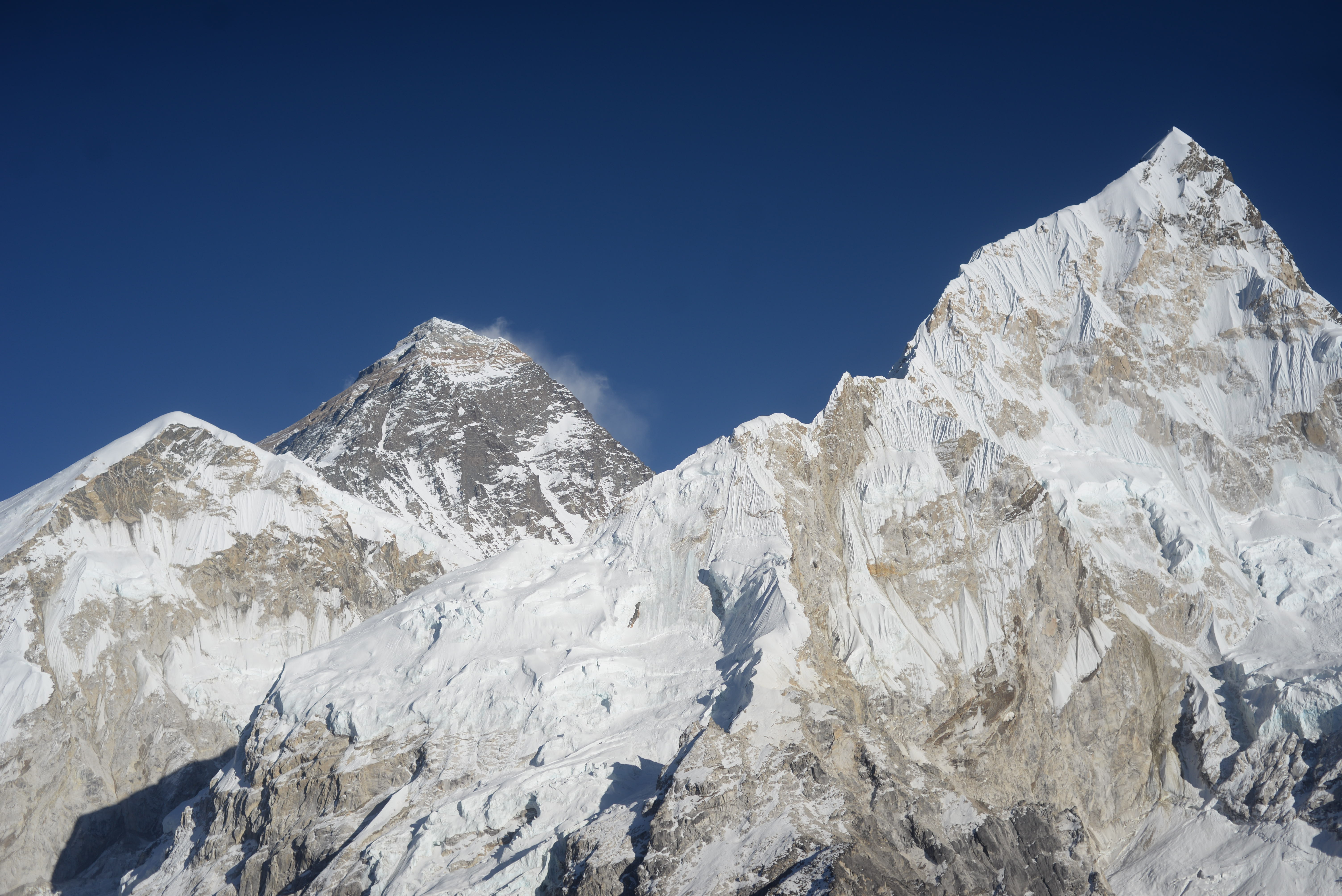
Weeks 1 to 3: Build the Base
3 cardio sessions per week, 35 to 45 minutes each: brisk walking, cycling, or light jogging. Conversation pace. Consistency over intensity.
2 strength sessions: squats, lunges, glute bridges, calf raises, clamshells, planks. 3 sets of 12 to 15 reps bodyweight. Add dead hangs from a bar for grip strength, 3 sets of 20 to 30 seconds.
Weekend hike: 2 to 3 hours on any terrain with 3 to 4kg in the actual trek daypack. Wear trekking boots from session one.
1 to 2 full rest days per week. Adaptation happens during recovery, not training.
Weeks 4 to 6: Add Stairs, Hills, Descents, and Upper Body
4 cardio sessions per week, 45 to 60 minutes. At least 2 on stairs or hills. This directly prepares the Phakding to Namche climb and the Renjo La approach.
Stair training: 30 minutes on real stairs twice a week. Include descents every session. Descending stairs builds the muscles that protect the knee on pass descents.
Introduce single-leg step-downs: step off a low box, lower the opposite foot slowly over 3 to 4 seconds. 3 sets of 8 per leg. This is the most important new exercise this phase. It directly trains the knee control demanded by the Renjo La scree descent, the Cho La eastern descent, and the entire return journey.
Pull-up progressions: if you can do pull-ups, add 3 sets of 6 to 8. If not, use a resistance band for assisted pull-ups, or do inverted rows. This builds the upper body engagement for Cho La's fixed rope section.
Dead hangs: increase to 45 to 60 seconds per set. Grip fatigue on the fixed rope at 5,400m is avoidable with specific preparation.
Weekend hike: 3 to 4 hours with 5 to 6kg. Include as much descent as possible, walk down a hill and back up multiple times.
Start back-to-back training days: hike Saturday and Sunday. The second day shorter is fine. The goal is teaching the body to move again before full recovery.
Weeks 7 to 10: Trek-Specific Load
4 to 5 sessions per week. Mix long steady cardio (60 to 75 minutes) with hill and stair repeats. Prioritise trail terrain over flat roads.
Your longest training day: one 6-to-7-hour hike with 7 to 9kg in the pack. This is the most important single training session in the plan. It reveals pack fit problems, hotspots, and any remaining fitness gaps before Nepal.
Stair training: increase to 45 minutes with loaded pack. Descend every session.
Strength: progress squats to goblet or barbell variation. Add Romanian deadlifts for hamstring and lower back endurance, heavily loaded on the long descents from Chukhung and from Namche to Lukla. Add farmer carries with heavy dumbbells, 3 sets of 40 metres, for grip and loaded carry endurance.
Single-leg step-downs: increase box height and add weight. By end of Week 10, aim for 3 sets of 10 per leg from a 40 to 50cm box under control.
Pull-ups or progression: 3 sets of 8 to 10. Add a bodyweight row variation to train the pulling movement under fatigue.
Back-to-back weekend days: attempt once with under 10 hours between sessions, simulating the real rest window on the trail. This specifically prepares Days 14 to 16.
Weeks 11 to 12: Sustained Load and Specific Simulation
Continue 4 to 5 sessions per week. Add one three-day consecutive hiking block if possible: Friday, Saturday, and Sunday. This is the closest simulation available to the Days 14, 15, and 16 sequence that defines this trek.
One 8-hour hike with full pack weight. Do not reduce weight at this stage. The body needs to have experienced this load before Kongma La day.
On the longest training hikes, practice the rest step: briefly lock the back knee on each step, letting the skeleton bear weight while breathing catches up. Practice pressure breathing alongside it: forceful pursed-lip exhale on every few steps. Both techniques pay off above 5,000m and both need to be automatic before Nepal.
Maintain strength and upper body work. Do not drop grip training in these weeks.
Weeks 13 to 14: Taper and Arrive Fresh
Reduce training volume by 40 to 50 percent. The fitness is locked in. The body needs time to absorb the training load before it is tested.
3 to 4 light sessions per week: easy walks, gentle cycling, stretching, foam rolling. Nothing new, nothing at high intensity.
One short hike (90 minutes) with the full trek daypack to confirm gear fit, no hotspots, and boot comfort under load.
Prioritise 7 to 9 hours of sleep per night. Arriving in Nepal well-rested is worth more than any session in this final window.
Complete all gear checks now. Microspikes, boots, pack fit, and cold-weather layer system must all be verified at home. Thangnak, Dzongla, and Lungden are not places to discover a problem.
What Each Exercise Prepares You For on the Everest Three Passes Trek?
Exercise | Prepares you for |
Squats and lunges | Sustained daily climbing: Phakding to Namche, Thame to Lungden, and the Renjo La approach from 4,380m to 5,360m. |
Single-leg step-downs | Eccentric knee control on all descents: Renjo La scree, Cho La eastern face, Chukhung to Tengboche (870m), and Namche to Lukla (580m). |
Romanian deadlifts | Hamstring and lower back endurance for the extended downhill sections on days 17 to 19, the most frequently underprepared section. |
Loaded glute bridges and clamshells | Hip stability that keeps the kneecap tracking correctly under load on every descent across the full circuit. |
Dead hangs and pull-up progressions | Grip strength and upper body endurance for the Cho La fixed rope ascent and the exposed section on the descent. |
Farmer carries | Loaded carry endurance for 7 to 9 hours daily with a full daypack. Shoulder and forearm endurance under sustained weight. |
Stair climbing with loaded pack | The stone-step terrain between Lukla and Namche, the Renjo La approach, and the sustained steep sections on all three pass days. |
Back-to-back weekend hikes | The cumulative fatigue pattern from Lobuche through Kongma La, specifically the Days 14 to 16 sequence where recovery becomes partial. |
Three-day consecutive hiking block | The specific physical demand of Days 14, 15, and 16 as a sequence. The most critical training simulation in the plan. |
Rest step practice on stairs | Above 5,000m on Renjo La, Cho La, Kongma La, and Kala Patthar: locking the back knee briefly to let the skeleton bear weight while breathing catches up. Needs to be automatic before Nepal. |
The recommended progression: Ghorepani Poon Hill or Annapurna Base Camp for a first Nepal trek, followed by EBC, followed by Three Passes. The Annapurna Circuit or Manaslu Circuit Trek can replace the EBC step for trekkers who want circuit experience before tackling the Khumbu. Each route in this progression builds specifically on what the previous one demanded. Arriving at Three Passes without any of these steps is possible but it is the version of this route that most commonly results in early evacuation or incomplete crossings.
Who Should and Should Not Do Everest Three Pass Trek?
This trek is right for you if: you have spent multiple consecutive nights above 4,000m before and know how your body responds. You can complete a 6-hour hike with a loaded pack and do it again the next morning. You have no unaddressed knee issues. You are prepared to treat the three-day sequence of Days 14 to 16 as the defining physical commitment of the route, not an afterthought.
This trek is not right for you if: EBC would be your first multi-day trekking experience above 3,000m. You have a history of knee problems that has not been addressed with a physiotherapist. You are planning to do this in under 18 days to save time. Or you are treating it as a harder version of EBC rather than a fundamentally different challenge.
Age is a weaker predictor than preparation. Guides have led trekkers in their late sixties who completed Kongma La comfortably and watched fit trekkers in their twenties struggle because general athletic fitness in one dimension, usually cardio, does not transfer to the specific demands of this specific route.
Continue Reading: Everest Three Passes Trek
On This Trek
Everest Three Passes Day-by-Day Breakdown : Every stage covered in full: terrain, conditions, and what to expect at each stop.
Best Time to Visit the Everest Three Passes Trek: Month-by-month conditions, pass-specific timing, and the honest seasonal verdict.
Altitude Sickness on the Everest Three Passes Trek: AMS, HACE, HAPE, the Lake Louise Score, and where risk concentrates on this route.
Everest Three Passes Food and Accommodation Guide: What teahouses look like at each stop and where facilities drop off sharply.
Everest Three Passes Packing List: What goes in the bag for glaciated terrain, multiple nights above 4,800m, and the Kongma La unsupported day.
Related Treks and Comparisons
Everest Base Camp Difficulty and Fitness Guide: The recommended prior route and the fitness benchmark for Three Passes preparation.
Annapurna Circuit Trek: Thorong La at 5,416m: comparable difficulty profile, different terrain and culture.
Manaslu Circuit Trek: Remote circuit trekking in a restricted permit zone with a comparable cumulative fatigue pattern.
Mera Peak Climbing: The next step after Three Passes for trekkers ready to move into mountaineering above 6,000m.
The Everest Three Passes trek is demanding in a way that rewards specific preparation more than general fitness. The trekkers who complete it well are not necessarily the strongest or the most experienced. They are the ones who understood exactly which days would be hardest, trained specifically for those days, and arrived at Lobuche on day thirteen with enough in reserve for what the next three days were going to ask.
That preparation is available to almost anyone willing to do it properly. The14 weeks above are the starting point.
Of the five physical demands this route makes, which one do you think is your weakest right now, and what is your plan for it?
Want to know if you are ready for this route? Talk to the Freedom Adventures team and we will give you an honest answer.
KEEP EXPLORING
Uncover similar insights
Month-by-Month Guide to do Everest Three Passes Challenge