

Table of Contents:

Best Time to Visit the Manaslu Circuit Trek
Month-by-Month Guide to Manaslu Circuit Trek with Tsum Valley
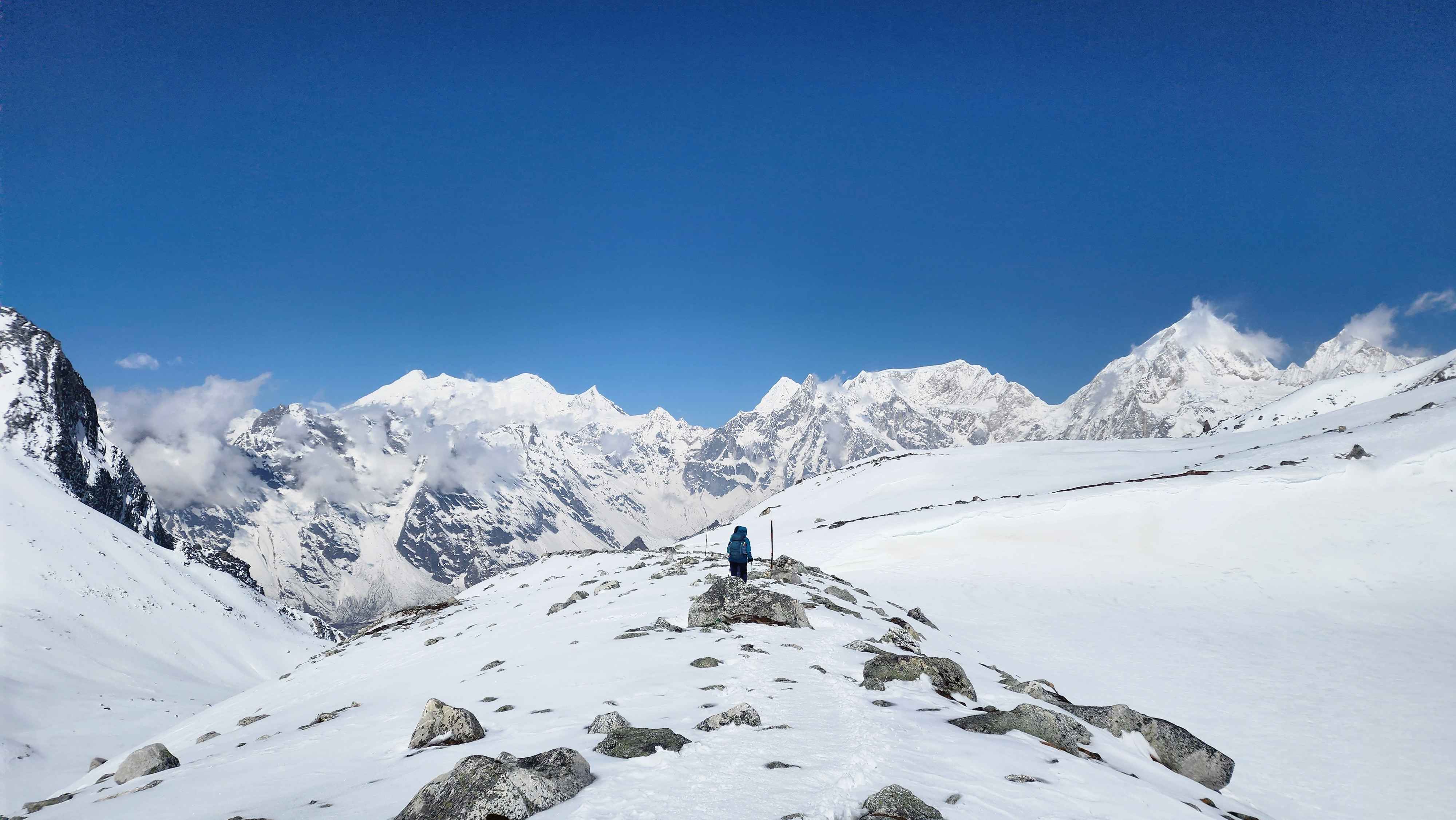
Choosing when to trek the Manaslu Circuit with Tsum Valley may be the first real decision you make before any other detail falls into place. That single choice decides what the trail underfoot looks like, whether Larkya La is a manageable snow walk or a genuine gamble, how cold Dharmasala gets at night, how many other trekkers you share Samagaon with, and whether Tsum Valley's forests are bare or in full rhododendron bloom.
Autumn, September to November, and Spring, March to May, are the only two windows worth planning around. Autumn provides the clearest skies of the year, the most stable snowpack on Larkya La, and the driest trail from Machhakhola all the way to Bhimthang. Spring provides milder temperatures at lower elevation, rhododendron forests in full bloom through Tsum Valley, and a livelier Samagaon shared with Manaslu's own climbing expeditions. Everything outside those two windows comes with trade-offs most trekkers aren't prepared for, and one of them, a closed Larkya La, doesn't just cost you a view.
If you had to pick a single best month for the safest possible pass crossing, October would be it. If you wanted the fullest, greenest version of the whole route, Tsum Valley in bloom included, April would be your answer.
When is the Best Time to Visit the Manaslu Circuit Trek?
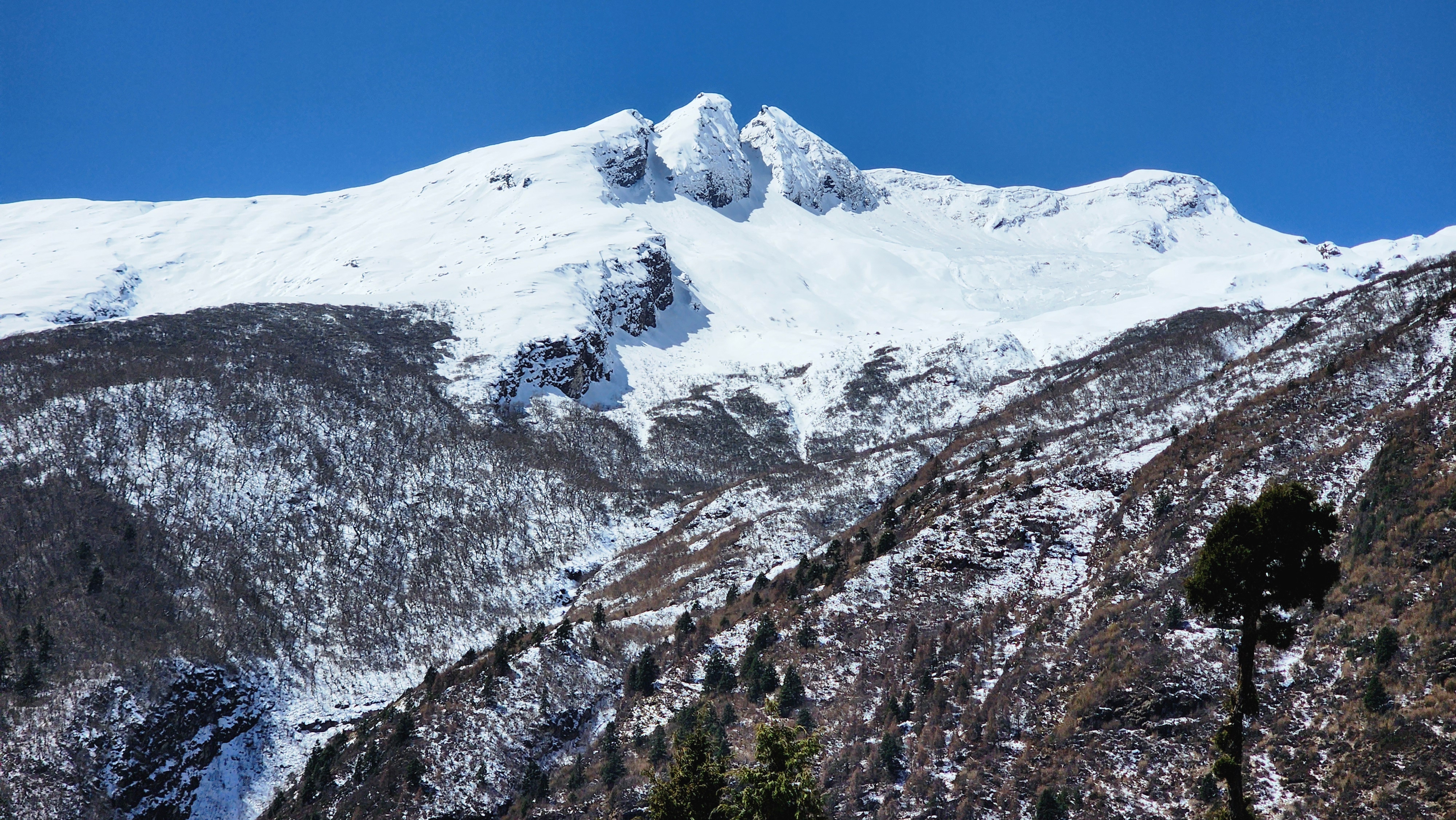
Ask this question about most treks in Nepal and the answer is a shrug toward spring and autumn. Ask it about the Manaslu Circuit Trek with Tsum Valley and the answer actually has teeth, because one wrong month doesn't just mean a cloudier photo, it can mean a closed pass with no way around it. Autumn, September through November, and spring, March through May, are the two-windows worth building a trip around. Outside them, you're either fighting monsoon rain and landslide risk on the lower trail, or heavy snow that can shut Larkya La down completely. That same rule holds trek for trek across Nepal, Everest Base Camp and the Annapurna Circuit both follow the identical spring and autumn pattern, so if you've researched either of those, this part of the calendar will already feel familiar.
Between the two windows, autumn is the safer, more predictable choice for the Manaslu Circuit Trek specifically. The monsoon has just washed the dust out of the air, trails are dry, and Larkya La sees its most stable conditions of the year. Spring runs a close second, warmer at lower elevations and better for rhododendron bloom through the Tsum Valley section, but with a higher chance of afternoon cloud and a slightly softer, muddier pass crossing in April as old snow starts to melt.
Why Does Timing Matter So Much on the Manaslu Circuit Trek?
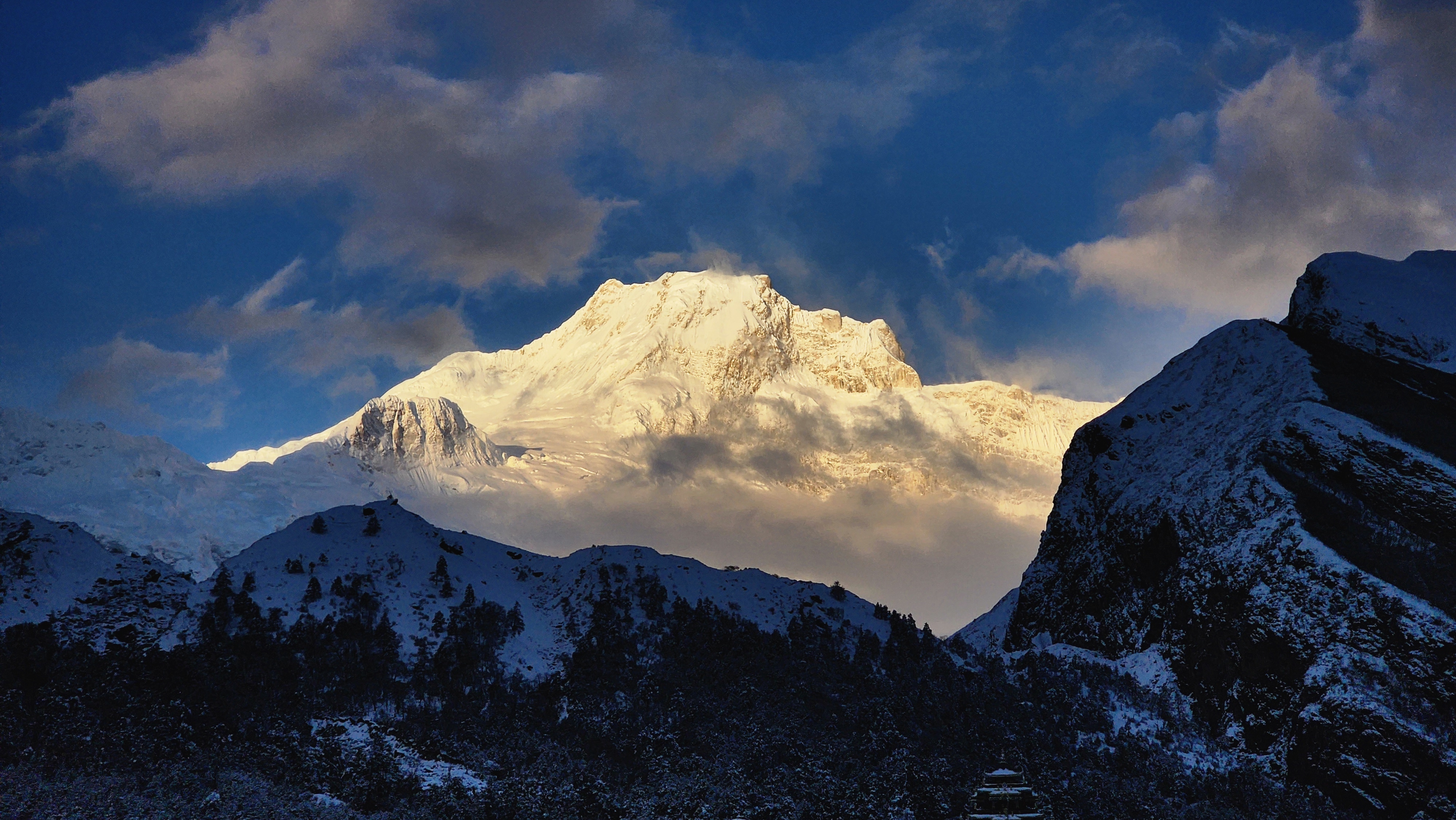
On the standard Everest Base Camp trek, a bad weather day is just a harder walk and a cloudier view. It's an out-and-back trail, so turning around costs you the summit photo and nothing else. The Manaslu Circuit Trek with Tsum Valley doesn't work that way. Larkya La is the only link between the Manaslu side of the route and the Annapurna side. There's no lower alternate trail, no road, no way around it. If the pass is closed when you reach Dharmasala, the only way out is to turn around and walk back the entire way you came, Samdo, Samagaon, Namrung, Deng, all the way to Jagat, adding the better part of a week to a trip that was supposed to be ending.
That puts Manaslu in the same category as the Annapurna Circuit, where Thorong La plays the identical single-gateway role, rather than in the same category as Everest Base Camp, where the trail forgives you because it was never one-way to begin with. It's also, worth saying plainly, less exposed than the Everest Three Passes trek, where three separate passes each carry their own weather risk and none of them can be skipped either, which raises the stakes of getting the season wrong even further than Manaslu does. Knowing which category your trek falls into before you book matters more than most people realize when they're just comparing photos of mountains.
Manaslu Circuit Trek Weather by Season
Four seasons, four genuinely different trails. Here's what actually changes in each one, and where it lines up or diverges from Everest and Annapurna's own calendar.
Spring on the Manaslu Circuit Trek (March to May)
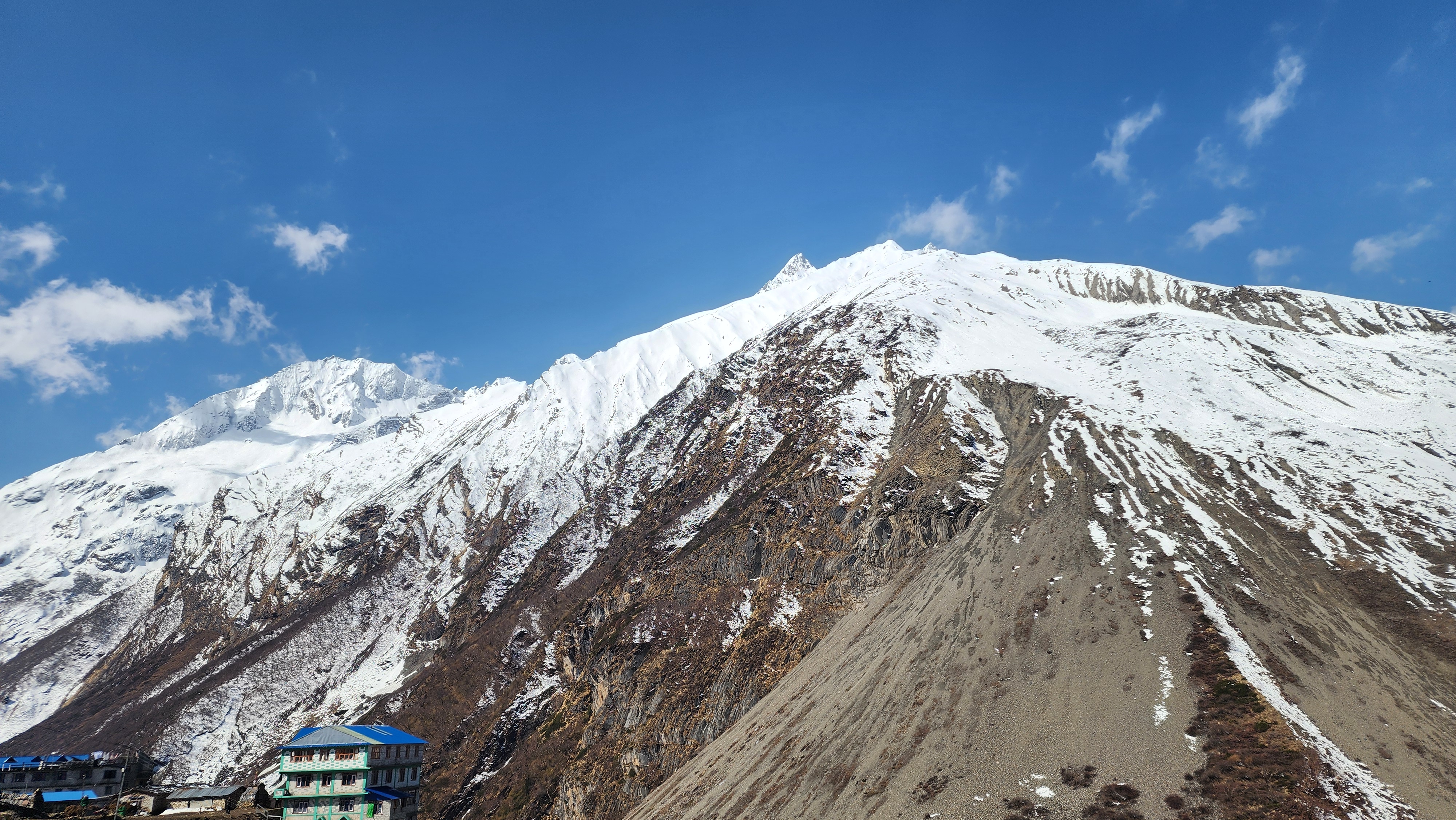
Spring opens with March still carrying winter's chill, daytime temperatures around 10°C to 15°C at mid elevation, nights still dropping below freezing above 3,500m, similar to what you'd feel on the Annapurna Circuit at the same elevation in the same month. By April, the trail warms considerably, rhododendron forests bloom hard through the lower Budhi Gandaki valley and into Tsum, and daytime temperatures at Samagaon, Samdo, and Bhimthang commonly reach 12°C to 20°C. Snow on Larkya La is generally manageable by April but can still be soft and muddy near the top as the previous winter's accumulation starts to melt. May is the warmest month of the year at lower elevations, sometimes hitting the mid-twenties in the Budhi Gandaki valley, but afternoon cloud builds more often as the month goes on, a sign the monsoon is approaching.
Spring's Hidden Bonus
Spring on the Annapurna Circuit is often called the wholesome season, mild weather and rhododendron corridors from Ghorepani to Tadapani that draw the biggest crowds of the year. Manaslu's version of that same bloom runs through Tsum Valley instead, just as vivid, with a fraction of the people competing for the same photo. Spring is also when Manaslu's own climbing expeditions set up at Samagaon, so don't be surprised to share a teahouse with climbers prepping for the summit rather than just fellow trekkers.
Monsoon on the Manaslu Circuit Trek (June to August)
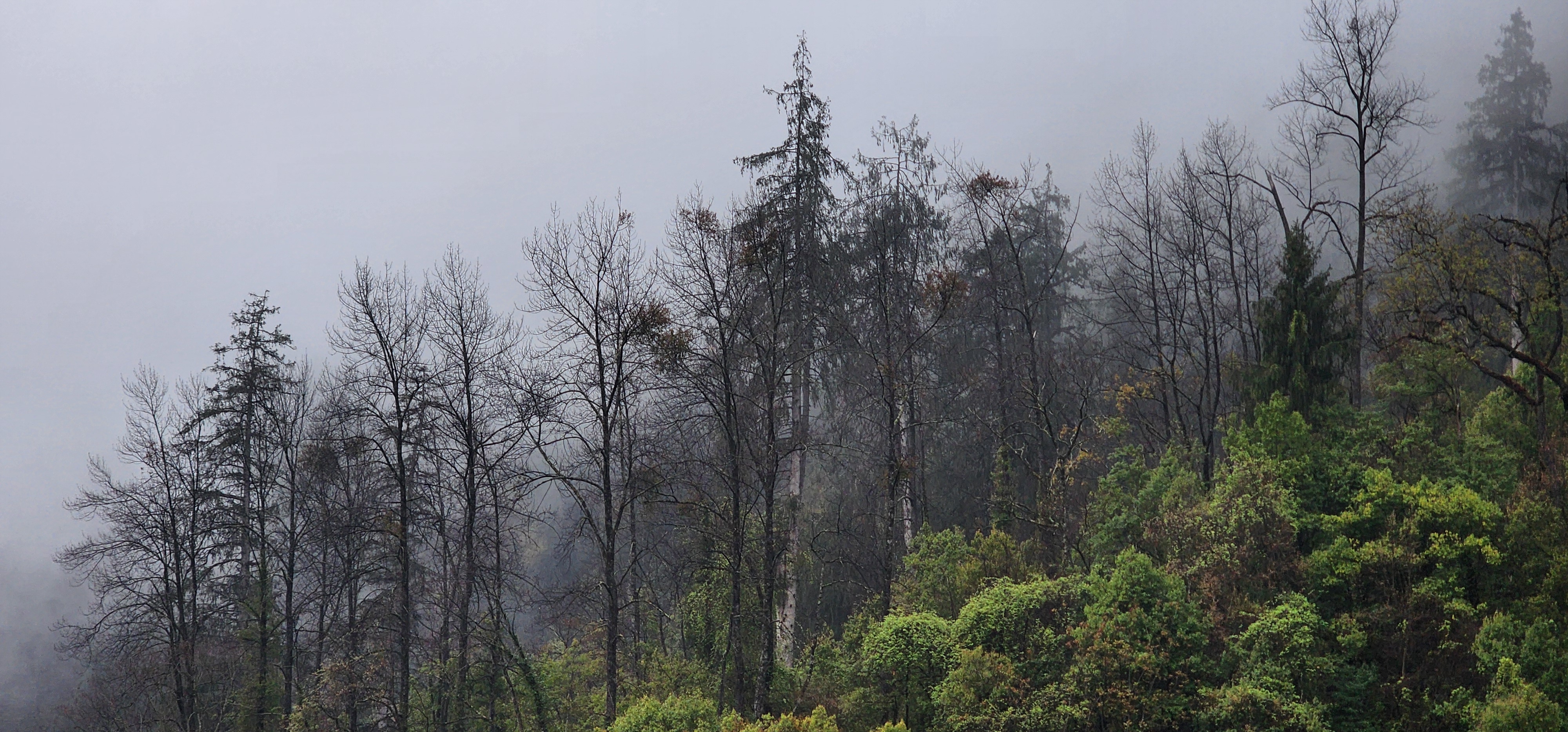
Monsoon typically arrives in Nepal in mid June and holds through most of September, and this is the one season where the trail genuinely fights back. Heavy, frequent rain floods the lower valley below Namrung, rivers rise fast enough to shift the safe crossing point on a suspension bridge overnight, and leeches turn active in the forested stretch between Machhakhola and Deng. Cloud sits low enough most days to erase the mountain views entirely, and the payoff most people come for, Manaslu appearing over Namrung, or the summit view from Larkya La, mostly disappears behind grey sky for weeks at a stretch.
Can I trek the Manaslu Circuit in June or during monsoon?
Technically yes, but almost nobody should. Higher up, Tsum Valley and the Nubri valley get some shelter from the worst of it thanks to Manaslu's own rain shadow effect, similar in principle to how Manang stays noticeably drier than the rest of the Annapurna Circuit, but that shelter is partial here, nowhere near as complete as it is on the Annapurna side. This remains the least recommended season on the entire calendar, and most agencies discourage it outright.
Monsoon's Silver Lining
It isn't all bad news. The lower valley turns genuinely lush, waterfalls that are a trickle by October run full and loud, and Tsum Valley's partial rain shadow means Chumling and Chhokangparo sometimes sit in sunshine while Jagat, a few days back down the trail, is socked in with rain. It's not a reason to book this window, but if monsoon travel to Nepal is already locked in for other reasons, this is the more forgiving half of the route to be on.
Autumn on the Manaslu Circuit Trek (September to November)
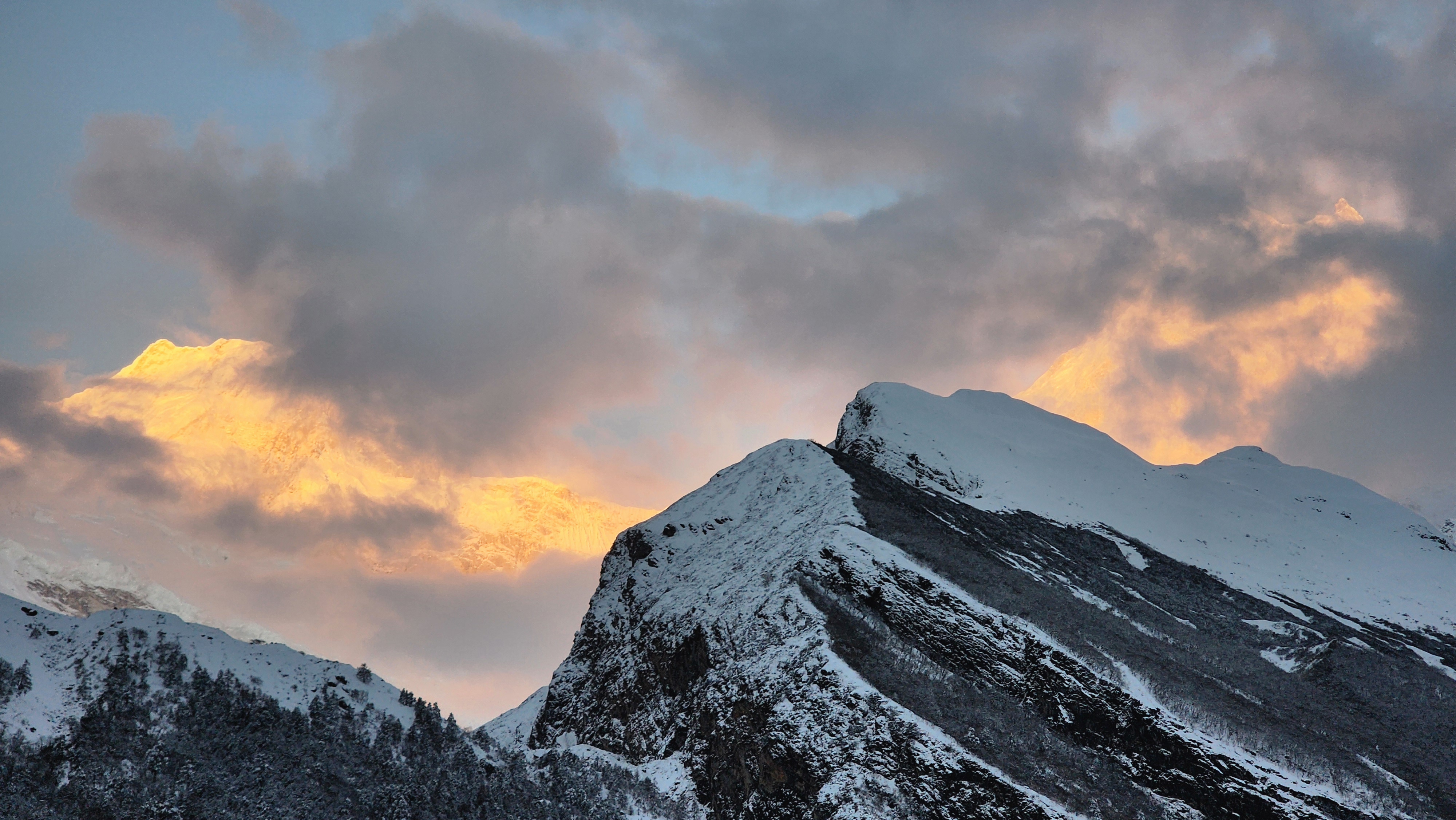
Early September can still carry the tail end of monsoon moisture, occasional rain and high humidity in the lower valley, but by late September the skies clear fast, and October arrives as the most reliably stable month of the entire route, dry trails, minimal cloud, and daytime temperatures in the 12 to 20°C range depending on elevation. Nights get cold fast above 3,500m, often down to -10 to -15°C at Samdo and Dharmasala, roughly what Lobuche sees on the Everest Base Camp trail in the same month. November holds the same clarity with slightly colder nights, and by late November crowds thin out fast as winter approaches.
Is October a good time for the Manaslu Circuit Trek? Yes, and by most measures it's the single best month of the year to go, the most reliable window this guide can offer without a caveat attached.
Autumn's Hidden Bonus
Autumn overlaps with Dashain and Tihar, Nepal's two biggest festivals, usually falling between late September and mid November depending on the lunar calendar. Villages along the lower trail celebrate both, which can mean warmer hospitality and a livelier atmosphere in teahouses, but also occasionally a family-run lodge running with reduced staff while relatives travel home. Worth asking your guide what's happening locally if your dates land near either festival.
Winter on the Manaslu Circuit Trek (December to February)
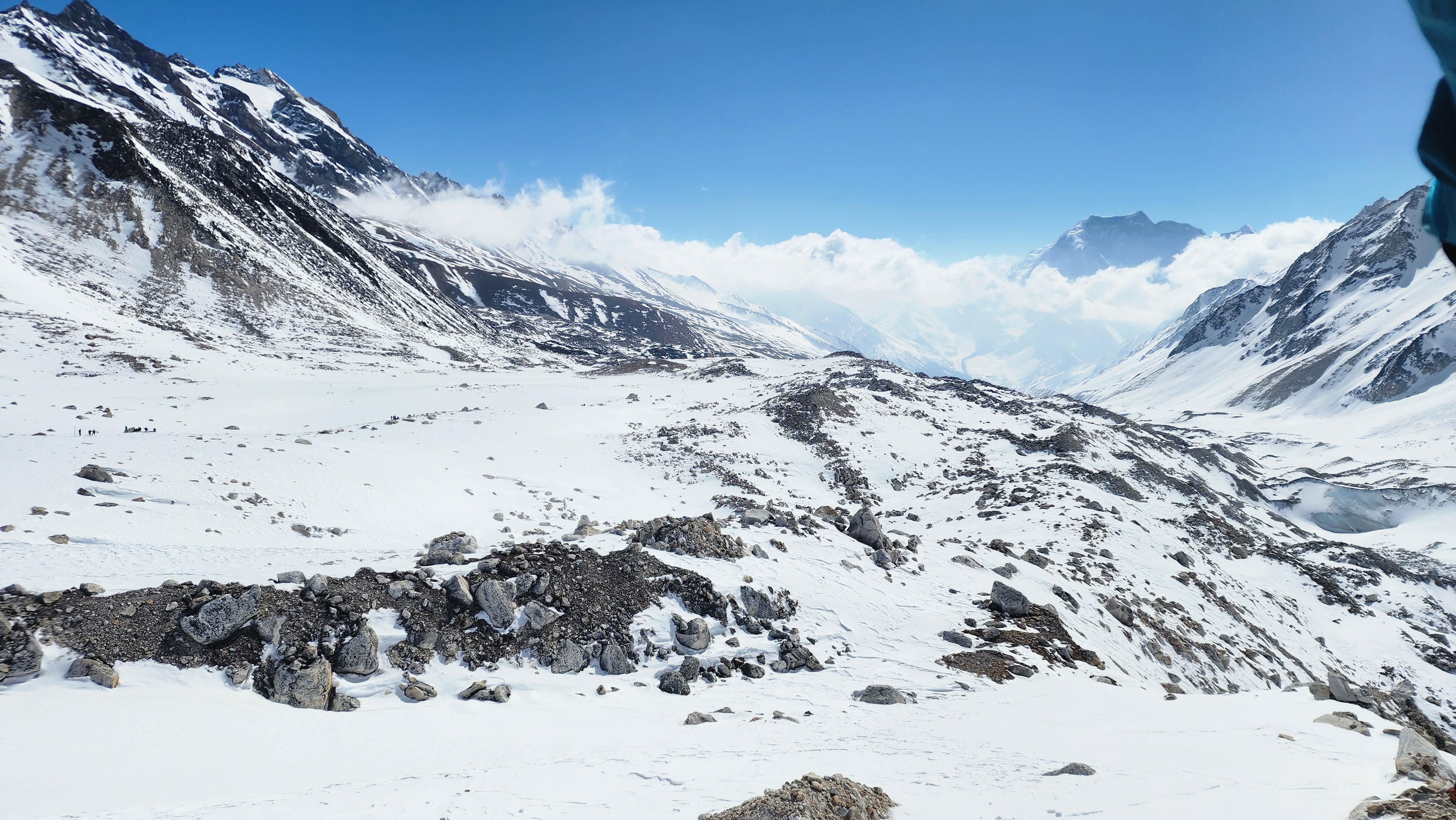
December starts cold and gets colder fast. By the second half of the month, many locals in Samdo and Dharmasala move down to lower villages for the season, and a number of teahouses close entirely. January is the coldest month on the entire route, with night temperatures near Larkya La commonly falling between -15°C and -25°C, colder than almost anywhere on the Everest Base Camp or Annapurna Circuit trails at the same time of year, and the pass itself frequently buried under enough snow to be closed or genuinely dangerous to cross. February starts to thaw slightly but remains firmly winter conditions at altitude.
How risky is winter on the Manaslu Circuit Trek?
Risky enough that this window belongs to experienced winter trekkers with the right gear and a guide who knows exactly when to turn back, not a first high altitude trip.
Winter's Hidden Bonus
Winter gives the sharpest, clearest mountain views of the entire year, cold, dry air with none of the haze that builds up by late spring. Villages that empty out for the season also mean the handful of teahouses still open give you their full attention, no queue for the dining room stove, no competing for the last room in Samagaon.
How Cold Does the Manaslu Circuit Trek Get?
Cold enough to matter, and it changes fast depending on where you are and what season you picked. At the warmest point of the trek, the subtropical lower valley near Machhakhola, daytime temperatures can reach the high twenties even in spring. At the coldest point, Dharmasala just before Larkya La, winter nights fall to -20°C or lower. That's close to a 50° swing across one single itinerary, wider than almost any other standard trek in Nepal covers, including Everest Base Camp, where the coldest point, Gorak Shep and Kala Patthar, rarely gets meaningfully colder than Dharmasala does even in peak winter.
The number that actually explains all of this: temperature drops roughly 6.5°C for every 1,000m you climb. A mild 18°C afternoon in Machhakhola tells you almost nothing about what Dharmasala, roughly 3,600m higher, will feel like that same night.
Pack for the Coldest Point, Not the Warmest
Pack for Dharmasala and Larkya La, not for the day you're currently standing in. A four season sleeping bag rated to at least -20°C is the baseline for this trek in any month outside peak summer, and non negotiable from October through March.
Manaslu Circuit Trek Temperature Month by Month
Approximate day and night temperature ranges, and what's actually happening on the trail and at Larkya La, for every month of the year.
Month | Day Temp | Night Temp (high camps) | Views | Larkya La | Crowds |
January | -5 to 5°C | -20 to -25°C | Sharp and clear, haze free | Often closed | Very low |
February | 0 to 8°C | -15 to -20°C | Clear | Frequently snow blocked | Very low |
March | 10 to 15°C | -5 to -10°C | Good, some haze building | Clearing, some snow | Low to moderate |
April | 15 to 20°C | 0 to -5°C | Excellent | Manageable, can be soft | High |
May | 18 to 25°C | 0 to -5°C | Good, declining late month | Manageable, more cloud | Moderate |
June | 20 to 28°C | 0 to 5°C | Poor | Rising risk | Very low |
July | 20 to 28°C | 0 to 5°C | Very poor | High risk, avoid | Very low |
August | 20 to 27°C | 0 to 5°C | Very poor | High risk, avoid | Very low |
September | 15 to 22°C | -5 to -10°C | Improving, some cloud | Clearing mid month | Moderate, rising |
October | 12 to 20°C | -10 to -15°C | Best of the year | Most stable of the year | Very high |
November | 10 to 18°C | -10 to -15°C | Excellent to good | Excellent, colder | High, thinning late month |
December | 0 to 10°C | -15 to -20°C | Clear but cold | Risk increasing fast | Low |
Leech and Landslide Warning
Leeches are active and common in the forested lower valley through monsoon, particularly between Machhakhola and Jagat. Landslide risk on this same stretch peaks in July and August, and agencies routinely build in delay days for exactly this reason during monsoon departures.
Avalanche Warning
Winter snow loading on the slopes above Larkya La raises genuine avalanche risk, not just a difficult, cold walk. This window is for experienced winter trekkers with a guide who is prepared to turn back, and it should never be attempted as a first high altitude trek.
What is the Weather Like at Larkya La Pass?
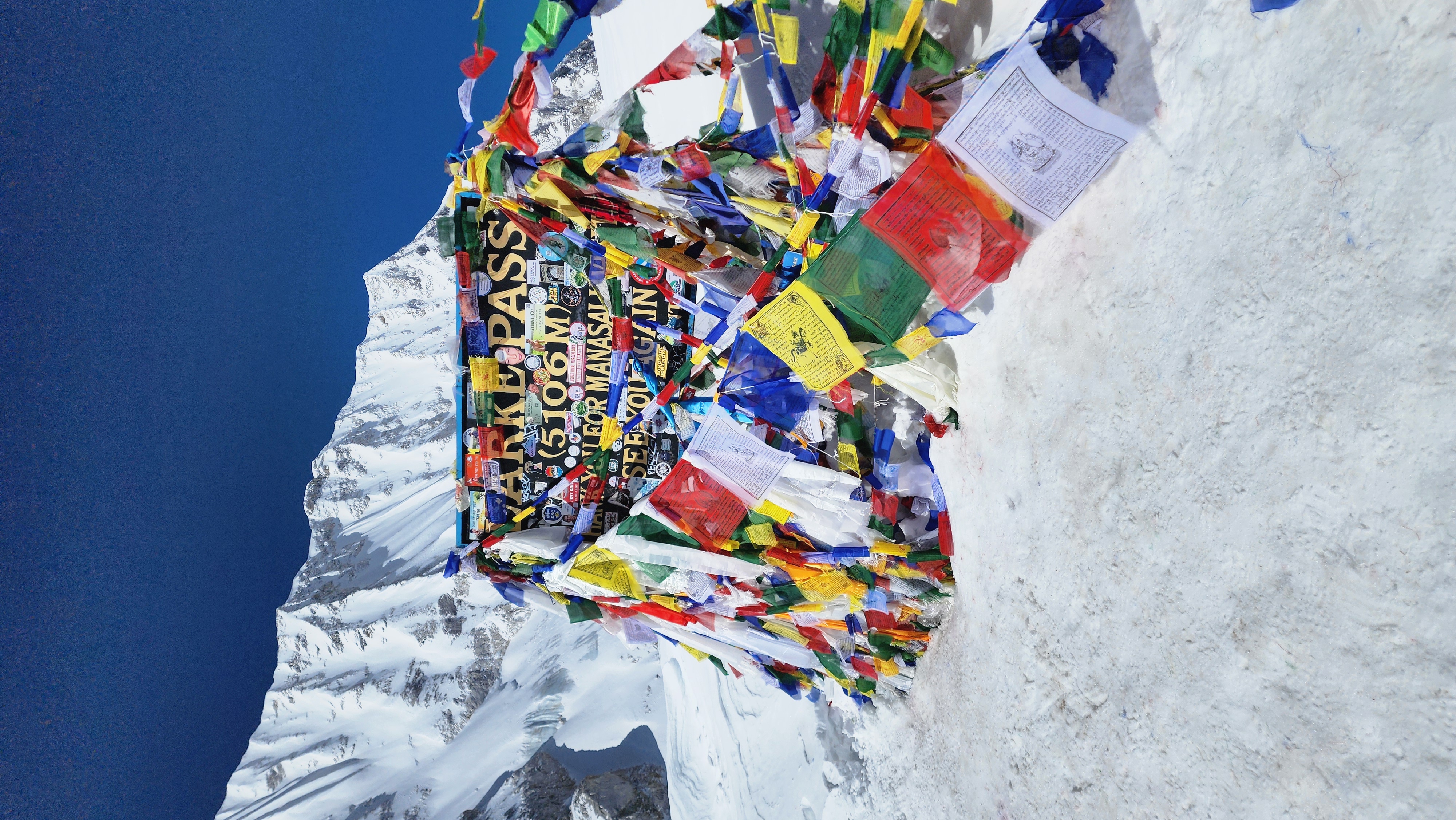
Larkya La sits at 5,106m.
For scale, the pass sits a little lower than Everest Base Camp's Kala Patthar viewpoint at 5,545m, though crossing it, rather than just standing at the bottom looking up, makes the comparison feel closer than the numbers suggest. It also demands a narrower, more stable weather window than Mera Peak's summit push at 6,476m needs, if only because Mera climbers plan for technical snow conditions from the outset while Larkya La trekkers sometimes don't, and it's a fundamentally different kind of crossing than the Everest Three Passes trek's Cho La, which involves an actual glacier traverse. Larkya La is not glaciated. It's a long, cold, exposed walk over moraine and snowfield, which makes it less technical than Cho La but no less serious when the weather turns.
The Crossing isn't One Risk, It's Three, and Season Changes Each Differently
The first stretch out of Dharmasala crosses loose rocky moraine in the dark. This stage is at its worst in winter, when ice glazes the rock surface and ankles roll more easily than any other season would allow.
The middle stretch crosses open snowfields below the summit, and this is where season matters most directly.
Autumn snow is settled and consolidated from the summer's accumulation, generally the firmest, most predictable footing of the year.
Spring snow, especially in April, is still thawing from winter, meaning microspikes usually suffice but the surface can turn soft and slushy by midmorning if the group is running late.
Winter snow is deep, unconsolidated, and carries real avalanche loading risk on the slopes above the trail.
Monsoon moisture rarely reaches the pass as rain, it falls as unstable, wet snow instead, arguably the least predictable surface of any season.
The final push to the summit is short but exposed to wind regardless of season, and this is the stage where afternoon cloud and wind become the deciding factor no matter what the snowpack underfoot is doing.
Cyclones forming in the Bay of Bengal after monsoon occasionally track northwest and dump heavy, unseasonal snow on Nepal's high passes in late October or early November. Cyclone Hudhud did exactly this in 2014, causing fatalities on the Annapurna Circuit. The remnants of Cyclone Montha did it again in late October 2025, tracking into Nepal and dumping heavy snow across the Annapurna, Manaslu, and Everest regions between October 27 and November 1. Trekkers attempting Larkya La that week were caught in whiteout conditions and stranded mid crossing, and helicopter rescue was grounded for days by the same weather, as far away as Lobuche on the Everest Base Camp trail. This isn't a reason to avoid October, it's still the most reliable month on the calendar. It's a reason to keep your return dates flexible and confirm your travel insurance covers itinerary disruption, not just medical evacuation. Season narrows your odds. It has never guaranteed them.
How Crowded is the Manaslu Circuit Trek by Season?
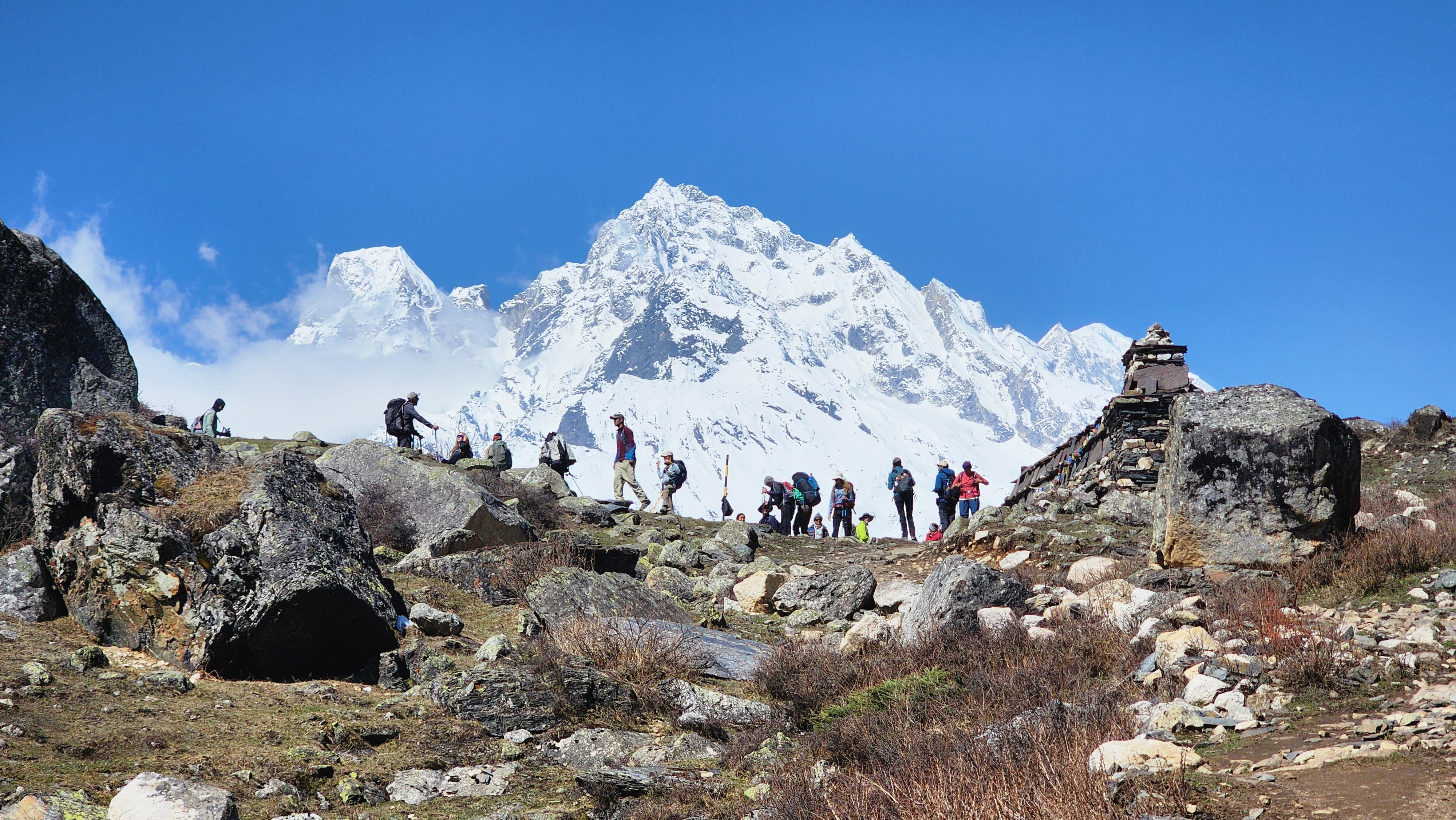
The busiest stretch of the whole route is Namrung to Samagaon in October and April, where lodges fill fast and booking a day or two ahead genuinely matters. Dharmasala never has more than a handful of rooms regardless of season, since it exists purely to support the pass crossing, so a crowded October doesn't actually mean a crowded Dharmasala, it means a full Samagaon the night before you get there.
Tsum Valley, even at the height of autumn, stays noticeably quieter than the main circuit corridor, partly because far fewer trekkers add the extension at all, and partly because its teahouse capacity was never built for volume in the first place. Late March, early September, and late November offer close to peak season conditions with a fraction of the people, the same shoulder season logic experienced trekkers already use on Everest and Annapurna.
How Manaslu's Season Compares to Other Nepal Treks?
The spring and autumn rule holds across almost every major trek in Nepal, but the details underneath it vary more than people expect.
Trek | Best Months | Max Elevation | Seasonal Note |
Manaslu Circuit + Tsum Valley | Mar–May, Sep–Nov | 5,106m | Single gateway pass, no glacier crossing, but no bypass either if it closes |
Mar–May, Sep–Nov | 5,545m (Kala Patthar) | Out and back trail, no gateway pass, the most forgiving weather structure of this list | |
Mar–May, Sep–Nov | ~5,535m | Three separate weather dependent crossings, including a real glacier traverse at Cho La | |
Mar–May, Sep–Nov | 5,416m (Thorong La) | Same single gateway pass structure as Manaslu, plus a genuine rain shadow at Manang | |
Mar–May, Sep–Nov | 4,130m | Lower altitude means a shorter, more forgiving weather window on either side of peak season | |
Apr–May, Oct–Nov | 6,476m | A climbing peak, not just a trek, needs a stable summit weather window, not merely decent trail weather | |
Langtang Valley | Mar–May, Sep–Nov, workable in winter | ~4,984m (Tserko Ri) | No high pass to cross, so winter is genuinely viable here in a way it isn't on Manaslu |
Mar–Apr, Oct–Nov | 3,210m | Best rhododendron bloom in Nepal along the Ghorepani-Tadapani stretch, low altitude keeps most months workable except monsoon |
Which Month Should You Actually Book for Manaslu Circuit Trek?
Choose October or Early November If
You want the safest, most predictable Larkya La crossing of the year and don't mind booking teahouses ahead of time or sharing the trail with more people through Namrung and Samagaon.
Choose April If
You want warmer daytime temperatures, rhododendrons in full bloom through Tsum Valley, and can accept a slightly softer, muddier pass crossing and the same booking pressure as October.
Choose Late March or Late November If
You want most of the benefits of peak season with noticeably fewer people on the trail, and you're prepared for colder nights than the true peak months bring.
Avoid June Through August Unless
You have significant high altitude experience, a flexible schedule that can absorb weather delays, and a guide who has run this route in monsoon before. Otherwise, this window isn't worth the risk for the payoff.
Continue Reading: Manaslu Circuit Trek
On This Trek
Manaslu Circuit Trek Day by Day Itinerary. Every stage of the route, terrain, elevation, and a real callout for each day, from Kathmandu back to Kathmandu.
Manaslu Circuit Trek Food and Accommodation Guide. What teahouses actually look like at each stop, and exactly where facilities drop off above Samagaon.
Manaslu Circuit Trek Difficulty and Fitness Guide. What this route demands physically, and how to train for three weeks at altitude with a single non by passable pass at the end.
Manaslu Circuit Trek Packing List. What goes in the bag for a route spanning subtropical valley floor to a 5,106m pass.
Seasonal Comparisons and Related Treks
Best Time for the Everest Base Camp Trek. Why an out and back trail forgives bad weather in a way this route doesn't.
Best Time for the Everest Three Passes Trek. Three weather dependent crossings, including a real glacier traverse, instead of Manaslu's one.
Best Time for the Annapurna Base Camp Trek. Month by month guide to the base camp
Mera Peak Climbing Season. The natural next step for trekkers ready to move from trekking into technical climbing.
If you already have travel dates in mind, tell us and we'll tell you within a few minutes whether they land in a strong window or one worth shifting by a couple of weeks, and exactly what that means for your gear list and your buffer days around Larkya La. If you don't have dates yet, tell us whether quiet trails or guaranteed weather matters more to you, and we'll work backward from there.
So, are you chasing the clearest sky of the year, or the trail almost nobody else is walking that same week?
KEEP EXPLORING
Uncover similar insights
Day-by-Day Demands, Training Plan, and Mental Grit
Month-by-Month Guide to do Everest Three Passes Challenge