Table of Contents:

Best Time to Visit Annapurna Base Camp
Month-by-Month Guide
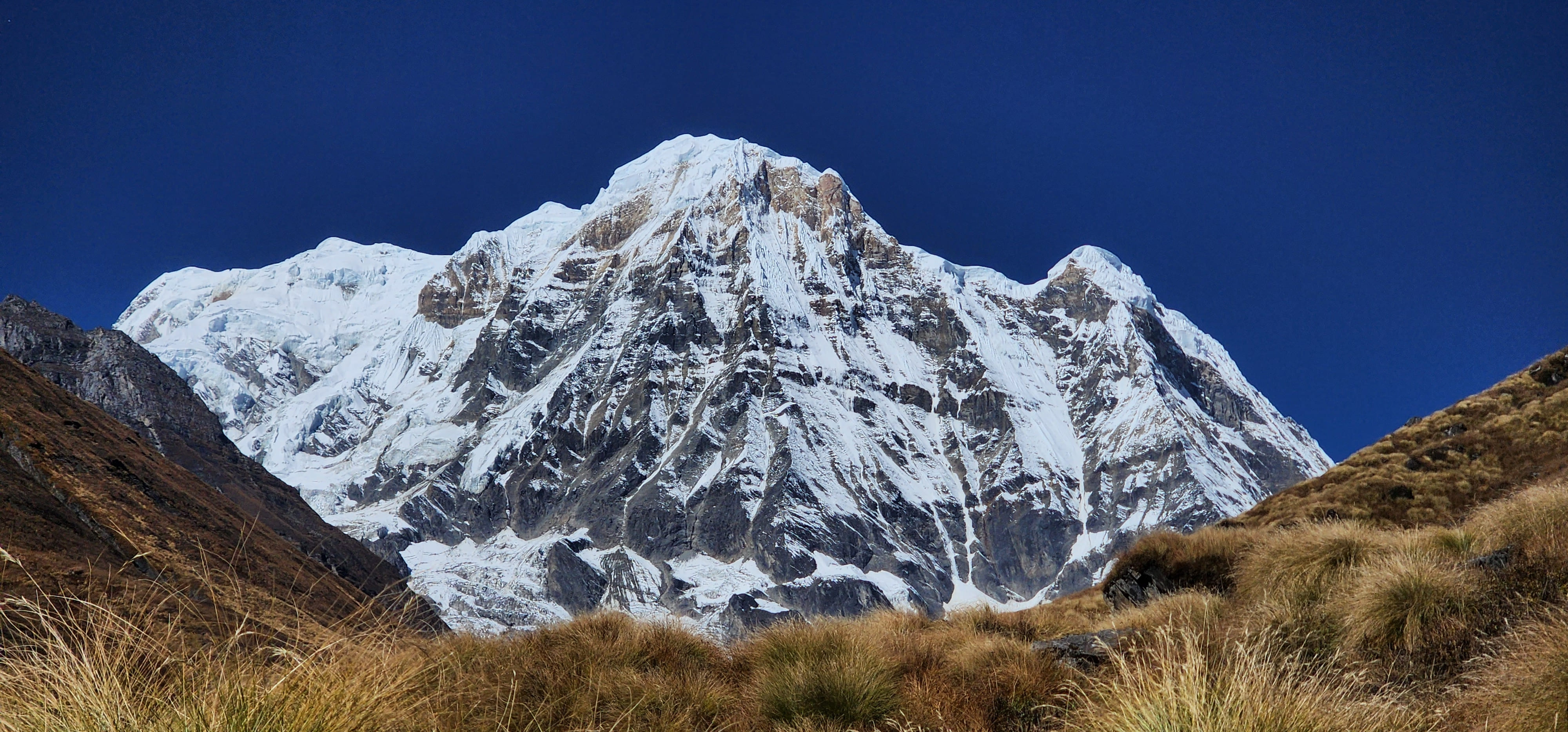
Choosing a time for a trek to Annapurna Base Camp may be the first decision you have to make before making any others. The choice of season will dictate everything from what the trail looks like; what the sky looks like above the basecamp; how cold the nights will be; how many people will be in the basecamp amphitheater and whether the forest along the trail will be bare or blooming.
Spring (March to May) and Autumn (September to November) are the only two seasons worth planning for. For example, spring provides a warm climate; the beautiful flowering rhododendron trees are in bloom; and relatively mild temperatures. Fall provides crystal clear skies; and some of the sharpest mountain views throughout the year. Everything outside those windows comes with trade-offs that most trekkers are not prepared for.
If you could select a single best month for viewing mountains; then October would be the Month with the clearest views. If you were looking to see the entire landscape in all its glory, then April would be your best option.
Why Timing Matters More on This Trek Than Most
Annapurna sanctuary is located at an elevation of 4,130m, within a glacial valley surrounded by peaks that exceed 6,000m. The area lies south-facing within the southern flanks of the Himalayas directly in line with where the monsoon rains emanate from the Bay of Bengal.
According to The Department of Hydrology and Meteorology (DHM) of Nepal, the southern slopes of Annapurna receive greater than 5,000 mm annually of precipitation; placing them amongst the top in terms of total amount received in Nepal. Approximately eighty percent (80%) of that amount is precipitated during June thru August.
This creates a unique situation regarding the trail itself. The different parts of the trail change dramatically depending upon the time of year. The gorge portions; forested areas; base camp surroundings; and even the stone staircases vary greatly. Although choosing the wrong time will merely create a less-than-desirable environment for hiking, it will also render your hike potentially dangerous during monsoon periods due to increased rain fall totals and flash flooding potential.
Altitude Sickness (AMS)
The ABC route climbs fast. In a few days you move from subtropical river valleys to over 4,000 meters, with fewer built-in acclimatization stops than routes like Everest Base Camp. AMS is a real risk regardless of fitness level. Symptoms include persistent headache, nausea, dizziness, and disrupted sleep. The protocol is consistent across all seasons: ascend gradually, drink 3–4 liters of water per day, and descend immediately if symptoms do not improve overnight.
Quick Reference: Annapurna Base Camp by Season
Season | Months | Max °C at ABC | Min °C at ABC | Sky | Trail |
Spring | Mar–May | 4 to 14 | -8 to 0 | Clear mornings, some afternoon cloud | Fully open |
Monsoon | Jun–Aug | 16 to 19 | 3 to 7 | Heavy cloud and rain | Muddy, landslide risk |
Autumn | Sep–Nov | 11 to 20 | -10 to 0 | Clearest of the year | Dry and fully open |
Winter | Dec–Feb | 5 to 9 | -20 to -14 | Clear but cold | Snow above 3,500 m |
Spring (March to May)
Spring is the season most repeat trekkers choose when they come back.
The combination of moderate temperatures, stable weather, and the rhododendron forests in full bloom produces a trek that is not just a walk to a base camp but a complete landscape journey. The approach sections through Ghorepani and Tadapani in March and April are among the most visually striking stretches of any trek in Nepal, at any time of year.
The Rhododendron Window
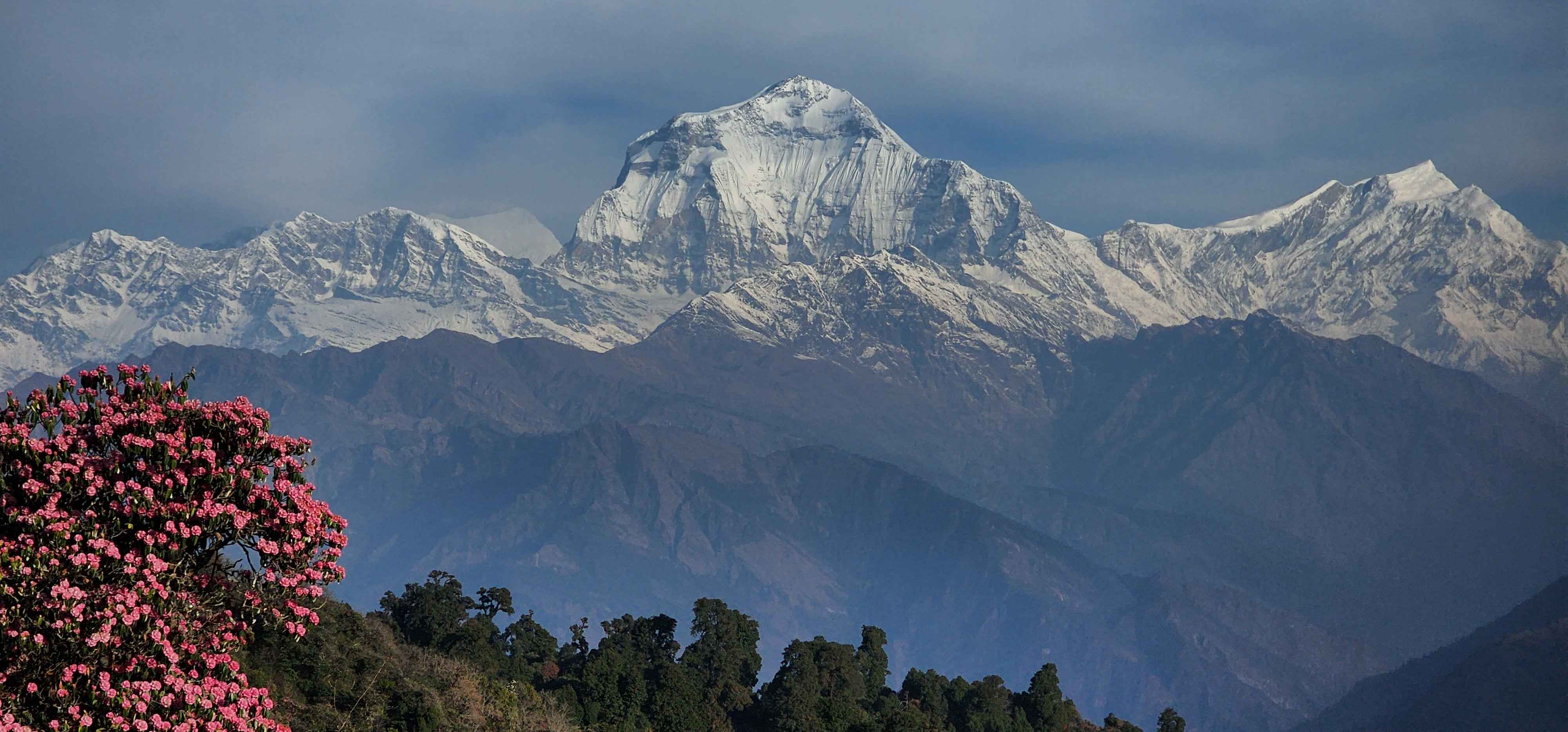
The Ghorepani region contains one of the largest rhododendron forest concentrations in the world. ACAP documents 16 rhododendron species in this zone, with Rhododendron arboreum, Nepal's national flower, growing to 15 to 20 meters in height. In peak bloom, the forest canopy closes over the trail in red, pink, and white.
Elevation Range | Bloom Period | What You See |
2,000 to 2,500 m (Nayapul to Ulleri approach) | Late February to March | First crimson blooms; R. arboreum leading the season. |
2,500 to 3,000 m (Ghorepani core, Tadapani corridor) | Late March to mid-April | Peak bloom with full red, pink, and white canopy across the forests. |
3,000 to 3,800 m (above Sinuwa, approach to sanctuary) | Late April to May | Final high-altitude species, often white and cream, framed by lingering snow on the peaks above. |
Best Bloom Window
The overlap window where all three elevation zones are blooming simultaneously runs from roughly the last ten days of March through the first ten days of April. The bloom moves upward with the season, so this narrow period is the only time the full red-to-white gradient is visible at once.
Spring Weather: What It Actually Does
The pre-monsoon westerly pattern keeps the region broadly stable. Mornings are reliably clear across all elevations from March through April. Afternoons develop cloud, but below 4,000 metres this rarely closes completely or produces meaningful rain until late May.
By May, the leading edge of the monsoon begins building afternoon precipitation. Mountain views from ABC are still excellent in the morning hours, but the window of clear conditions narrows to the first two to three hours after dawn. Wind increases at altitude through April and May. At Machhapuchhre Base Camp and ABC, spring wind can be sharper and colder than the air temperature alone suggests.
Spring Temperatures at ABC
Month | Avg Max (°C) | Avg Min (°C) | What to Expect |
March | 4 | -8 | Cold nights, improving days. Snow possible above 3,500m. |
April | 8 | -4 | Best spring conditions. Stable days, cold nights. |
May | 14 | 0 | Warmest spring month. Afternoon cloud builds from mid-month. |
Sleeping Bag Note
In April, days reach 8°C but nights drop to -4°C at ABC. That 12-degree swing within a single day catches unprepared trekkers out. A sleeping bag rated to -10°C is the minimum for April at MBC and ABC. A -15°C rating is preferable for March.
Monsoon (June to August)
Avoid monsoon unless you know exactly what you are accepting.
The Annapurna southern slopes above Pokhara receive some of the heaviest monsoon rainfall in the country. From June through August, the gorge section between Sinuwa and Deurali, already the highest landslide and rockfall risk on the entire route in normal conditions, has active debris fields rather than stable ones.
Landslide Warning
The Sinuwa to Deurali section carries the highest rockfall risk on this route. In monsoon, debris fields are actively moving, rockfall follows every heavy rain event, and the Nepal government issues periodic warnings for this corridor during peak monsoon months. Move through all debris zones without stopping. Do not linger under cliff faces after heavy rain under any circumstances.
What Monsoon Does to the Trail
The stone staircases become slippery from continuous moisture and moss growth. The lower forest trail produces leeches from roughly July. Mountain views above 3,500m are blocked by cloud for the majority of daylight hours. The gorge carries the sound of the river you cannot see and rocks you need to move through quickly.
Some trekkers do choose monsoon deliberately. The trail is almost empty. The lower gorge is intensely green in a way no other season produces. The waterfalls above Deurali run at full volume. These are real rewards, but they sit alongside real risks.
Monsoon Temperatures at ABC
Month | Avg Max (°C) | Avg Min (°C) | What to Expect |
June | 16 | 3 | Monsoon onset. Trail muddy. Cloud frequent above 2,000m. |
July | 18 | 6 | Peak monsoon. Maximum rainfall. Landslide risk at its highest. |
August | 19 | 7 | Heaviest month. Thick persistent cloud. Brief clearings are rare. |
Autumn (September to November)
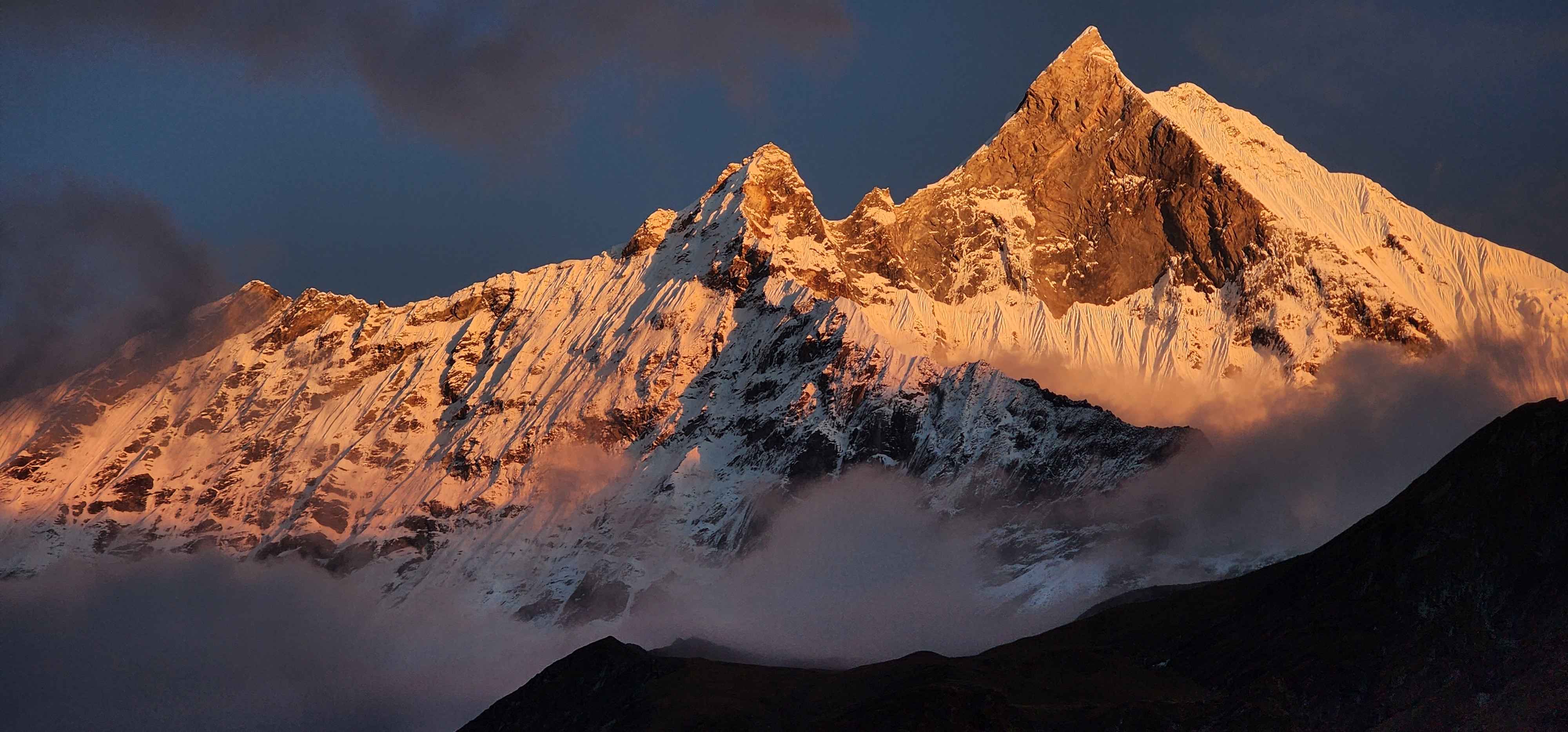
The post-monsoon air is the cleanest of the year. Months of rain strip the atmosphere of dust and particulate, and what replaces the monsoon is a high-pressure system over the Tibetan Plateau pushing dry, stable air south across the Himalayas. Visibility from ABC in clear October conditions can exceed 100 kilometers. The Dhaulagiri massif to the northwest, appears with definition. Annapurna I's upper snowfields are sharp to the ridgeline in a way that spring's marginal haze does not allow.
September: The Overlooked Window
Late September is one of the most underrated windows on the entire ABC calendar. By the third week, conditions are generally stable, the lower gorge is at its most intensely green, and the trail is measurably less crowded than it will be in three weeks. You accept some residual rain. You gain a route that has not yet been hit by peak-month foot traffic. This is the best crowd-to-conditions trade-off in the autumn season.
October: The Peak Month
October is the best single month for ABC by most objective measures. The sky is stable. Rain is rare. Daytime temperatures sit around 16°C at ABC. Nights are cold at around -6°C at base camp, but manageable with appropriate gear. The sunrise inside the amphitheater, when the south face of Annapurna South catches first light while the basin floor is still in shadow, is one of the most photographed mountain moments in Nepal.
The cost of October is the crowd. The Poon Hill viewpoint on a standard October morning draws 80 to 200 people at sunrise. ABC has hundreds of people rotating through the amphitheater on a busy day.
November: Underrated, Colder, Worth Considering
November is where trekkers who have done this route before often end up. The crowds thin noticeably after the first week. The skies remain stable. Mountain views are excellent. The light in late November is low-angle and long, producing a different quality of illumination on the upper snowfields that October does not deliver.
The cost: temperatures drop sharply. ABC minimums reach -10°C by mid-November and can fall to -15°C in the final week. A sleeping bag rated to -20°C is the correct choice for the upper sanctuary in late November.
Autumn Temperatures at ABC
Month | Avg Max (°C) | Avg Min (°C) | What to Expect |
September | 20 | 0 | Transition from monsoon. Late month viable and quieter than October. |
October | 16 | -6 | Peak season. Best post-monsoon clarity. Cold nights. Full crowds. |
November | 11 | -10 | Quieter, colder. Excellent conditions but upper facilities thinning. |
Winter (December to February)
If you want the ABC amphitheater with almost no one else in it, winter is when that happens. Above Deurali (3,230m), snow accumulates from December onward. The section from Deurali through the gorge to Machapuchare Base Camp can carry 30 to 60 centimeters of snow on the trail in January and February, and more in heavy years. Some teahouses at MBC and ABC close or operate with reduced staff. The gorge between Sinuwa and Deurali carries genuine avalanche risk following significant snowfall events. These are not theoretical concerns.
Winter Critical Gear
A sleeping bag rated to -20°C is non-negotiable at MBC and ABC in January. Teahouse blankets are not sufficient. Solar charging at MBC is severely limited in winter. Charge all devices in Himalaya village before pushing higher. Micro-spike traction aids for icy sections above 3,000m are worth carrying. Gaiters for snow on the upper trail.
Winter Temperature at ABC
Month | Avg Max (°C) | Avg Min (°C) | What to Expect |
December | 9 | -14 | Cold setting in sharply. Snow likely above Deurali. Upper teahouses closing. |
January | 5 | -20 | Coldest month. Trail above MBC snow-covered. Lowest trekker numbers of the year. |
February | 6 | -20 | Marginally milder than January. Snowfall still possible. Lowest-elevation rhododendrons beginning by month's end. |
Complete Month-by-Month Reference
Month | Max °C | Min °C | Sky | Trail |
January | 5 | -20 | Clear, cold, stable | Icy and snowy above 3,500m |
February | 6 | -20 | Clear, wind increasing | Snow above 3,500m, easing by month's end |
March | 4 | -8 | Clear mornings | Open. Residual snow possible above 3,800m |
April | 8 | -4 | Stable, excellent | Fully open. Best spring conditions |
May | 14 | 0 | Clear mornings, afternoon cloud from mid-month | Fully open |
June | 16 | 3 | Frequent cloud and rain | Muddy. Landslide risk rising |
July | 18 | 6 | Heavy rain. Poor visibility | Challenging. Landslide risk at maximum |
August | 19 | 7 | Heaviest month. Thick cloud | Maximum risk. Leeches on lower trail |
September | 20 | 0 | Improving from mid-month | Late month drying and viable |
October | 16 | -6 | Exceptional. Clearest of the year | Dry and fully open |
November | 11 | -10 | Excellent. Light angle reducing | Open, upper facilities thinning toward month's end |
December | 9 | -14 | Clear but cold | Snow above Deurali. Some closures above Chhomrong |
Note: All temperatures are approximate historical averages. Mountain weather at 4,130m is highly variable and can deviate significantly from any published figure. Use these as planning guides only. Conditions on your trek may differ substantially from anything described here.
Trail Conditions: What Changes Between Seasons
Stone Staircases
The staircase from Tikhedhunga to Ulleri and the sections around Chhomrong are the route's most physically demanding fixed elements. In autumn they are dry and grippy. In spring they may be wet after afternoon rain but generally stable. In monsoon they are slippery from continuous moisture and moss growth. In winter the sections above 2,500m can ice over before dawn.
The Sinuwa to Deurali Gorge
This section changes more between seasons than anywhere else on the route. The gorge is carved by the Modi Khola River, which defines the entire lower sanctuary approach. In autumn the river is calm and debris fields are stable. In spring there is some residual movement from snowmelt above, but risk is manageable. In monsoon the Modi Khola swells significantly, debris fields are in active motion, and the gorge becomes genuinely hazardous. In winter the upper sections carry avalanche risk following significant snowfall.
Debris Zone Protocol
This applies in every season, not just monsoon. Move through sections where rockfall risk is elevated without extended breaks. Do not stop for photography or rest in open debris fields, regardless of how quiet the mountain seems. Your guide will know which sections require moving without stopping.
Above Deurali: Open Alpine Terrain
From Deurali to ABC, the terrain opens into glacial basin and rocky moraine. In autumn and spring, the main challenge here is altitude, not terrain. In winter it is snow-covered. In monsoon it is cloud-covered. The transition from the enclosed gorge to the open sanctuary is one of the route's defining moments, and it is most complete in October.
Gear by Season: How Packing Changes
Layering on this route is not optional. It is the single most important thing you pack.
The lower gorge in May and the upper sanctuary in November are effectively two different climate environments. Your clothing system has to work for both within the same day on the same trek. A brief breakdown by season:
Spring (March to May). Moisture-wicking base layers matter as much as insulation because of midday heat in the lower gorge. A sleeping bag rated to -10°C is the minimum for April at MBC and ABC; -15°C for March. Waterproof outer layers become important in May. The rhododendron forest sections in wet weather make waterproof footwear worth the additional weight.
Autumn (October to November). October days at lower elevations are warm enough for a single mid-layer while moving. October nights at ABC drop to around -6°C; November pushes that to -10°C or colder. Sleeping bag choice needs to reflect which part of the month you will be in the upper sanctuary. Wind chill at the exposed MBC and ABC platforms in November makes a down jacket the most-used item in the upper section. Trekking poles are non-negotiable on the Chhomrong descent on tired legs toward the end of the route.
Winter (December to February). A sleeping bag rated to -20°C is non-negotiable at MBC and ABC in January. Micro-spike traction aids for icy sections above 3,000m are worth carrying. Insulated gloves rather than liner gloves only. Gaiters for snow on the upper trail. The temperature differential between Pokhara and ABC in January is the largest of any season: roughly 25 degrees across a two-day climb.
For the full list, including what to buy versus rent in Kathmandu, what to carry versus leave behind, and the five items that are non-negotiable at any season, read the ABC Trek Packing List.
The Annapurna Sanctuary rewards the trekkers who choose the right window. The season shapes what the trail looks like, what the sky does, how cold the nights are, how crowded the amphitheater is, and whether the forests are bare or in full bloom above you.
Two windows work well. Spring gives you the fuller approach experience. Autumn gives you the cleaner mountain views and the sharper sky. Everything else sits outside those windows for reasons that are real and consistent from year to year.
Whichever month you go, get the gear right before you leave Kathmandu. The mountains will be there.
KEEP EXPLORING
Uncover similar insights
Day-by-Day Demands, Training Plan, and Mental Grit