

Kathmandu: Day One of the 15th In-House Training
Review
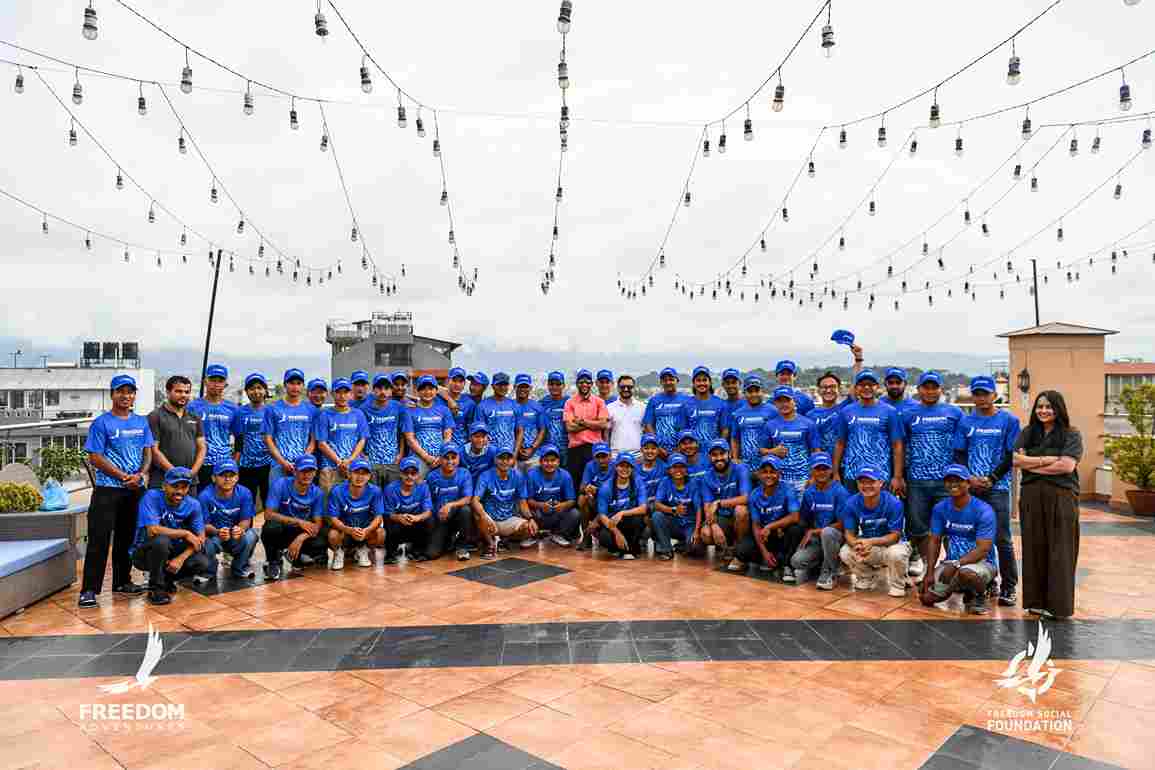
Two days, sixty members of the team, and a programme built around the things that actually shape how we guide, lead, and serve our guests.
The Kathmandu leg of the 15th In-House Training opened on 16 August with all sixty members of our guiding and office team in one room together for the first time since Sarangkot this past January. It is the first of four such programmes planned across this pre-season, and over two days it moved through team building, climate, leadership, culture, photography, and service, the full range of what it takes to run a guiding company well, not just the parts that happen on a mountain.
Our founder, Jagan Timilsina, opened the programme with a short note on why the company brings everyone together this way each year.
“Our work is not only about what we do and how we do it. It is also about how we understand it. We are not here to repeat the same programme every year for the sake of routine. Each season hands us something new to learn, and this is the one time of year we sit down as a full team and try to understand it properly. Being a guide is not only about leading someone up a mountain. It asks far more of a person than that, and that is what these two days are really for.”
Day one
The day started with games
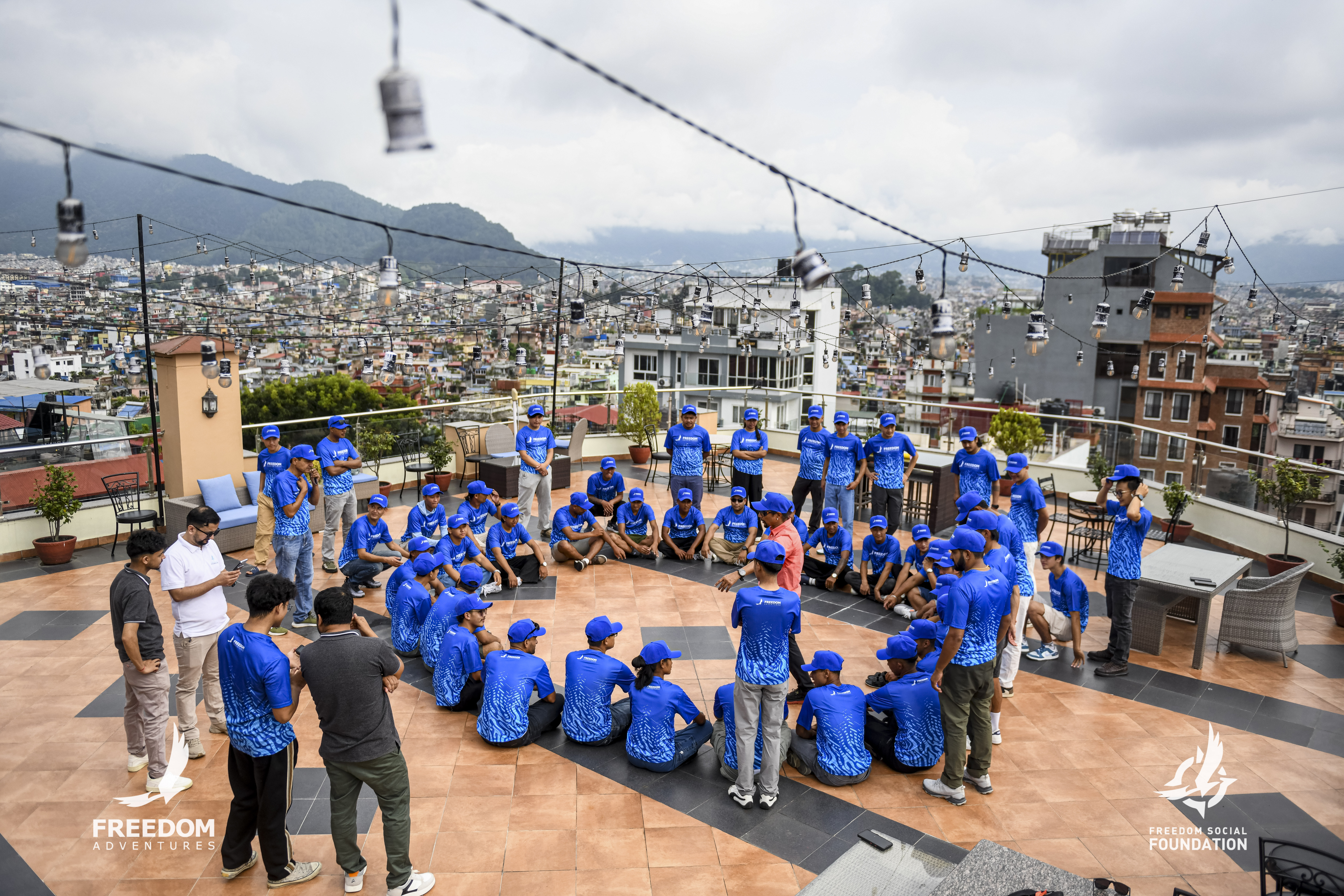
The first day began with a run of team building games, a deliberate choice before anything formal started. For a group that only sits together like this once or twice a year, it does real work. Guides from different regions who know each other by name but rarely by face were talking within minutes, and the office staff who spend the season behind a desk in Kathmandu were pulled into the same exercises as the people they support out in the field. By the time the first session started, the room already felt like one team rather than three separate ones sharing a floor.
A session on global warming
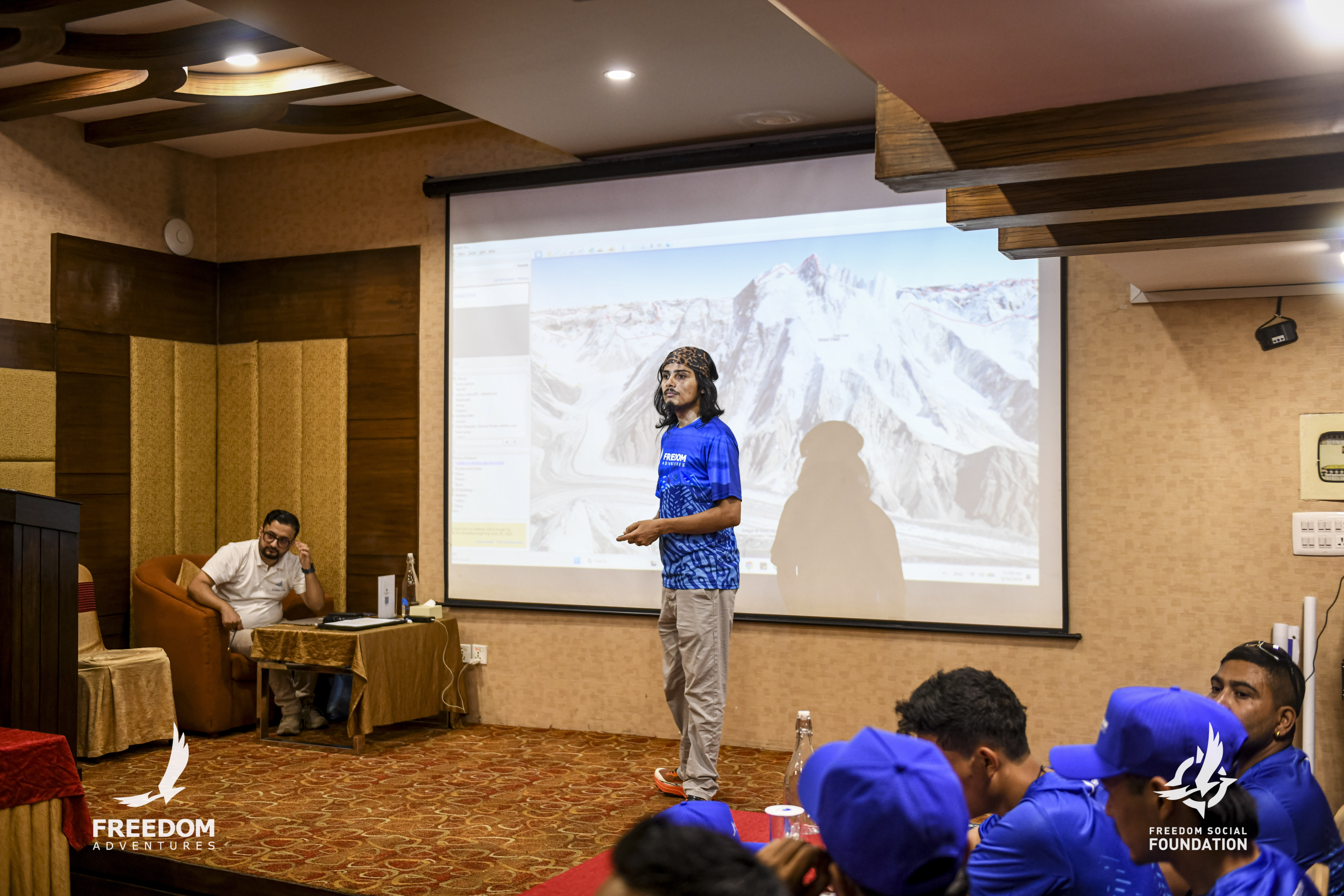
That energy carried into a more serious hour, a session on global warming and what it means for the mountains our guides work in every day. One after another, guides spoke from their own experience, glaciers pulled back further than the maps show, water sources that used to run reliably now drying out mid trek, trails rerouted around scree that was not loose two seasons ago. From there, the room worked through a case study on the avalanche that struck Broad Peak on the 30th of July, examining what happened and what it asks of anyone who leads people through terrain like it. It was a candid conversation, and a necessary one, given that it concerns the exact ground our guides walk every day.
Twice to the top of the world
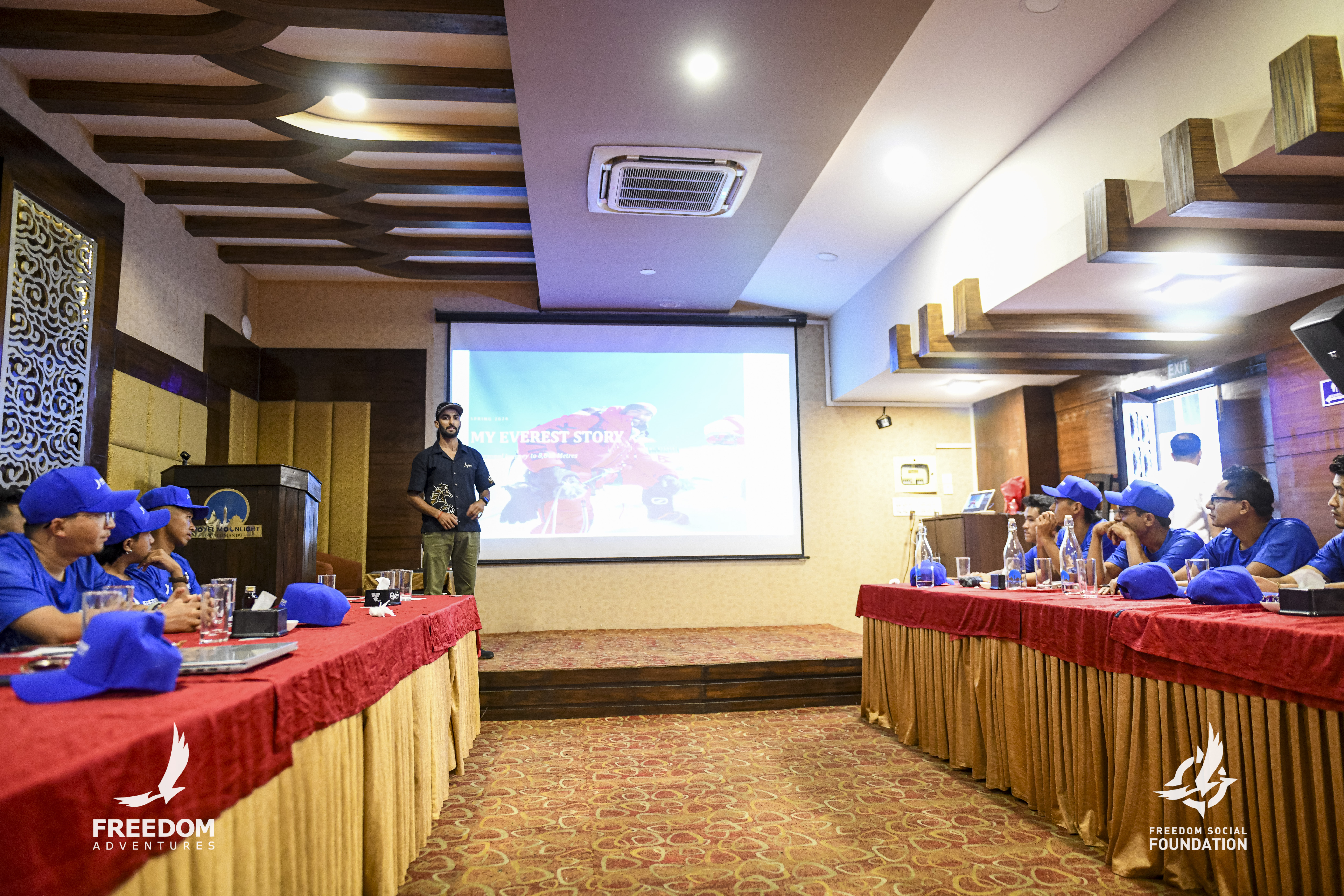
The afternoon turned personal with an experience sharing session from our lead guide, Sabin Bhattarai, who has summited both Everest (8,848.86 m) and Manaslu (8,163 m). He spoke about what it actually takes to work at those heights, the decisions that matter more than any piece of gear, and the lessons he carried back down the mountain with him. It is not often a training room gets to learn directly from someone who has stood where they are teaching about, and by every account, the team took in every bit of it.
Then the boots came off
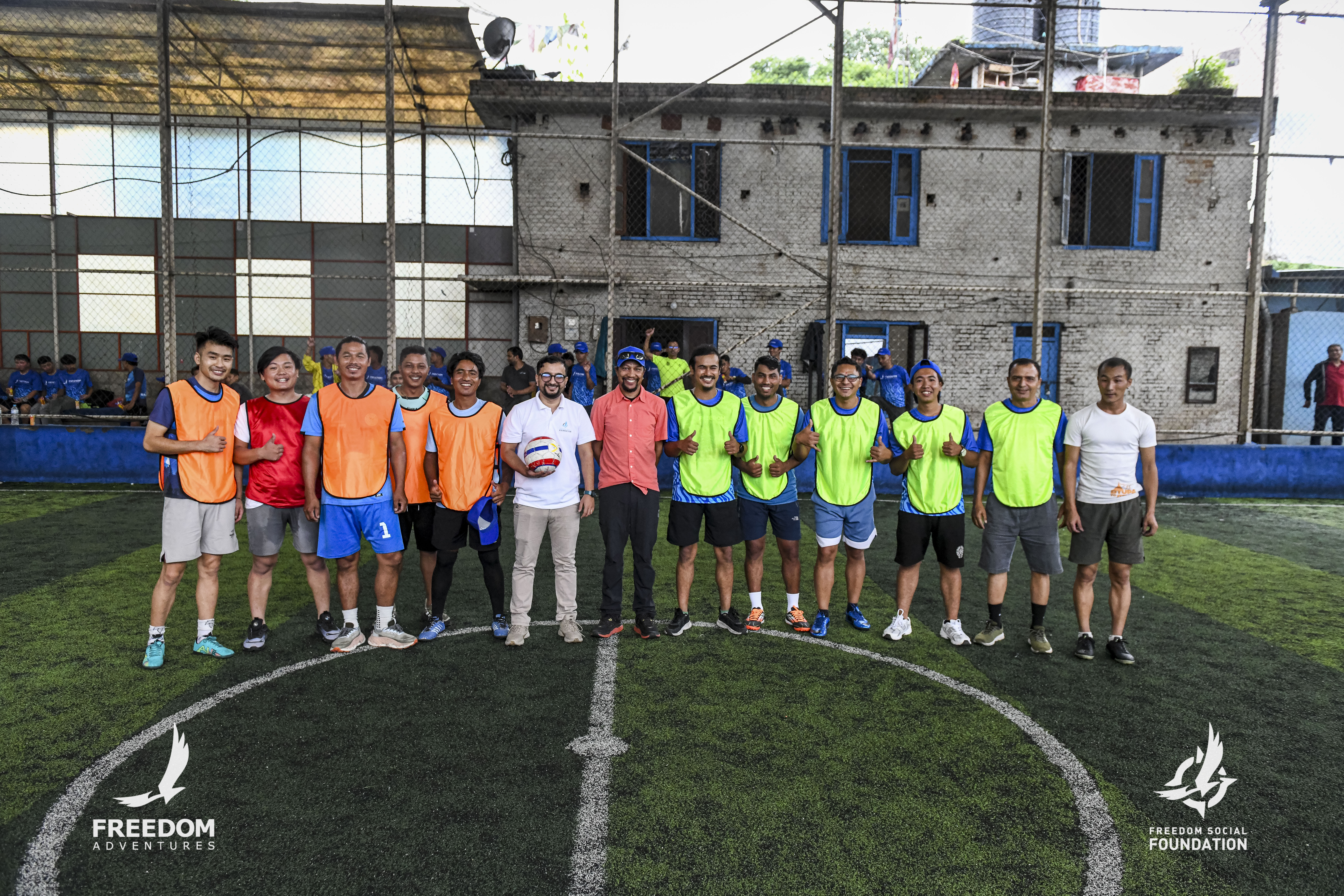
The day closed the way we believe these days should, on a futsal field. We hold to the idea that a team that plays together stays together, and the sixty were split into teams for two hours where the only altitude that mattered was how high the ball went. Guides who had spent the afternoon discussing glaciers and case studies were chasing goals a few hours later, and the energy in the room, or on the field this time, did not drop for a second.
That is a wrap on day one
Games, global warming, a summit story, and a football match, all in a single day in Kathmandu. Stay tuned for tomorrow. There is more to unfold before this leg of the training closes.
Day two
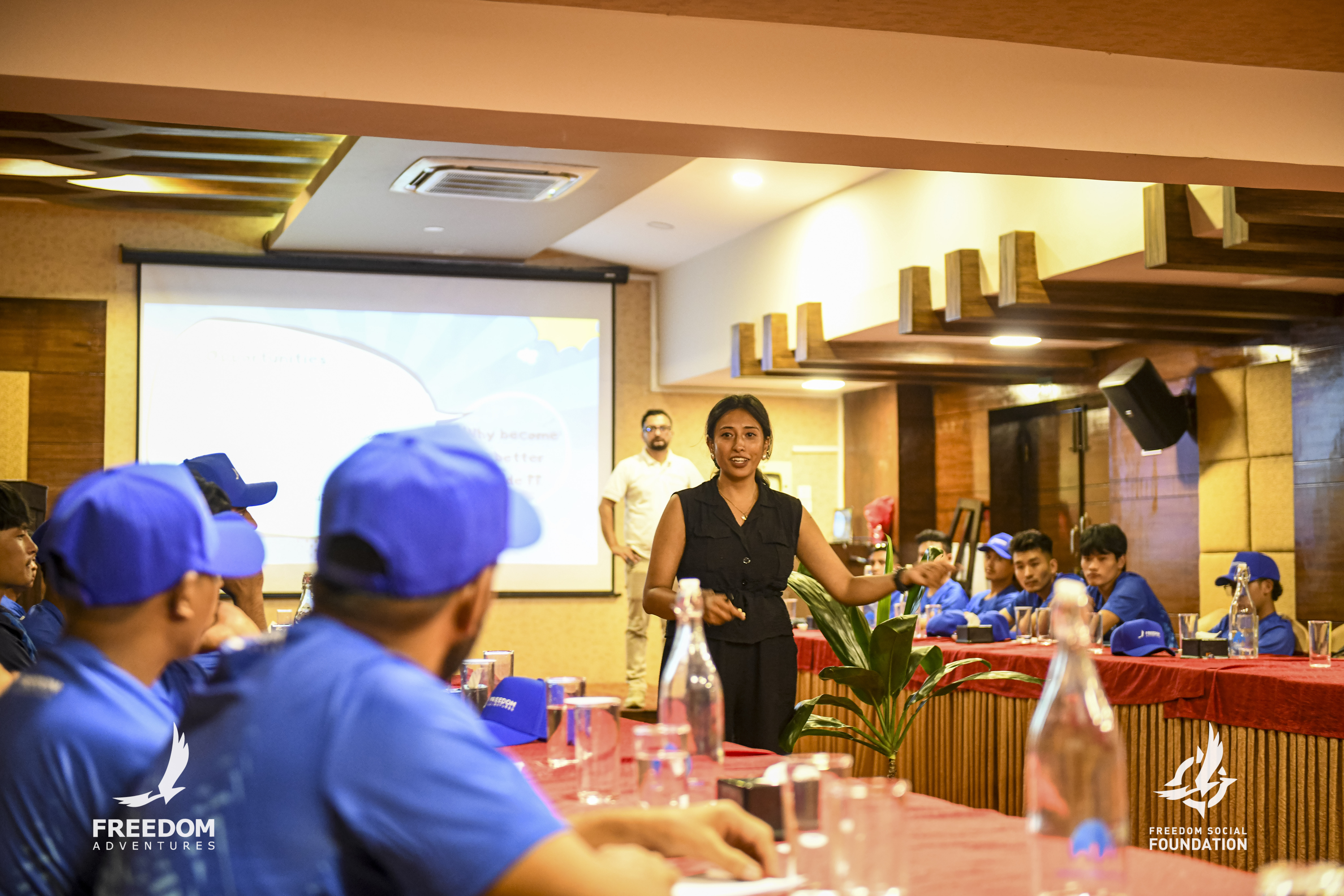
The second day opened with a session on leadership led by Ms. Tejshree Basnet. What defines a good leader is more than the ability to lead the path or provide a service, it is experience, patience, and knowing the job from every level, and that is exactly who Tejshree is. She worked her way up from an assistant guide to leading groups in the Himalayas herself, and she brought those lessons to the team directly, a session built entirely around what she has lived through on the trail rather than theory learned elsewhere.

From there, the room turned to a case study built entirely from the company's own field records, real situations pulled from treks we have actually run. Guides and assistant guides worked through them together, comparing what they would have done against what was actually decided at the time. It was less a presentation than an open discussion, the kind where someone from the Annapurna side questions a call made by someone from the Everest side, and everyone in the room walks away having learned something from a colleague rather than a slide.
A session from the founder
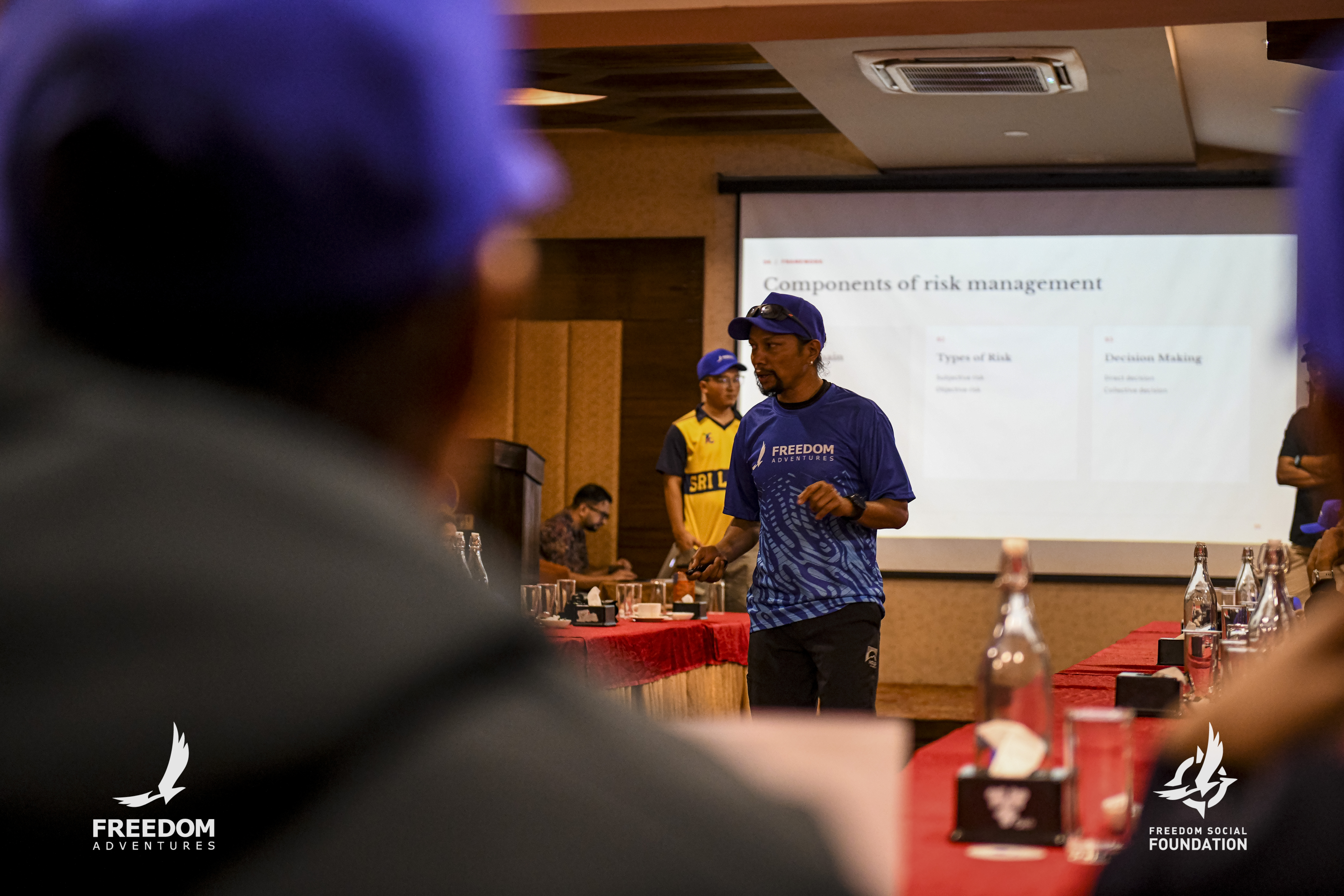
Our founder, Jagan Nath Timilsina, then took the floor for a session that was, by every measure, the most impactful of the two days. He picked up directly from the discussion the team had just finished and pushed it further, walking through the leadership calls a guide has to make when there is no one above him to ask, and the moments where the margin for error disappears entirely. There was no cushioning in how he put it, decision after decision laid out plainly, and what a guide owes the people following him when it actually counts. Few sessions in this training carry the weight that one did.
Understanding Buddhism
The day then turned to culture. Binaya Rana led a session on understanding Buddhism, a subject that sits close to almost every route our guides walk, from the monasteries along the trail to the customs our guests encounter without always knowing their meaning. For a team that spends its working life inside these mountains, knowing the belief systems that shape them is not a side interest, it is part of doing the job with respect.
Behind the lens
The photography session, led by Sanjay Bhatta, was built around a simple fact, our guides are the only ones present at the moments most worth photographing, and yet the job rarely trains anyone to capture them well. The session covered light, timing, and composition, but more than the technical side, it pushed the team to notice which moment on a trail is actually worth stopping for, a client catching their first sight of a summit, a porter resting mid climb, weather changing over a ridge. Small skills, but the kind that shape how well we can tell the story of a trek once it is over, for our own content and for the memories our guests carry home.
What the guest remembers
The formal sessions closed with our general manager, Himal Sharma Pandit, and of everything covered across the two days, his talk on quality service management may have been the plainest, and for exactly that reason, the one that landed hardest. He did not talk about numbers or targets. He talked about the guest who remembers one moment out of an entire two week trek, and how that moment is almost always decided by a person, not an itinerary. A guide who noticed someone was struggling before they said so. A desk that called back when it did not have to. He said the company is not built by the treks that go perfectly, it is built by what a guide does the one time something does not, and that our reputation rests on decisions made by individual people when nobody senior is watching. It was a short talk. Nobody in the room needed it to be longer.
“I have sat on the other side of this table as a guest before, and the thing I remember from every trip I have taken is never the itinerary. It is one person who did something they did not have to. That is what I want every one of us walking out of this room to carry, our whole reputation lives inside decisions nobody is watching us make. Get those right, and everything else about this company takes care of itself.”
The founder closed the two days with a short word of his own.
“Two days in one room, and every guide who walked in tired on the first morning is walking out today already talking about next season. That tells me everything I need to know about the standard we are building here. Kathmandu is done, but this is only the first stop this year, and the same standard travels with us to every one that follows.”
With the sessions behind them, the team returned to the futsal field for one more round, yesterday's teams sharper, the rivalries already settled into something real.
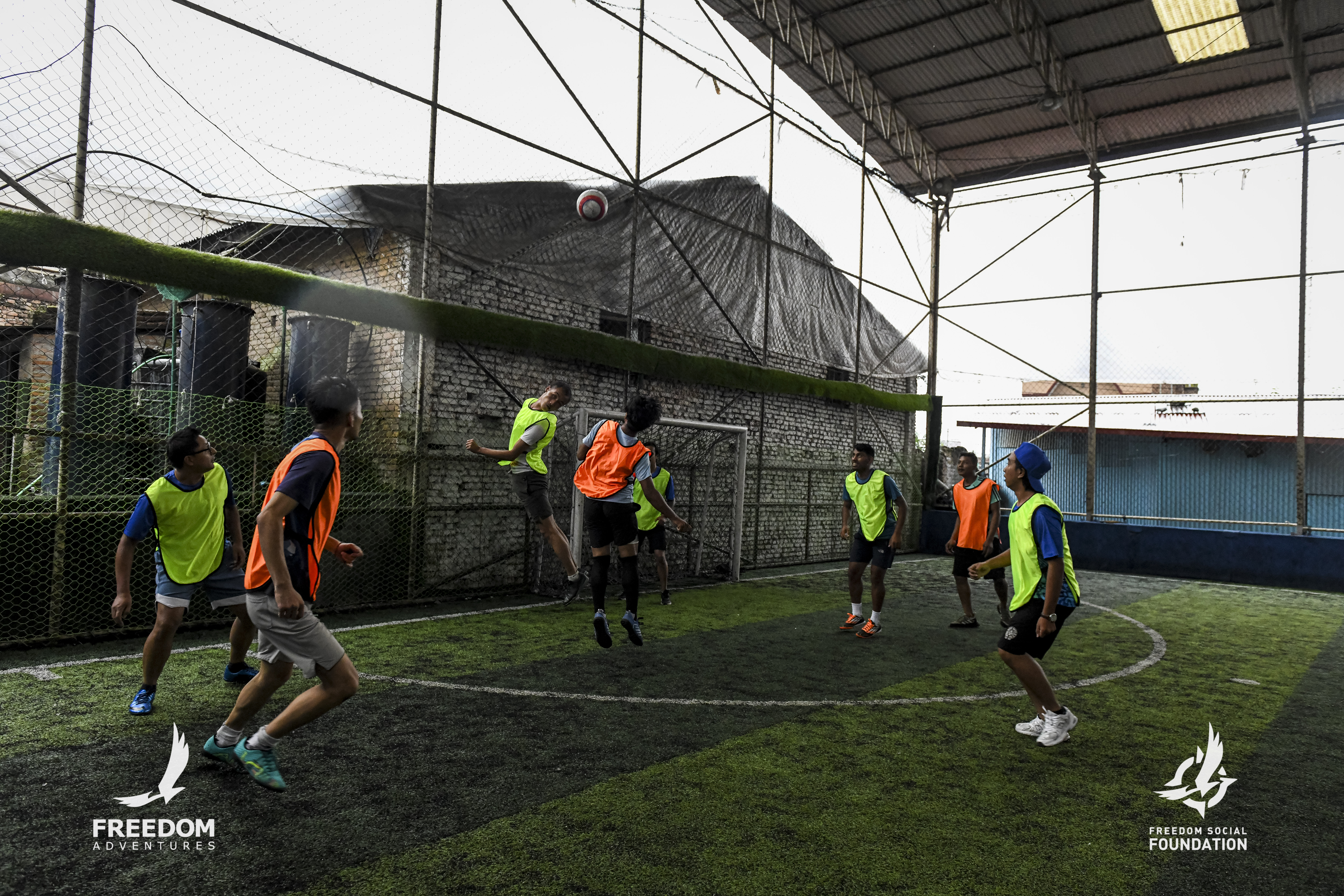
When the last match ended, the evening turned into a proper celebration, a collaborative toast to close out the two days and, with it, a full season and year of work behind every person in that room. There was no formality left by then, just sixty people who had spent the year apart on separate trails, sitting together one last time before Kathmandu wrapped and the training moved on to its next stop.
The fun is done, and it did what it was meant to do, it brought sixty people back together as one team before asking anything of them. Now the season ahead is the one that matters. Autumn 2026 is already at the door, and every guide who sat in that room this week walks into it a little sharper, a little more prepared, and carrying lessons that came straight from people who have earned the right to teach them. We are ready for what this season holds.
KEEP EXPLORING
Uncover similar insights
Day-by-Day Demands, Training Plan, and Mental Grit
Everything You Need to Know to Prepare for Your ETP Trek
Everything You Need to Know about Manaslu Circuit Trek