Table of Contents:

How Difficult is the Everest Base Camp Trek?
Day-by-Day Demands, Training Plan, and Mental Grit
The Everest Base Camp trek is graded moderate to strenuous, but that single rating hides the actual shape of the difficulty: it isn't evenly spread across twelve days, it concentrates in specific, predictable places.
The route covers roughly 130km round trip, gains a net 2,500m from Lukla at 2,860m to Base Camp at 5,364m, and continues to Kala Patthar at 5,545m, the true high point of the trek. But net gain is the wrong number to plan around. The trail constantly drops into river gorges and climbs back out, and every one of those climbs counts.
There is no technical climbing on the standard route, no ropes, no crampons required in normal autumn or spring conditions. What the route asks instead is 5 to 7 hours of walking a day, on rocky mountain paths and stone steps, for 14 consecutive days, carrying a daypack of 5 to 7kg, at elevations where the air thins and the body works harder for the same effort.
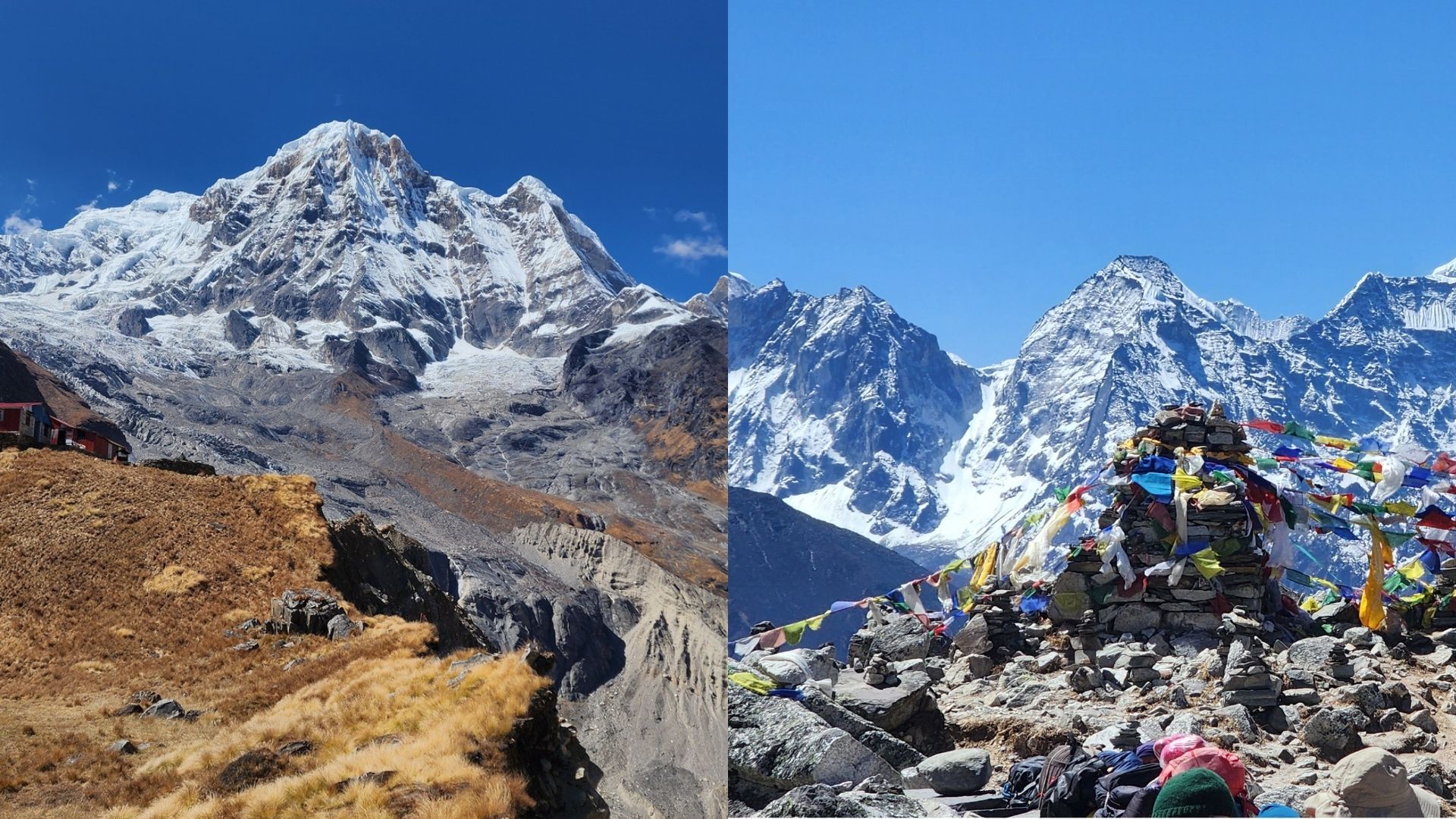
Compared to a shorter, lower route like Ghorepani Poon Hill, or even a single high point like Annapurna Base Camp's one night at 4,130m, EBC's defining demand is duration at altitude, not any one hard day.
Why the net number is misleading
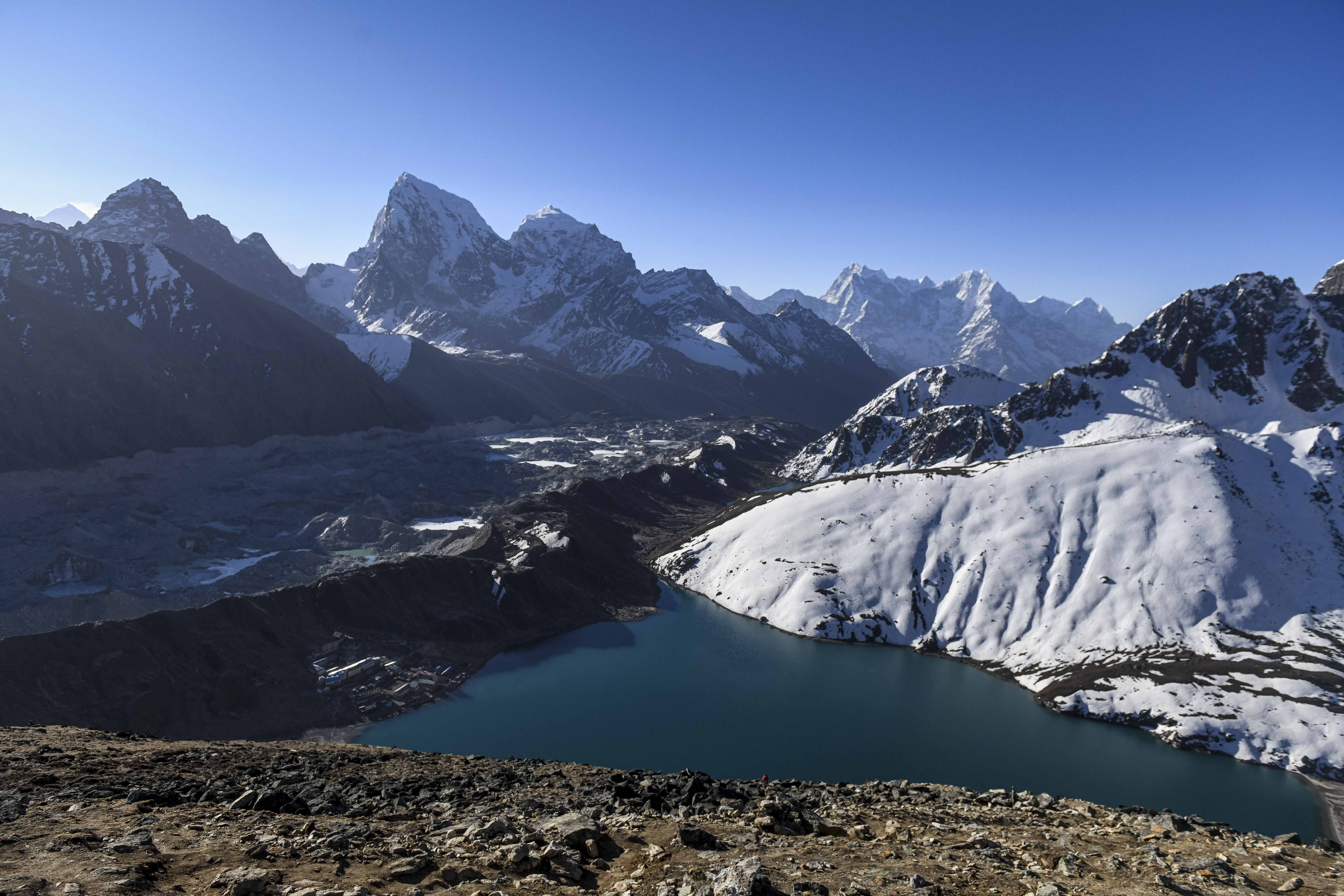
A trekker who only checks "2,500m of elevation gain" before booking is planning for a different, easier trek than the one that's actually waiting. Three separate single-day climbs on this route, into Namche, into Tengboche, and up to Kala Patthar, each gain more than 400m on their own. The body doesn't care about the net figure at the end of the trek. It cares about each individual climb, on top of the last one, with less oxygen each day to do it on.
Day-by-Day Physical Breakdown
Day 1: Lukla to Phakding: Easy
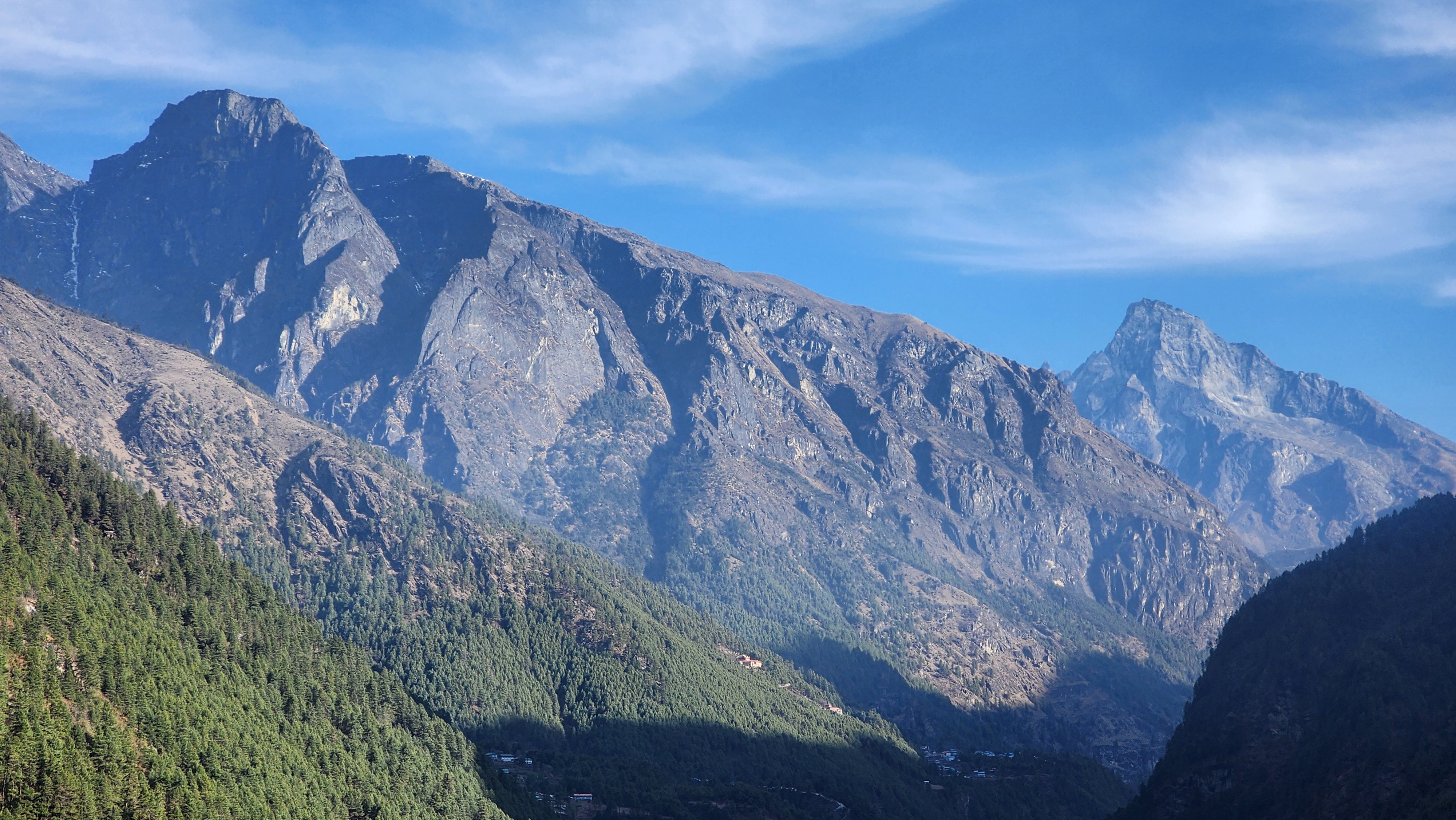
The trail actually loses around 220 to 250m of net elevation through Chheplung and Ghat, following the Dudh Koshi river downstream. But "downhill" doesn't mean flat. This is your first taste of what guides call Nepali flat, a trail that constantly rolls, a short climb out of one village, a drop into the next, repeated for most of the day, even while the overall direction trends down. Three to four hours of gentle walking. This is the day that gives first-timers a false sense of what's ahead, since nothing about it hints at day two.
Day 2: Phakding to Namche Bazaar: Hard
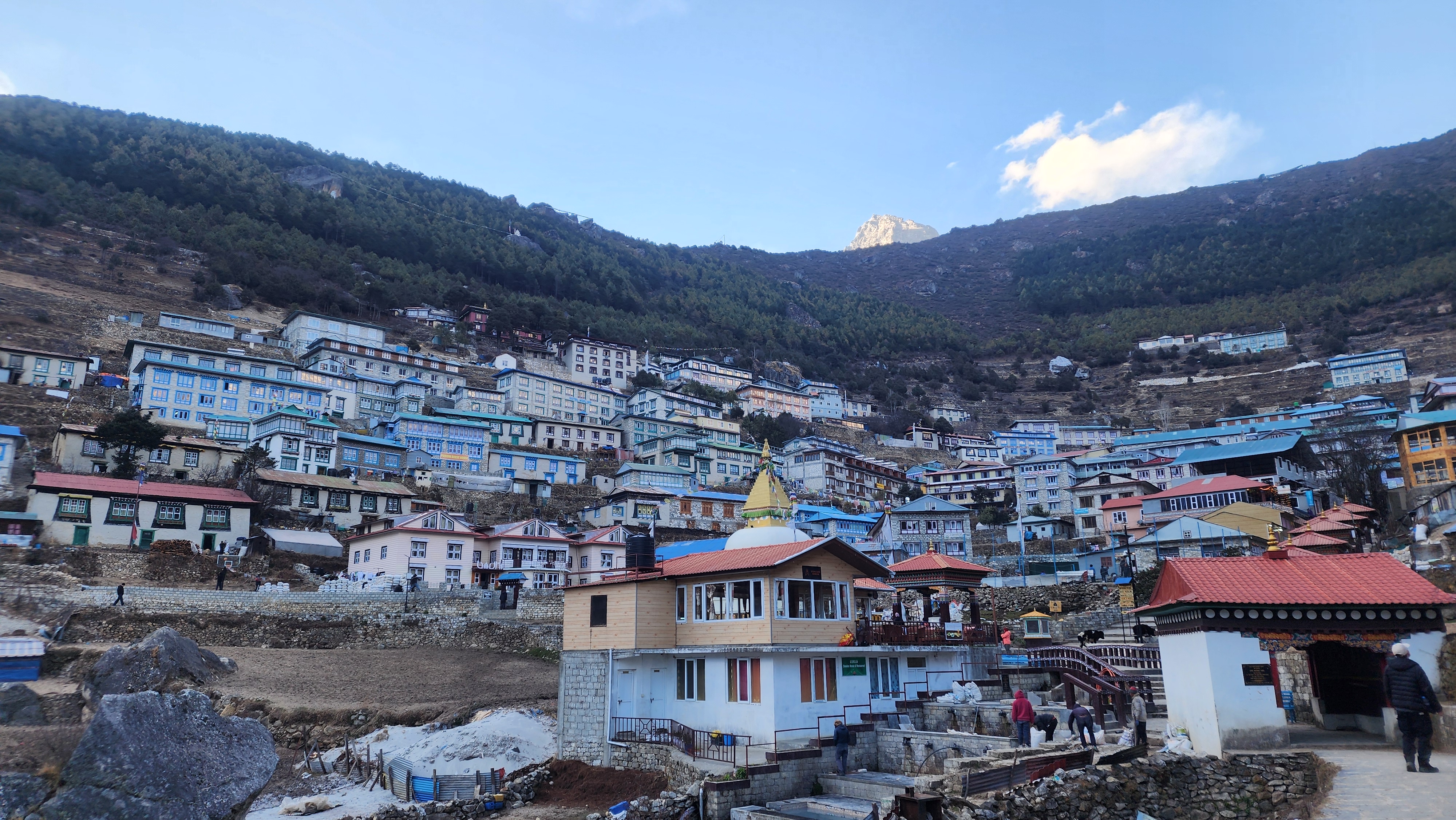
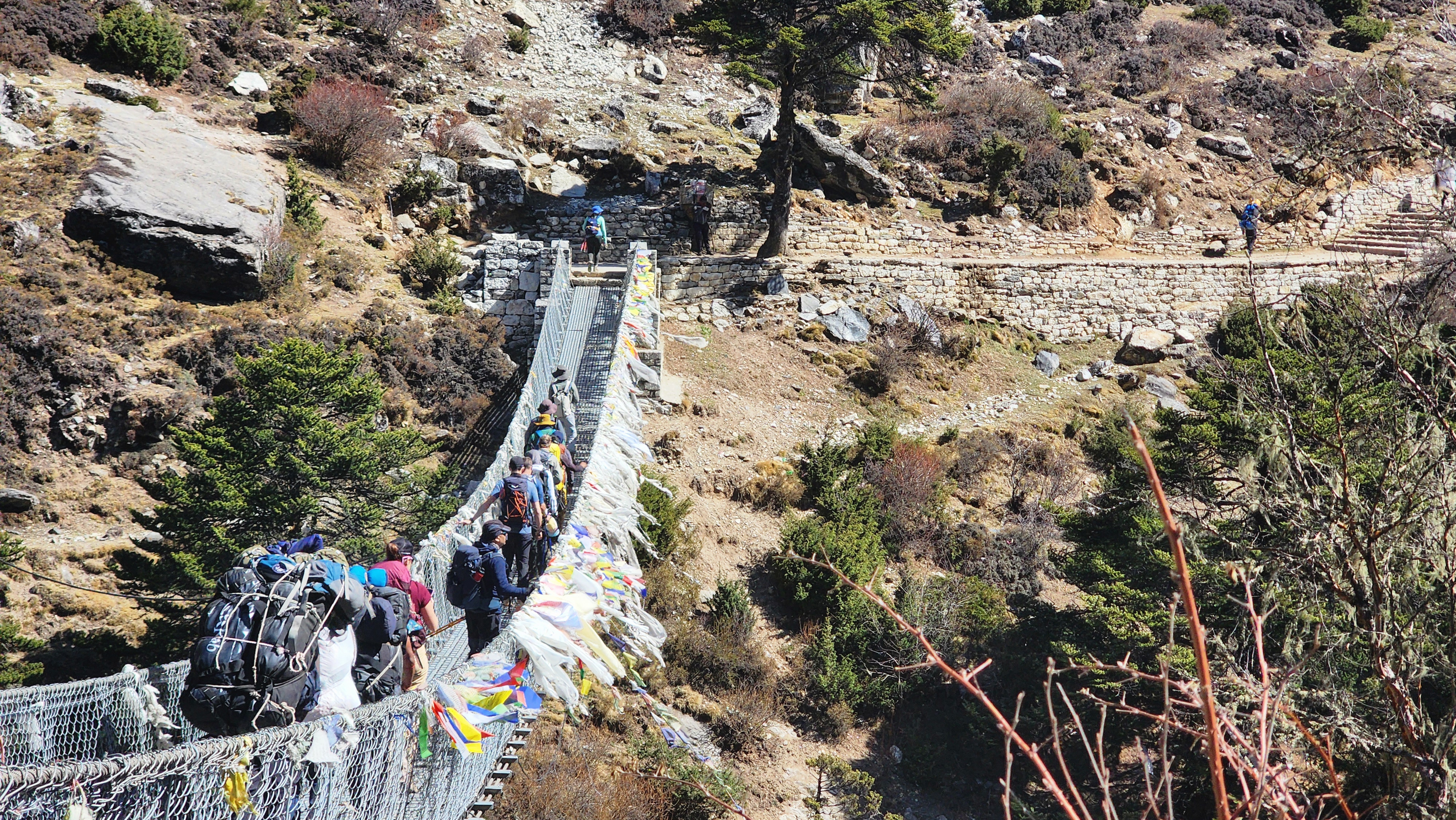
The first honest test. The trail crosses the Dudh Koshi on several suspension bridges, passes through the Sagarmatha National Park checkpoint at Monjo, continues through Jorsale, then climbs steadily and steeply for the final hour to 90 minutes into Namche, crossing the Hillary Suspension Bridge along the way. Net gain of around 830m over roughly 11 to 12 km. The climb concentrates almost entirely in that final stretch, after several hours of easier walking have already used up energy trekkers assumed they'd have spare, which is why this day consistently leaves people more tired than the distance alone would suggest.
Day 3: Acclimatization: Moderate
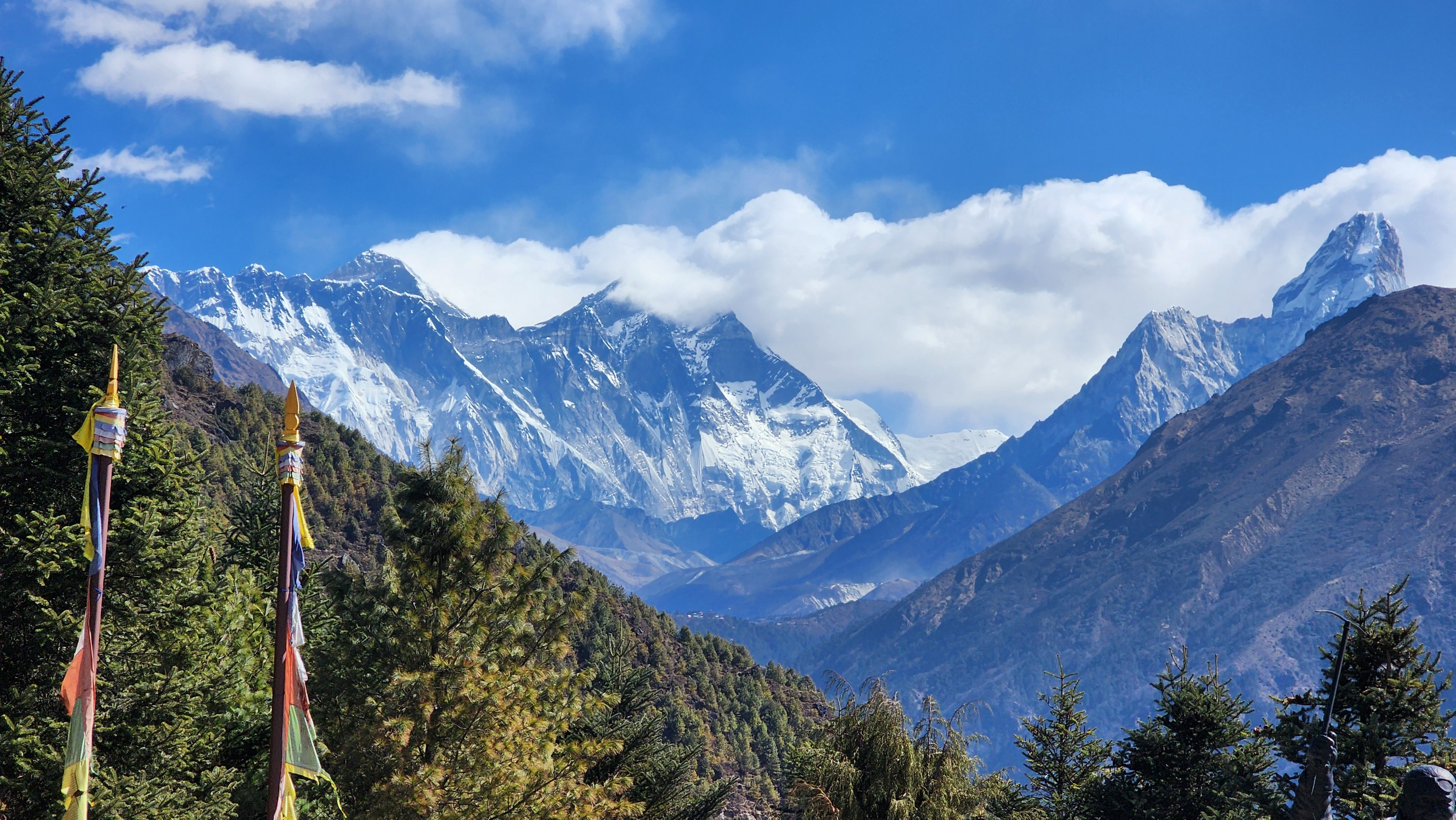
The first of two built-in acclimatization stops, and the one that does the most physiological work on the entire trek. The standard hike here climbs to the Everest View Hotel at 3,880m or up to Khumjung village, gaining over 400m above Namche's own 3,440m, before returning to sleep back down at Namche's altitude. The point isn't the hike itself, it's the principle behind it: climb high during the day, sleep lower at night, and give the body roughly 48 hours at this elevation to begin producing the additional red blood cells it needs before pushing higher. Trekkers who skip the hike and rest in the village instead get the lower altitude but miss the high-altitude exposure that actually drives the adaptation, and often feel the difference a few days later at Dingboche.
Day 4: Namche to Tengboche: Moderate
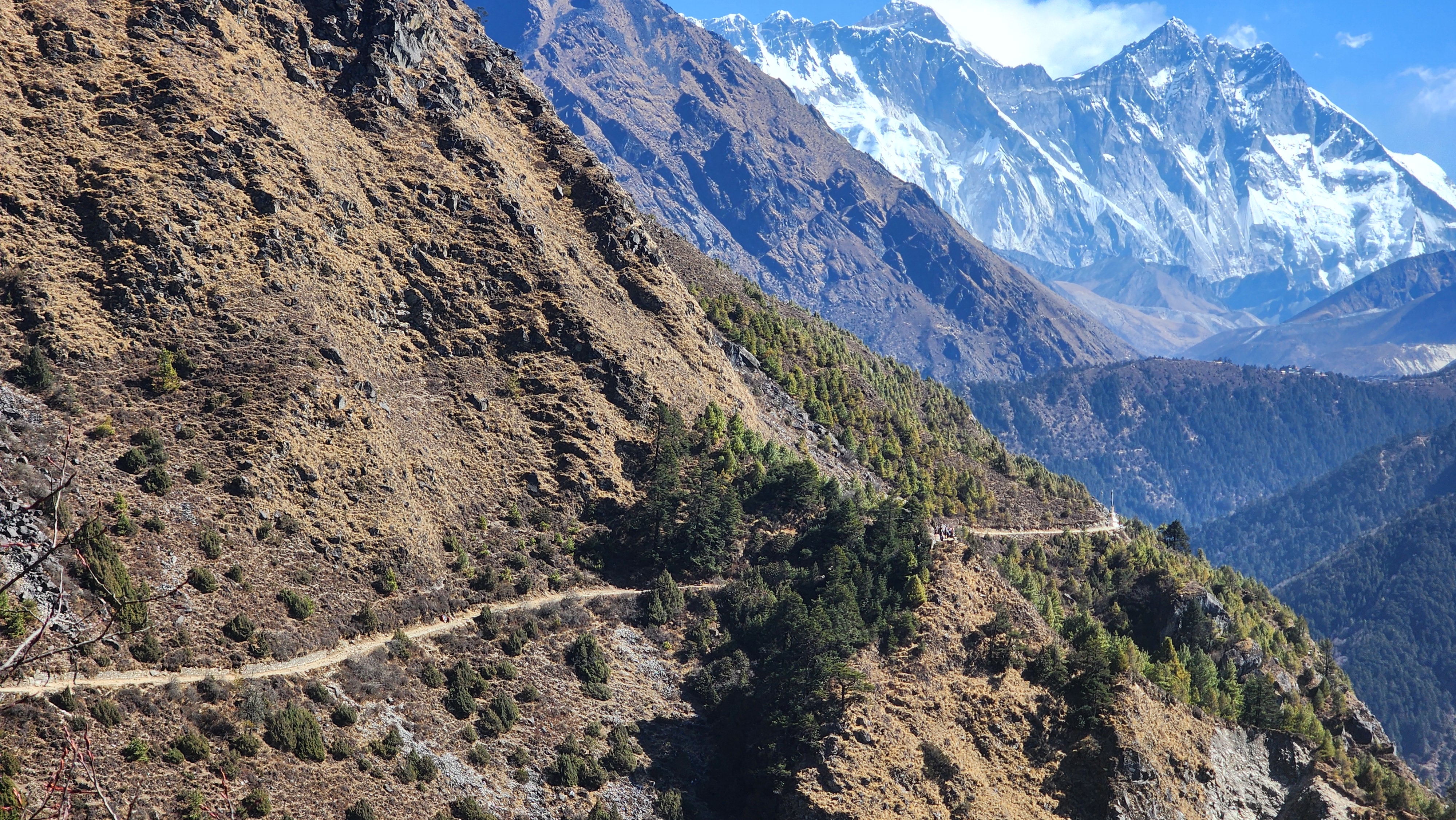
A genuine up-and-down day: a drop to the Dudh Koshi at Phunki Tenga for lunch, then a sustained climb back up through pine and rhododendron forest to Tengboche at 3,867m, home to the largest monastery in the Khumbu. No single hard push, but the descend-then-reclimb pattern previews how little of this trail goes one direction for long.
Day 5: Tengboche to Dingboche: Moderate
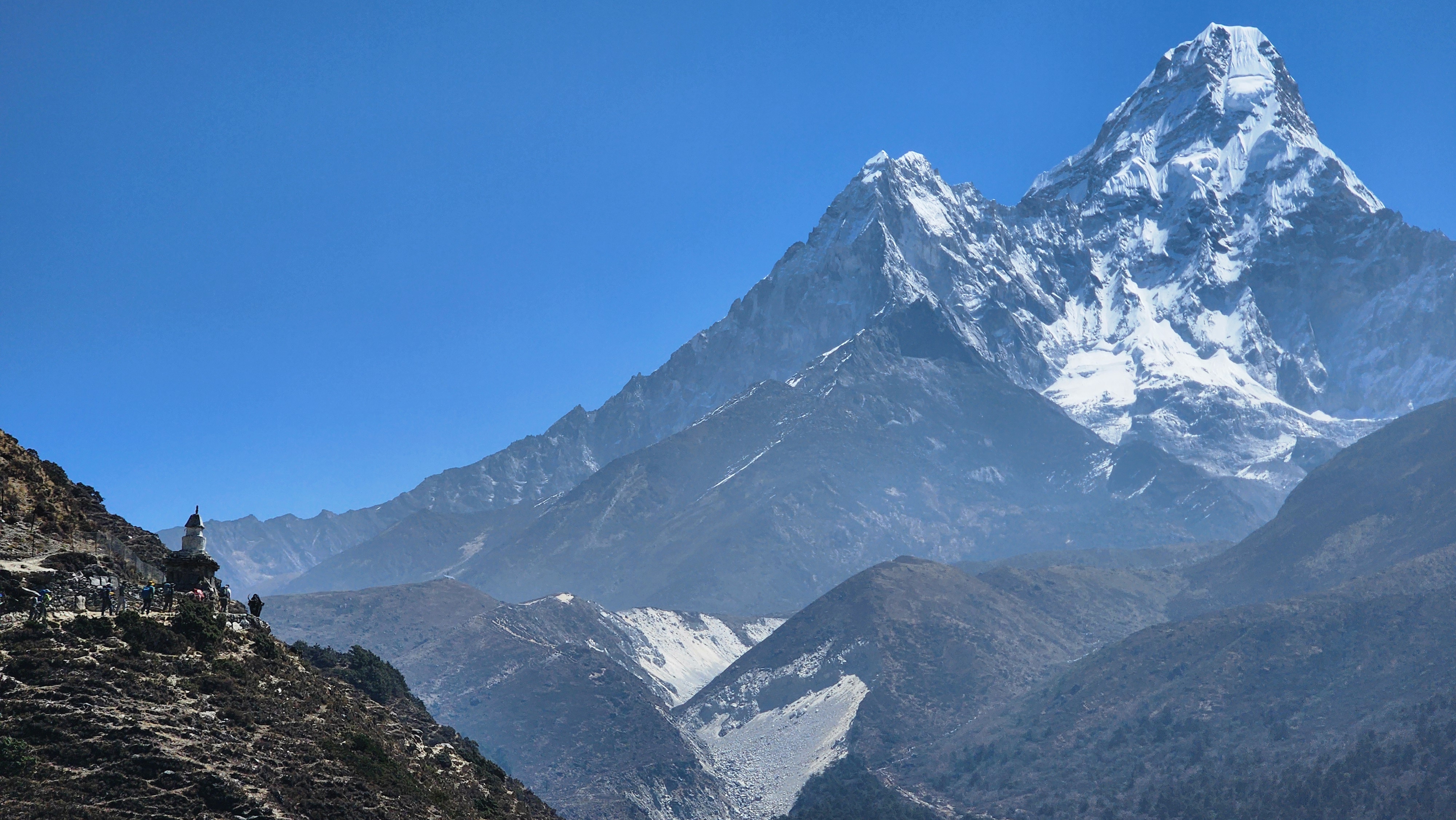
Through Deboche, across the Imja Khola on a suspension bridge, and up through Pangboche, the highest permanent settlement in the Khumbu. Past Pangboche, the trees thin and disappear by Dingboche at 4,410m, the last day with meaningful tree cover. Steady and gradual, but the shift to open alpine valley is also where wind exposure becomes a daily factor.
Day 6: Acclimatization: Moderate
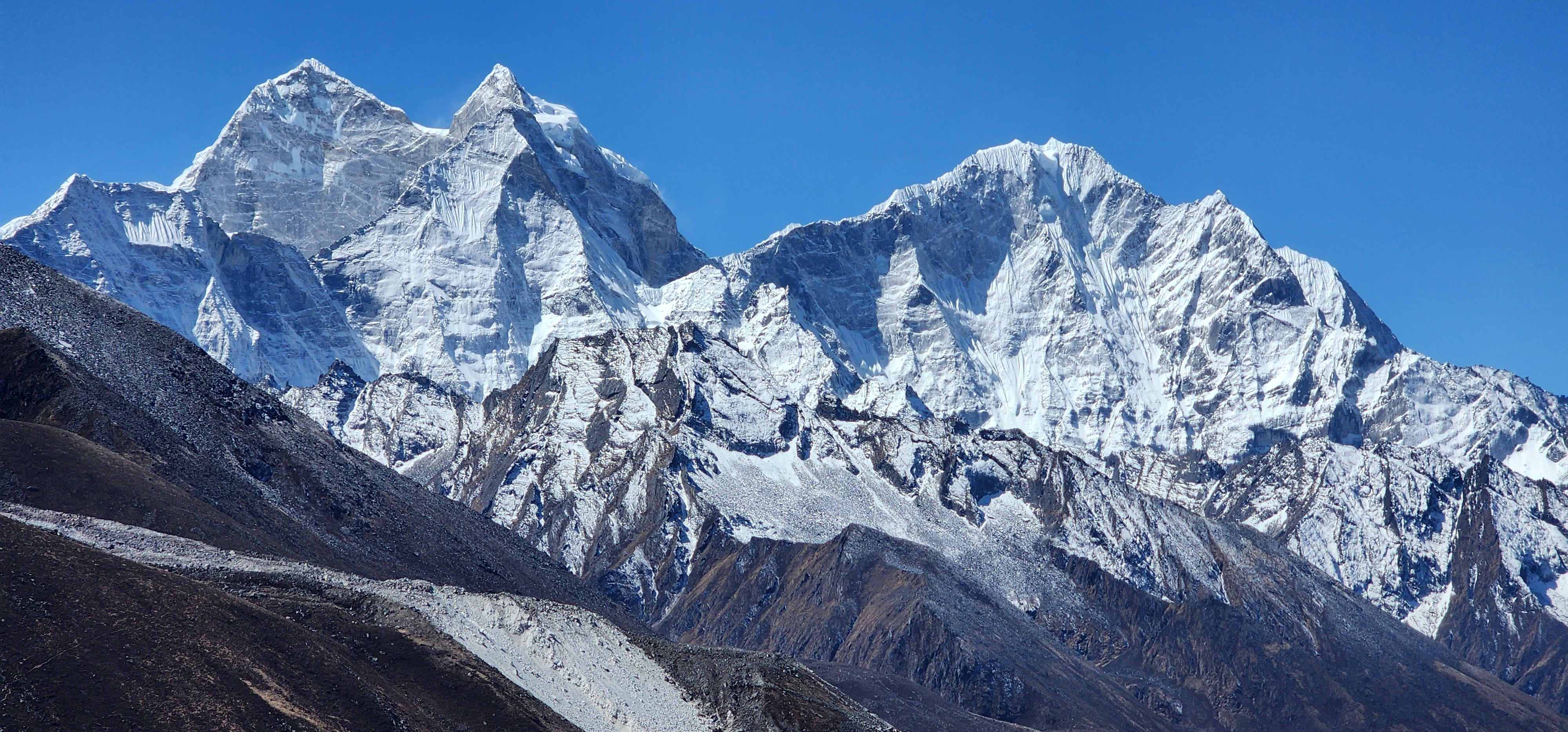
The second built-in acclimatization day, hiking to Nangkartshang ridge at 5,083m, a gain of over 600m. Most guides mark this as the real turning point of the trek, not because the trail gets harder underfoot, but because recovery starts becoming partial from here on: appetite drops, sleep gets lighter, and the accumulated fatigue from the days before starts to show.
Why the acclimatization days aren't optional rest
Skipping the Namche or Dingboche hikes to rest in the village instead feels like the easier choice in the moment. It removes the specific high-then-low altitude exposure your body uses to adapt before the trail pushes higher. Trekkers who treat these as full rest days rather than active ones consistently report a harder time above 4,500m than those who used the hikes as intended.
Day 7: Dingboche to Lobuche: Hard
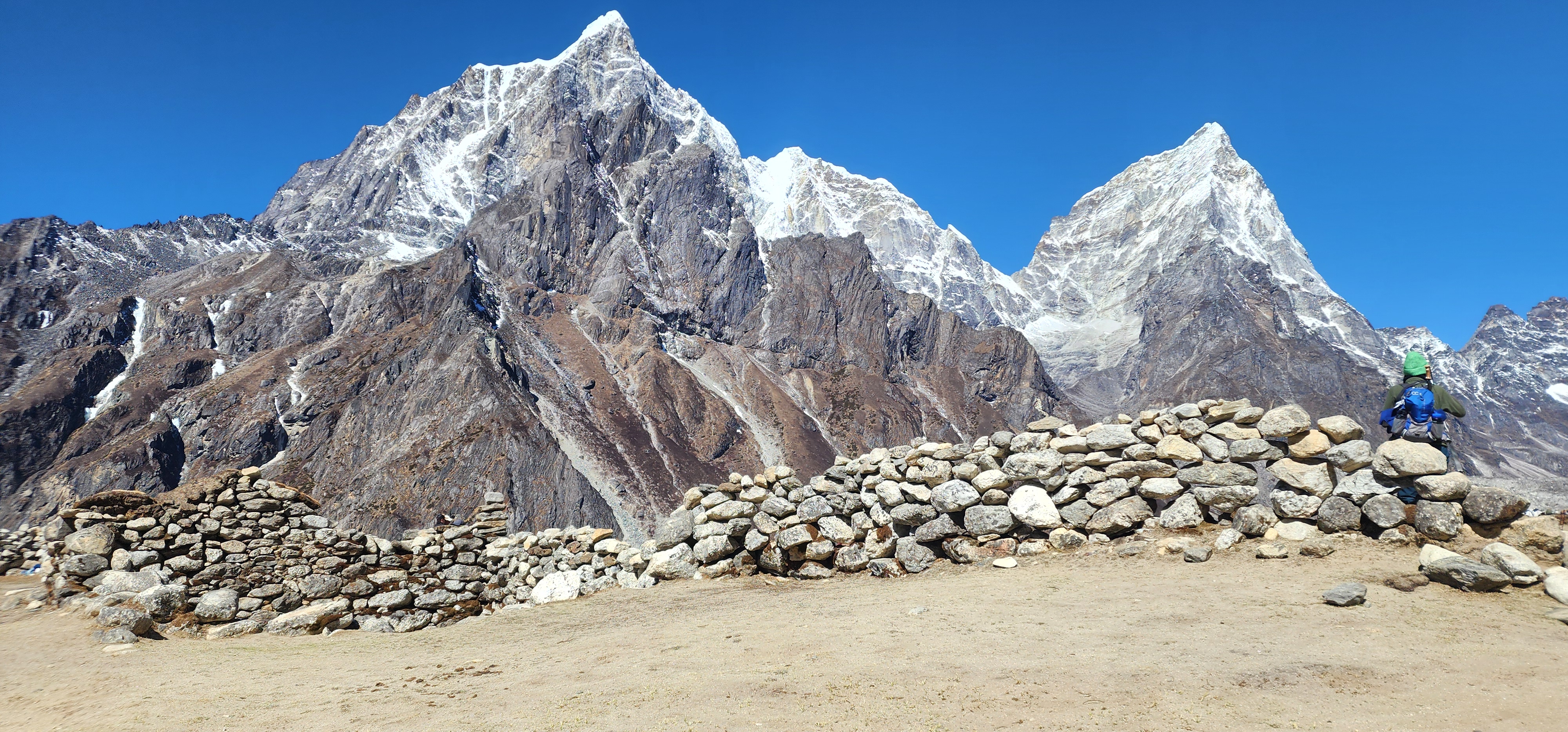
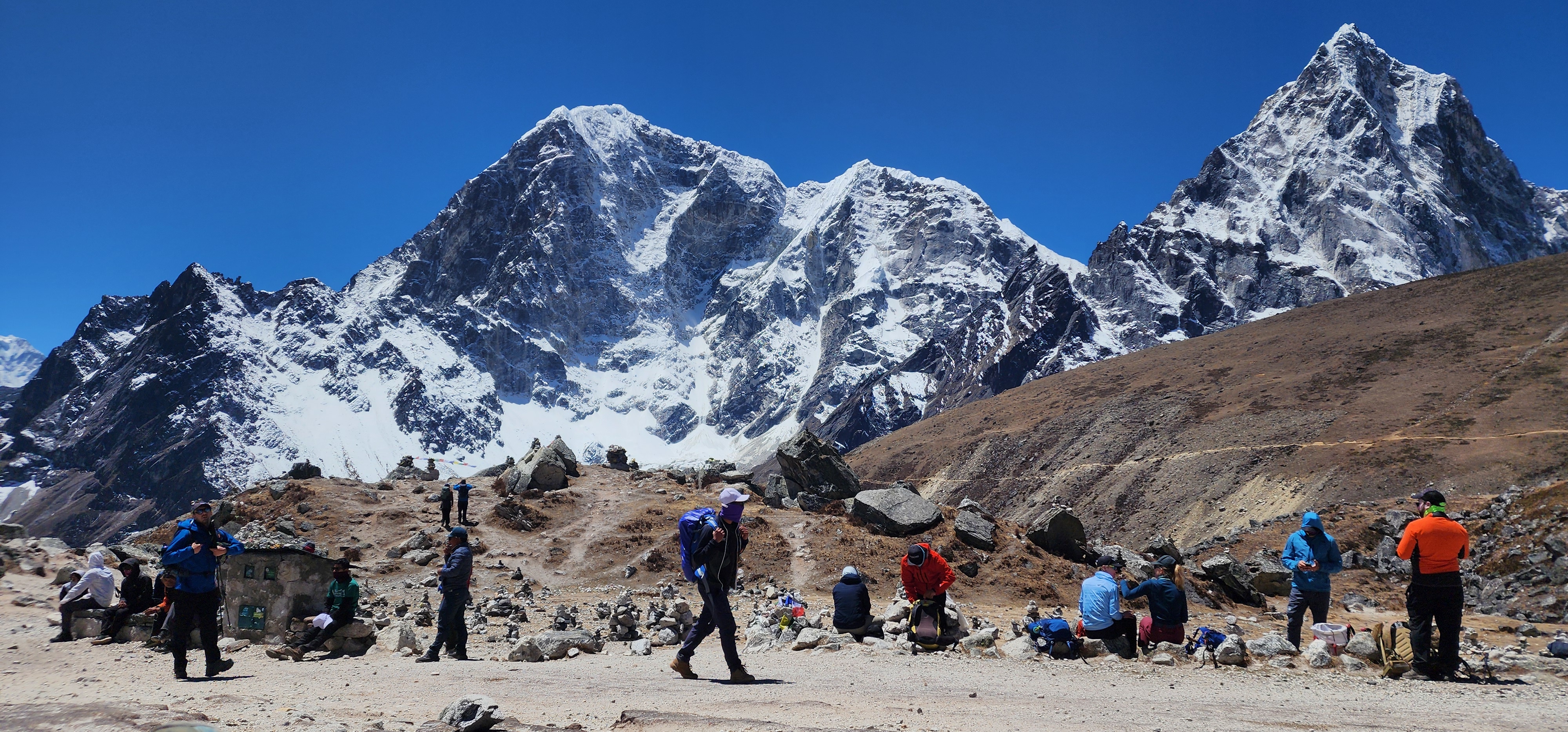
Only 8 to 9 km, but the most demanding single day on the route by near-universal consensus. A steep, sustained climb from Dughla up to Thukla Pass at 4,830m, where memorial chortens honor climbers and Sherpas who died on Everest. The pass is exposed and frequently windswept. Past the memorials, the trail follows the Khumbu Glacier's lateral moraine, rocky and narrow, where thinner air makes every uphill metre noticeably heavier than the same climb felt a week earlier.
Day 8: Lobuche to Gorak Shep, then Everest Base Camp: Hard
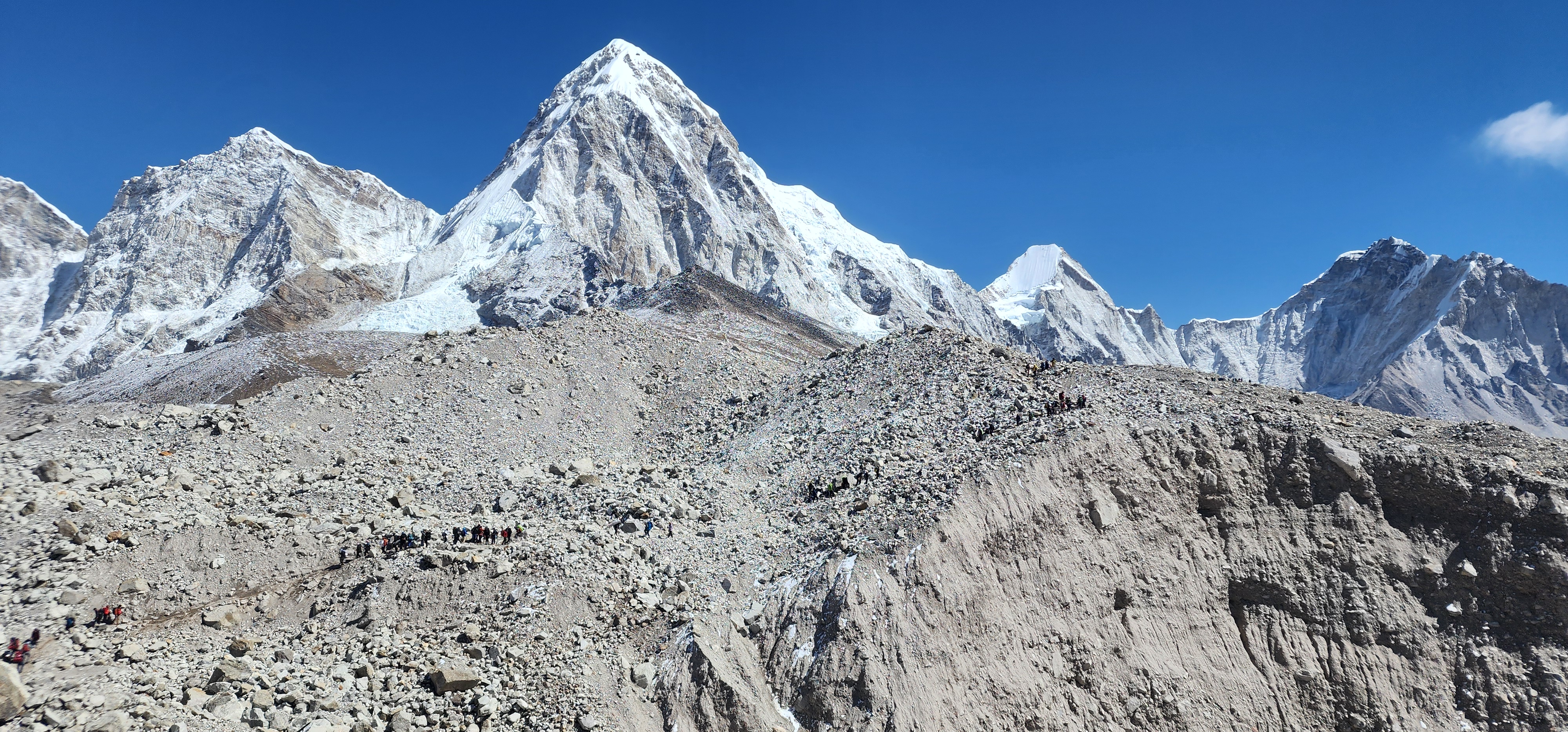
Short in distance, severe in altitude. By Gorak Shep at 5,164m, breathlessness on flat ground is normal physiology, not a fitness problem, and every trekker slows considerably here regardless of training. The afternoon walk onward to Base Camp itself, along the glacier's edge with the Khumbu Icefall in view, adds real distance on loose rock and ice-polished stone that demands careful footing. Most trekkers are on their feet for 6 to 7 hours above 5,000m by the time they return to Gorak Shep to sleep.
Day 9: Gorak Shep to Kala Patthar, then descent to Pheriche: Hard
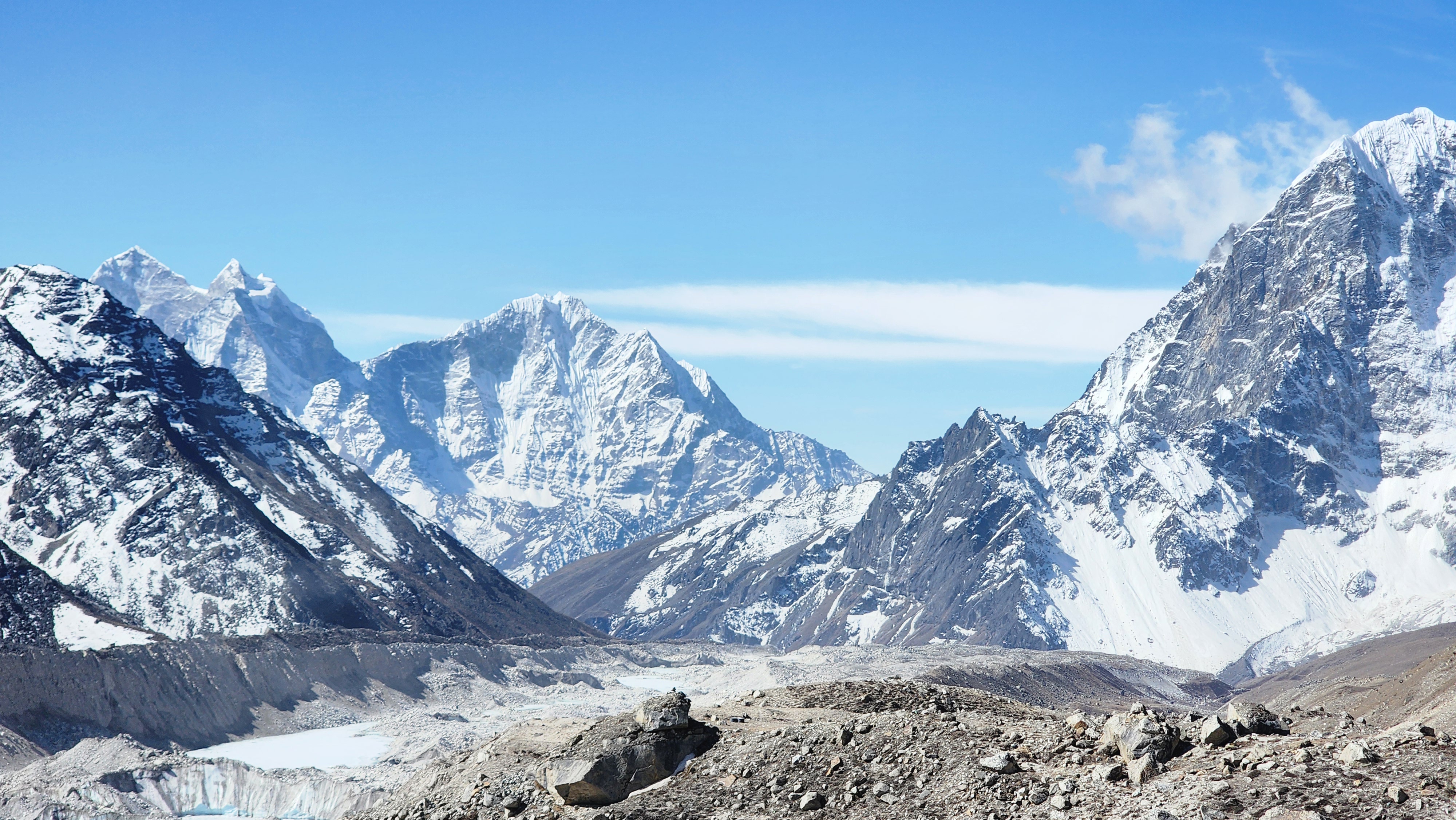
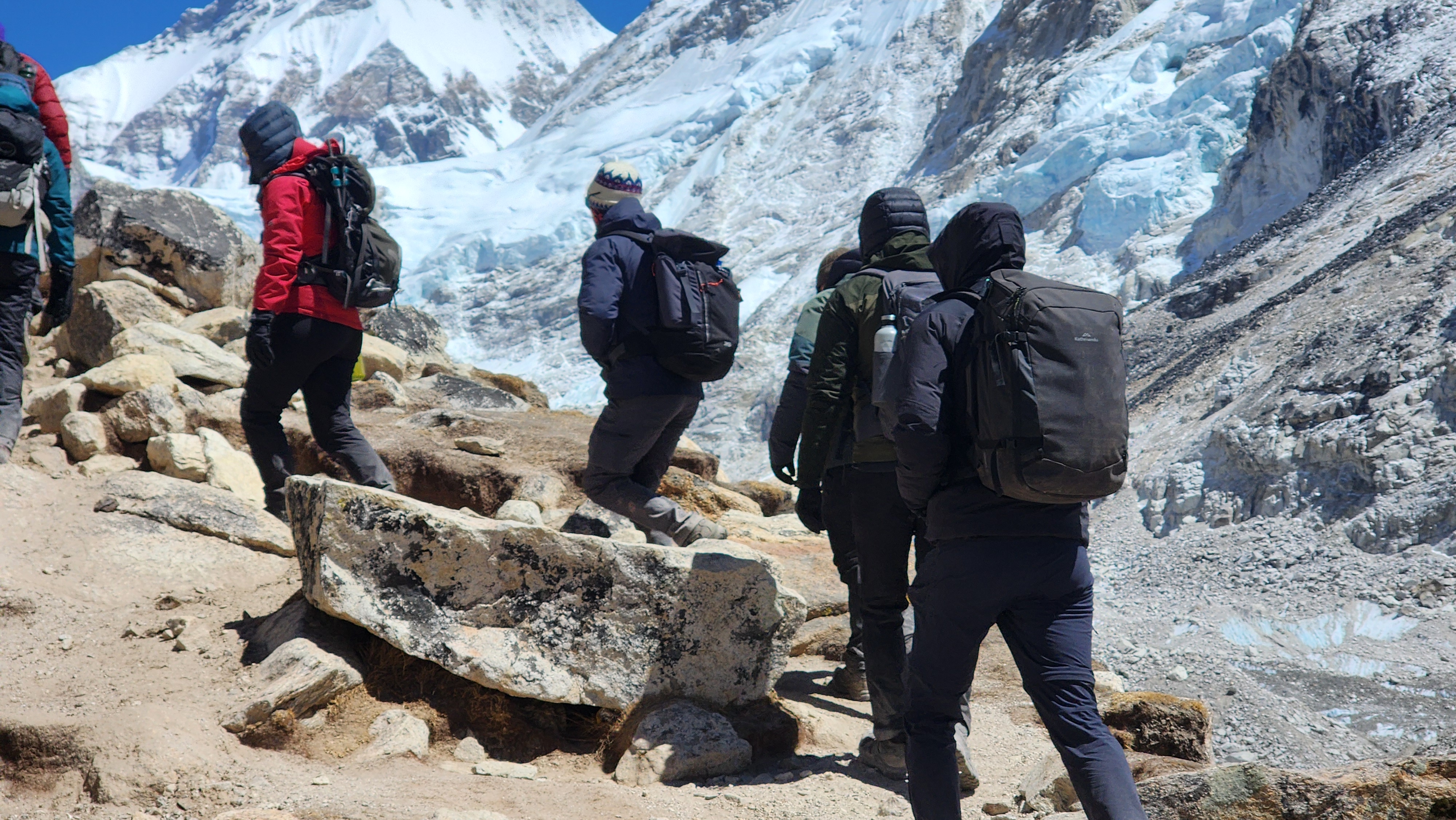
The hardest single push of the trek, and it comes the morning after the hardest day. You leave Gorak Shep before dawn, in the dark and the cold, on legs already worked by yesterday's push to Base Camp, and climb steep, loose scree gaining roughly 411m, to 5,545m. The altitude, the early hour, and the accumulated fatigue from the days above 5,000m all land at once. Most trekkers describe it as the most demanding ninety minutes of the entire route. After sunrise, the day continues with a long descent back through Lobuche to Pheriche, the body's first real taste of what the return journey will demand.
Day 10: Pheriche to Phortse: Moderate to Hard
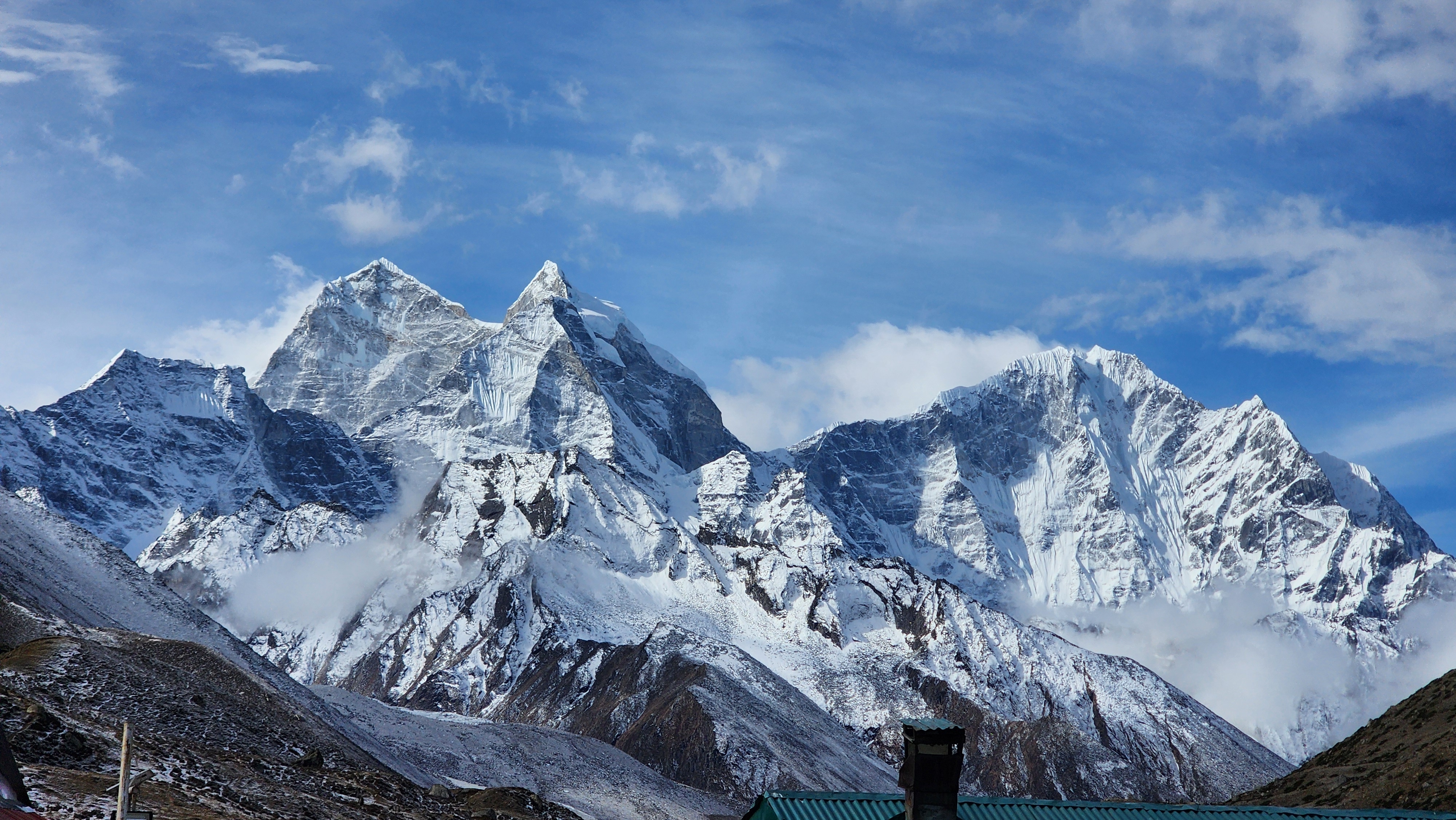
A long, varied descent day that retraces the main trail south through Tengboche and down through Namche Bazaar, then swings off the main route to Phortse, a quieter village sitting on the ridge above the Dudh Koshi. This day covers significant ground and over 1,000m of net descent from Pheriche at 4,250m to Phortse at roughly 3,810m. After nine days largely above 4,000m, the descent feels different from what the upward journey prepared you for: legs that climbed well now have to absorb sustained downhill under accumulated fatigue. The route through Namche involves familiar terrain but the body is working it in the opposite direction, and the off-route push to Phortse at the end of a long day adds distance when energy reserves are already low.
Day 11: Phortse to Monjo: Moderate
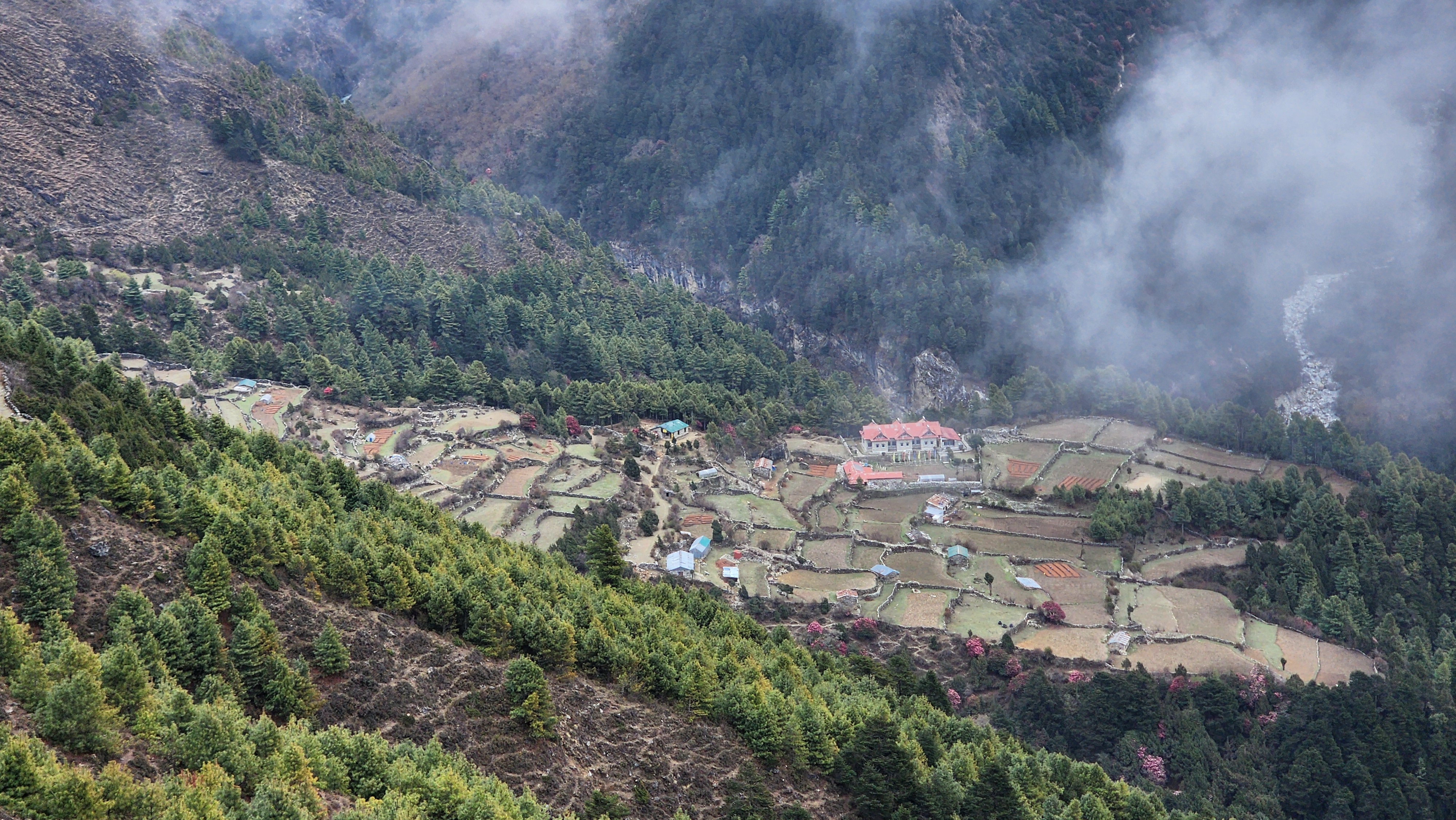
A descent through the lower Khumbu valley, dropping from Phortse at 3,810m down toward Monjo at around 2,835m, following the Dudh Koshi river south. Roughly 1,000m of net descent spread across a full walking day. The trail passes through familiar forest, the air thickens noticeably with each hour, and for most trekkers this day brings the first genuine sense of physical relief since above Dingboche. Knees are working harder now than at any point on the ascent, and the cumulative load across ten days of trekking starts to show on the descents.
Day 12: Monjo to Lukla: Moderate
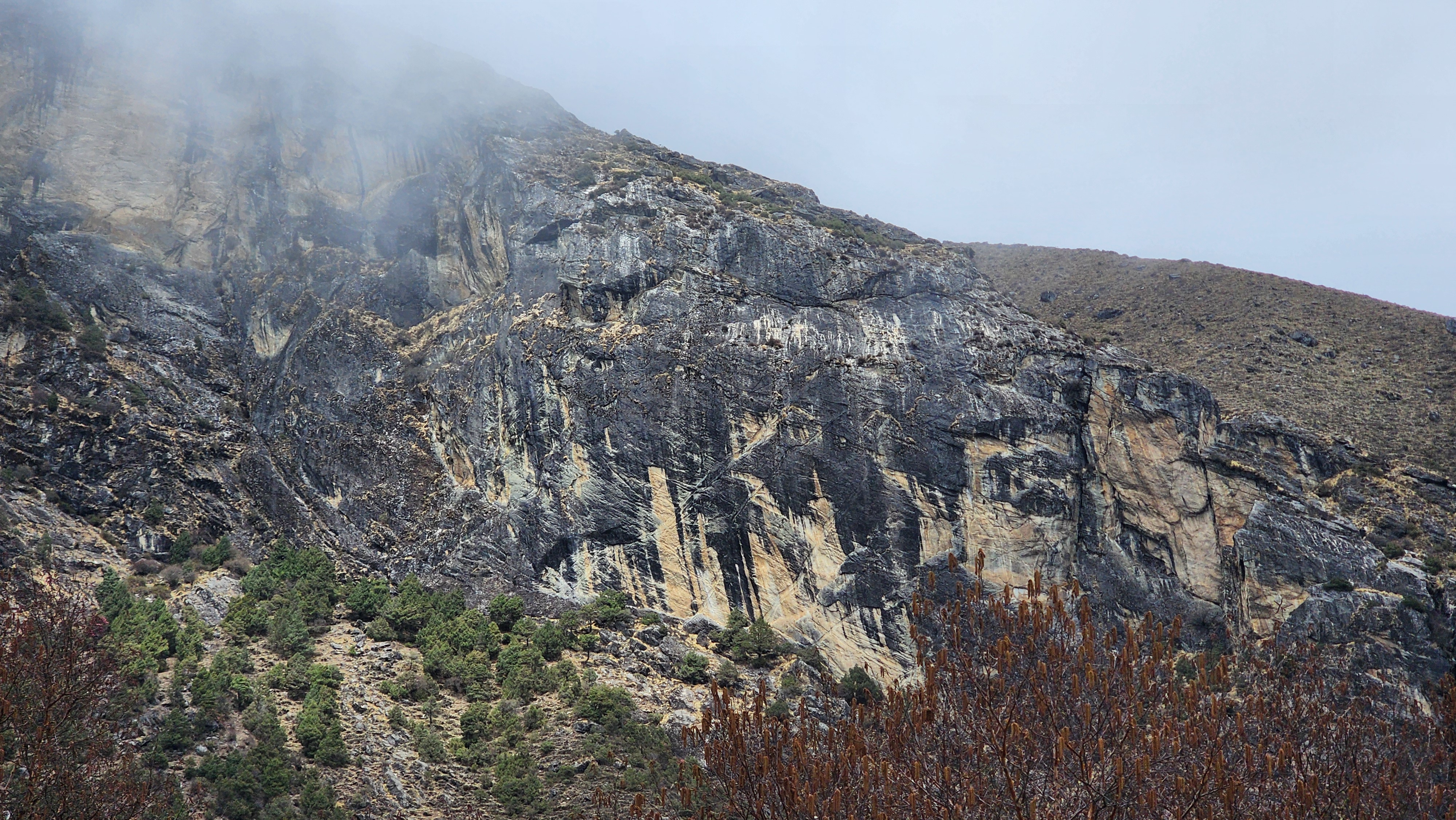
The final walking day. From Monjo at around 2,835m, the trail climbs briefly through Jorsale and follows the Dudh Koshi valley back up to Lukla at 2,860m. This isn't a straightforward descent, the trail undulates rather than dropping cleanly, and legs that have already done eleven days of work including three consecutive descent days, feel the accumulated load. The stretch past Phakding is where unprepared trekkers most often report knee pain, not from any single steep drop, but from the cumulative descent load carried across the previous two days landing on already-fatigued joints. Trekking poles earn their place most clearly here.
Day 13: Fly Lukla to Ramechhap: Easy
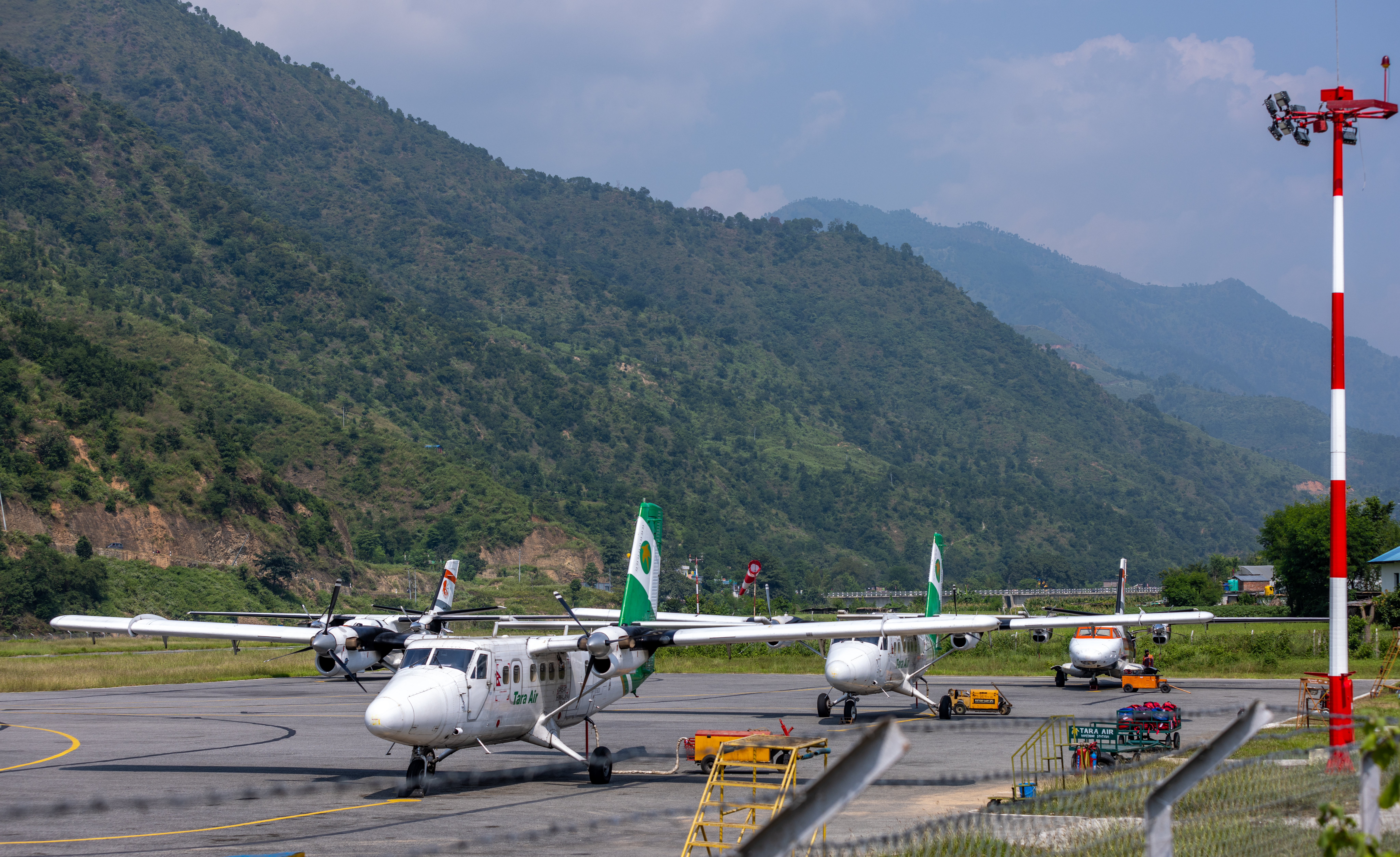
No walking. A short flight back down, where the air feels almost thick after nearly two weeks above 2,800m. Many trekkers notice genuine physical relief in the first hour back in Kathmandu, before they've even processed that the trek is over.
The Breathing Technique Guides Use Above 4,000m
Every Himalayan trek tests your legs. Far fewer test your breathing the way the stretch from Lobuche to Kala Patthar does, simply because few teahouse treks in Nepal sustain walking effort above 4,800m for as long as this one does. This is where a specific, trainable mountaineering skill actually pays off, and it's one of the few genuinely original physical demands of this particular trek.
The rest step
Mountaineers use this on every major peak above the tree line, and Khumbu guides use a version of it without necessarily naming it. With each step, you briefly lock your back knee, letting your skeleton bear your weight instead of your leg muscles, for a fraction of a second before the next step. At lower altitude this barely registers. Above 4,800m, on the approach to Kala Patthar or across the moraine past Thukla Pass, guides and climbers report pausing on that locked leg for several seconds at a time, simply to let their breathing catch up before the next step.
Pressure breathing
Paired with the rest step, this is a forceful, pursed-lip exhale, like blowing out a candle, that increases pressure in the lungs and measurably improves gas exchange. Published research on trekkers at altitudes comparable to this route's upper section has measured real increases in blood oxygen saturation from slow, controlled breathing patterns like this. It isn't a wellness technique borrowed from elsewhere, it's standard mountaineering practice, and the mechanism behind it, forcing more complete oxygen exchange when each breath delivers fewer oxygen molecules than it would at sea level, is exactly the problem this trek's upper stages create.
Train it before you ever see Lobuche
Practice the rest step on stairs during training, locking the back knee briefly on every third or fourth step, paired with a deliberate, forceful exhale. By the time you're walking the moraine past Thukla Pass at 4,830m, the technique should already feel automatic, not like something you're learning under pressure for the first time at altitude.
Hydration, Food, and Pace: The Three Things That Decide a Mild Headache
Most cases of mild AMS on this route come down to four habits, and they're connected. Get all three right and most mild symptoms either don't appear or resolve with a day of proper rest, rather than escalating into something that ends the trek early.
Dehydration thickens the symptoms of AMS and makes a genuine headache harder to distinguish from a mild one. Skipped meals reduce the energy reserve your body needs to keep adapting overnight. Walking too fast for the altitude raises your heart rate and respiratory demand exactly when your body needs to be conserving oxygen for adaptation, not effort. And poor sleep, which is common above 4,000m regardless of how well the first three are managed, compounds all of it, since the body does most of its altitude adaptation overnight.
Aim for 3 to 4 litres of water a day above 3,000m, eat fully even when appetite drops, and walk at a pace where conversation stays possible.
Who this trek is right for
Adults who can walk six hours a day on hilly terrain with a 5 to 7kg pack without stopping frequently. Train on actual hills over consecutive days, starting at minimum three months out. Altitude sickness does not care about fitness levels, but a strong base makes everything above 4,000m considerably more manageable.
Is the EBC Trek Hard on Your Knees?
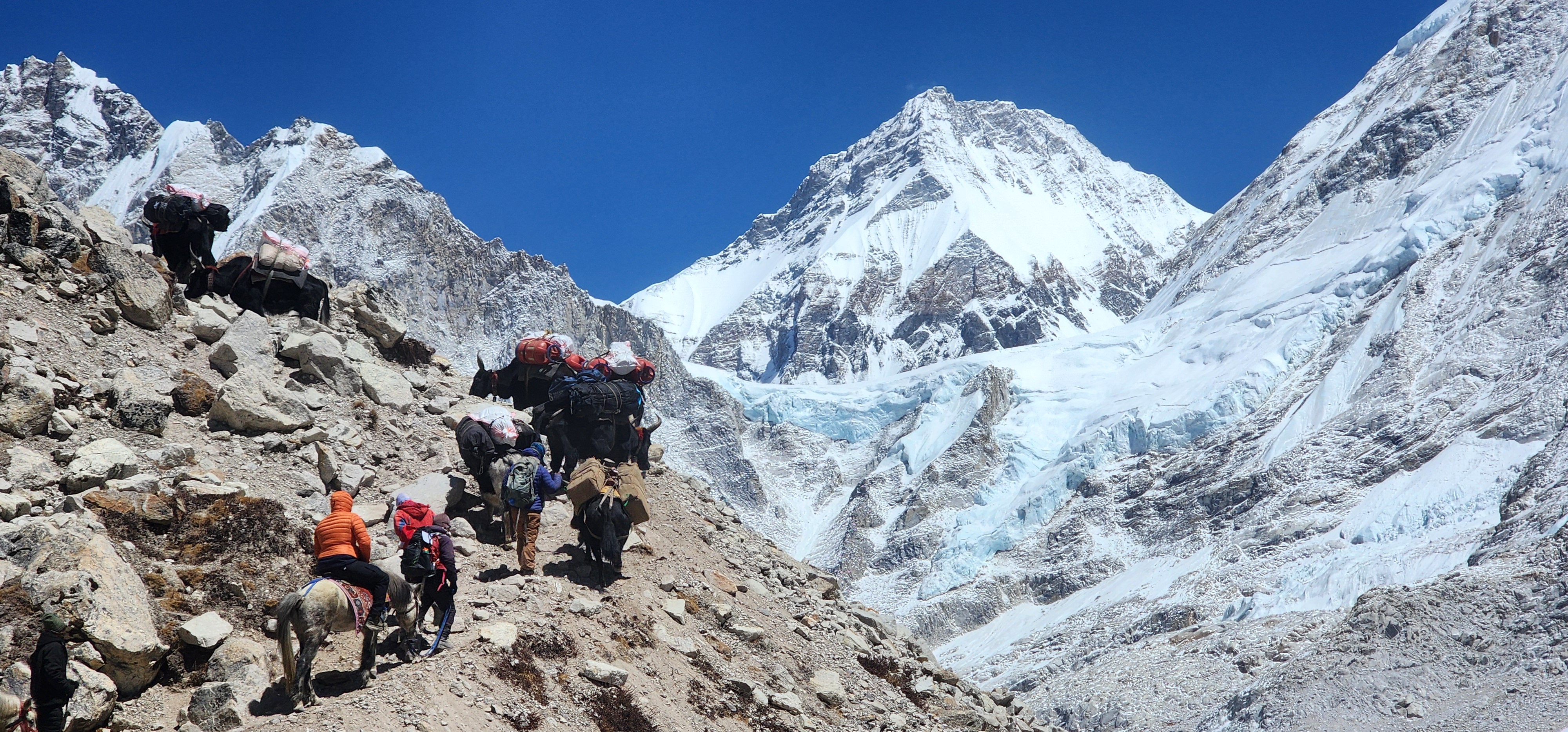
If Annapurna Base Camp's defining physical complaint is knee pain from days of relentless stone staircases, EBC's version is more spread across the final three descent days: from Pheriche through Phortse, then Monjo, then back to Lukla, roughly 1,400m of cumulative downhill distributed across legs that have already done nine days of hard trekking above 4,000m. Splitting it over three days rather than one doesn't remove the load, it distributes it, and the Monjo to Lukla day in particular, with its rolling terrain and uneven stone trail, is where accumulated knee fatigue tends to surface. The two conditions to know about are patellofemoral pain syndrome and IT band syndrome.
Condition | What it feels like | How to prevent it |
Patellofemoral pain syndrome | Pain around or behind the kneecap, worsening on descents and long stone staircases. Caused by the kneecap not tracking correctly in its groove. | Quad and glute strength, specifically single-leg step-downs, trains the muscles that keep the kneecap aligned under load. |
IT band syndrome (ITBS) | Sharp or burning pain on the outer side of the knee, from the iliotibial band rubbing against the lateral femoral condyle. | Hip stabilizer strength, loaded glute bridges and clamshells, controls the leg alignment that prevents this friction. |
On an incline, the knee absorbs two to three times your body weight. Across the Namche to Lukla descent specifically, on legs that have already completed ten days of work, that load is substantial on unprepared joints.
If you already have a history of knee problems
Talk to a physiotherapist before the trek, not after pain shows up on the trail. Many people with prior knee issues complete this route without trouble because they worked on the specific strength deficit in advance. What doesn't work is hoping the knee holds out for twelve days. The descent from Pheriche is long enough that a pre-existing weakness will surface.
Myths About Fitness and the EBC Trek
"If I did Annapurna Base Camp, I'm ready for this."
ABC tops out at 4,130m and you sleep there for one night. EBC keeps you sleeping above 4,000m for four or more consecutive nights, and above 4,900m for two of them. The two treks share a teahouse system and a similar daily walking demand, but EBC asks something ABC genuinely doesn't: sustained adaptation at altitudes where red blood cell production and sleep quality both come under real, prolonged strain. Completing ABC is a good sign of general trekking fitness. It isn't proof your body has been tested the way EBC will test it.
"A high resting SpO2 reading means I'm fine to push on."
A single oximeter reading taken at rest, first thing in the morning, tells you very little on its own. The number that actually matters is the trend across several days, alongside how you slept, whether your appetite held up, and whether your headache is improving or worsening. Trekkers who fixate on one good reading and use it to justify ignoring a genuine headache are reading the wrong signal. The Lake Louise Score, not the oximeter alone, is what should drive the decision to continue or rest.
"The acclimatization days are just for people who are struggling."
The two built-in rest days at Namche and Dingboche aren't a contingency for weaker trekkers, they're physiologically necessary for almost everyone on this specific route, fit or not. Skipping them, or treating them as flexible because you feel strong, removes the 48-to-72-hour window your body uses to begin producing additional oxygen-carrying red blood cells before the trail pushes past 4,800m. Feeling fine on day 03 says nothing about how day 08 will go.
"Garlic soup and ginger tea will sort out any headache."
Both are genuinely useful, well-established parts of Khumbu trekking culture, and worth drinking regularly above 3,500m. Neither treats AMS. A headache that worsens despite rest, hydration, and basic pain relief is a medical sign requiring descent, not a craving for a different hot drink. Treating folk remedies as a substitute for descent protocol is one of the more common, avoidable mistakes on this specific trek, where the upper villages are remote enough that a delayed decision has real consequences.
"The hardest day is whichever one has the steepest climb."
On most treks that's roughly true. On EBC it isn't, because altitude changes the calculation. The climb to Thukla Pass gains only 530m, less than the Phakding to Namche climb's 830m, and yet it's consistently named the hardest single day on the route, because it happens at an altitude where oxygen availability has already dropped meaningfully. Distance and elevation gain matter less here than where on the mountain they happen.
How Fit Do I Need to Be for the Everest Base Camp Trek?
"Fit enough" isn't one number. This trek asks four separate things of your body, and most people are stronger in some of these than others.
Cardiovascular endurance
The ability to sustain moderate effort for 5 to 7 hours, day after day, not the ability to push hard for 20 minutes. A useful self-test: Can you hold a 60-to-90-minute hike on hilly terrain at a pace where you could still hold a conversation in short phrases? If yes, your cardio base is workable.
Leg strength, specifically for descent
Walking uphill mostly tests your cardiovascular system. Walking downhill on stone steps for hours tests muscular strength and control in a completely different way, and it's the area most trekkers under-prepare. A useful self-test: descend a steep hill or several flights of stairs repeatedly for 20 minutes. If your knees ache by the end, this needs direct attention.
Load-carrying capacity
Your daypack will weigh 5 to 7kg for seven hours a day. A useful self-test: walk 10km with that exact weight, in your actual trekking boots. If your shoulders or hips are sore afterward, or the boots create a hotspot, you've found two problems worth fixing now.
Recovery between consecutive days
This is the dimension almost nobody tests in advance, and arguably the most important one. A single hard day is rarely the problem on this trek. Ten hard days in a row, with shortened sleep at altitude, is. A useful self-test: do two demanding hikes on consecutive days and see how the second day actually feels.
Age is a far weaker predictor than preparation across all four of these dimensions. Guides have led trekkers in their 70's who trained properly to Base Camp comfortably, and watched fit trekkers in their 20's struggle because general fitness in one dimension, usually cardio, doesn't transfer to the other three the way people assume.
EBC Trek Training Plan: 12 Weeks
A real plan tells you exactly what to do, not just a theme. Here is the progression, phase by phase.
Weeks 1 to 3: Build the Base |
|---|
|
|
|
|
Weeks 4 to 6: Add Stairs, Hills, and Eccentric Work |
|---|
|
|
|
|
|
|
Weeks 7 to 10: Trek-Specific Load |
|---|
|
|
|
|
|
|
Weeks 11 to 12: Taper and Arrive Fresh |
|---|
|
|
|
|
|
Boots, broken in properly, before anything else
Aim for at least 10 to 15 full training sessions, ideally 50km or more, in the actual boots before you fly to Lukla. A blister on day three doesn't heal on this trail, it compounds for the next nine days. This is one of the few problems on this trek entirely within your control to prevent.
What Exercise Prepares You for Which Section?
Every exercise in the plan above exists because of something specific on the trail. Here's the direct link between them.
Exercise | Prepares you for |
Squats and lunges | General leg strength for sustained daily climbing across the whole route, particularly the Phakding to Namche push |
Single-leg step-downs | Eccentric knee control for the Pheriche to Lukla descent specifically, the most damaging section on unprepared joints |
Loaded glute bridges and clamshells | Hip stability that keeps the kneecap tracking correctly on every descent on the route |
Romanian deadlifts | Hamstring and lower back endurance for the sustained downhill stretch from Pheriche through Phortse, Monjo, and back to Lukla |
Stair climbing, loaded | Direct simulation of the stone-step terrain that makes up much of this trail, especially day 2 |
Back-to-back weekend hikes | The consecutive-day fatigue pattern from Dingboche through Kala Patthar, where recovery becomes partial |
Loaded pack training | Shoulder, hip, and core endurance for carrying 5 to 7kg for seven hours a day, every day |
Training With a Daypack
Porters carry the main duffel. You carry the daypack every step of every day. Loaded with water, a down jacket, rain shell, snacks, first aid kit, and a headlamp, that pack weighs 5 to 7kg. Training without it leaves your shoulders, hips, and core unprepared for seven hours of uneven terrain under that load.
From Week 4, at least one session a week uses the actual trek daypack loaded to 4 to 5kg. By Weeks 8 to 10, the longest hike carries 6 to 7kg. A hip belt causing a hotspot after two hours needs adjusting before Namche, not at Namche.
On trekking poles
Trekking poles meaningfully reduce the load passing through the knee on descents by redistributing some of that force through the arms and shoulders. Across the three-day descent from Pheriche to Lukla, with roughly 1,400m of cumulative downhill spread over already-fatigued legs, that redistribution adds up considerably. Train with poles from Week 6 so the technique is automatic before Nepal, not something learned at Thukla Pass.
How Fitness and Altitude Actually Relate on Everest Base Camp Trek?
Above 2,500m the body extracts oxygen less efficiently from the air. Heart rate rises at the same physical effort that would feel easy at sea level. At Base Camp, oxygen availability is roughly half that at sea level, and steps that felt easy at 2,000m feel deliberate and slow. This is normal physiology at these elevations, not a fitness failure.
What fitness gives you at altitude is a better base to work from. A well-trained cardiovascular system recovers faster overnight, appetite holds stronger, sleep is marginally better, and you arrive at each teahouse with energy remaining. None of this prevents AMS. But all of it makes the upper trail considerably more manageable.
The standard EBC itinerary incorporates the climb-high-sleep-low principle specifically to manage AMS risk, with two-night stops at Namche and Dingboche built in for exactly this reason.
The absolute rule
Never ascend to sleep at a higher altitude while experiencing AMS symptoms. Descend if symptoms worsen. Early symptoms are persistent headache, loss of appetite, nausea, dizziness, and disturbed sleep. Severe symptoms, loss of coordination, confusion, and breathlessness at rest, require immediate descent and emergency evacuation. Diamox (Acetazolamide) must be discussed with your doctor before departure, never started on the trail without prior medical consultation. Comprehensive travel insurance covering high-altitude trekking and helicopter rescue is not optional on this route.
Mental Preparation, and What to Practice Before You Go
Multi-day trekking has a mental fatigue curve entirely different from single-day effort, and it's almost never discussed in fitness guides. The physical challenge of any single day on this route is manageable. The mental challenge of waking up tired, lacing cold boots, and doing it again for the ninth or tenth consecutive day is something different, and trekkers who've only done single-day hikes often report that the psychological demand of back-to-back days is the most unexpected part of the entire trip.
Train consecutive days deliberately
The most effective mental preparation is the same as the best physical preparation: back-to-back training days from Week 4 onward. Walking tired, choosing to go again the next morning, and discovering you can. This is building the evidence base your mind draws on above Dingboche, when the days start accumulating for real.
Pacing is a mental skill, not just a physical one
Above 3,000m, the correct pace is slower than feels natural for most fit trekkers. Going slower than you could is not failure, it's the correct strategy at this altitude. Trekkers who walk at their comfortable lower-altitude pace above Dingboche consistently feel worse by Lobuche than those who deliberately slow down. Practice walking at a controlled, conversation pace on every training hike with elevation, before Nepal, so it's already a habit when it matters.
Bad hours are not bad days
Every multi-day trek has difficult hours: a cold, wet morning, a climb that feels endless, an altitude headache in the afternoon that clears by dinner. Guides on this route consistently note that trekkers who frame a hard hour as "this trek is too much for me" struggle more than those who frame it as "this hour is hard and it will pass." Neither framing changes what happens next. One is simply more useful as a response.
How EBC Difficulty Compares to Other Nepal Treks?
Trek | Max altitude | Difficulty rating | What makes it hard |
3,210m | Easy | Steep stone steps for short stretches, but never sleeps high enough for altitude to be a real factor | |
4,130m | Moderate | Relentless stone staircases in both directions. One night at the high point, knees are the main demand | |
5,545m (Kala Patthar) | Moderate to Strenuous | Sustained altitude exposure, four or more consecutive nights above 4,000m. Demand is physiological, not just muscular | |
5,416m (Thorong La) | Strenuous | A single high pass crossed in one long, cold day, on top of significant daily distance over a longer overall trek | |
5,535m (Kongma La) | Strenuous to Very Strenuous | EBC's altitude and duration, plus three separate high passes and more technical, exposed trail | |
6,470m | Very Strenuous (Climb) | A genuine climb, not a trek. Requires crampons, a rope, and basic mountaineering skill above high camp |
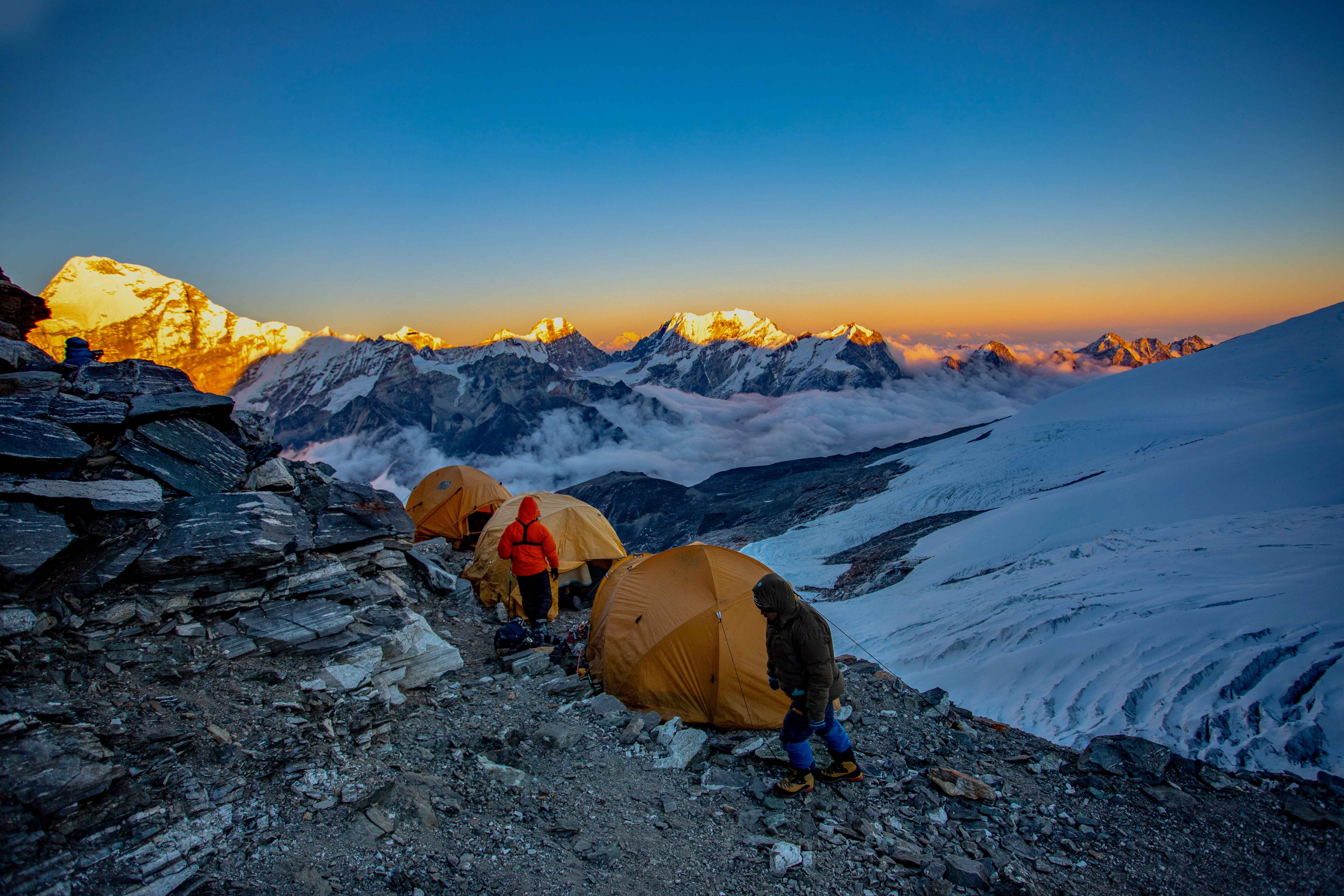
If your EBC training has gone well and you're already thinking about what comes next, the natural progressions from here are the Everest Three Passes route, for trekkers who want EBC's character with more technical trail and higher passes, or Mera Peak, for those ready to move from trekking into genuine entry-level mountaineering. If you're building up to EBC rather than coming from it, Ghorepani Poon Hill or the Annapurna Circuit are reasonable staging treks, the first for a true beginner taste of teahouse trekking, the second for a longer, lower-risk introduction to high-altitude pass crossings before EBC's sustained altitude exposure.
Plan the Rest of Your Trek
Difficulty and fitness are one part of getting ready. Knowing what to expect at each teahouse, when to go, what altitude sickness actually looks like, and what to pack matters just as much. Every number in this guide describes what the trail asks of you. What it can't tell you is how your own body will respond to four nights above 4,000m, or whether your knees will hold up on the descent from Pheriche. That part comes down to honest training and a realistic look at where you stand. If you're weighing whether you're ready, or want a hand building a training plan around your actual schedule, talk to us at Freedom Adventures. We've walked this trail more times than we can count, and we're happy to help you figure out what your preparation actually needs.
Ready to put in the work and see it for yourself? Trek Everest Base Camp with Freedom Adventures.
KEEP EXPLORING
Uncover similar insights
Day-by-Day Demands, Training Plan, and Mental Grit