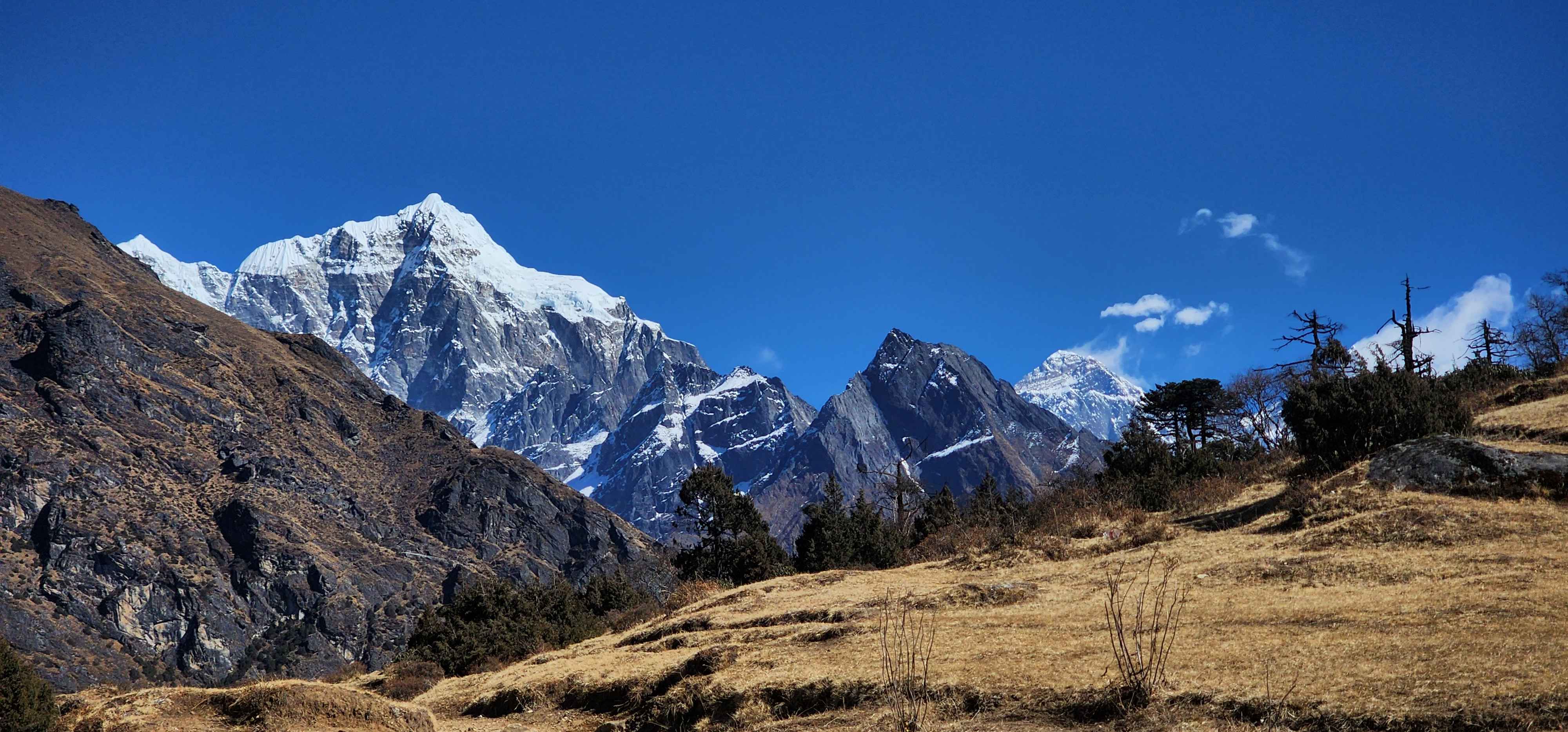

Food and Accommodation in Annapurna Base Camp Trek
Teahouse Facilities on the Annapurna
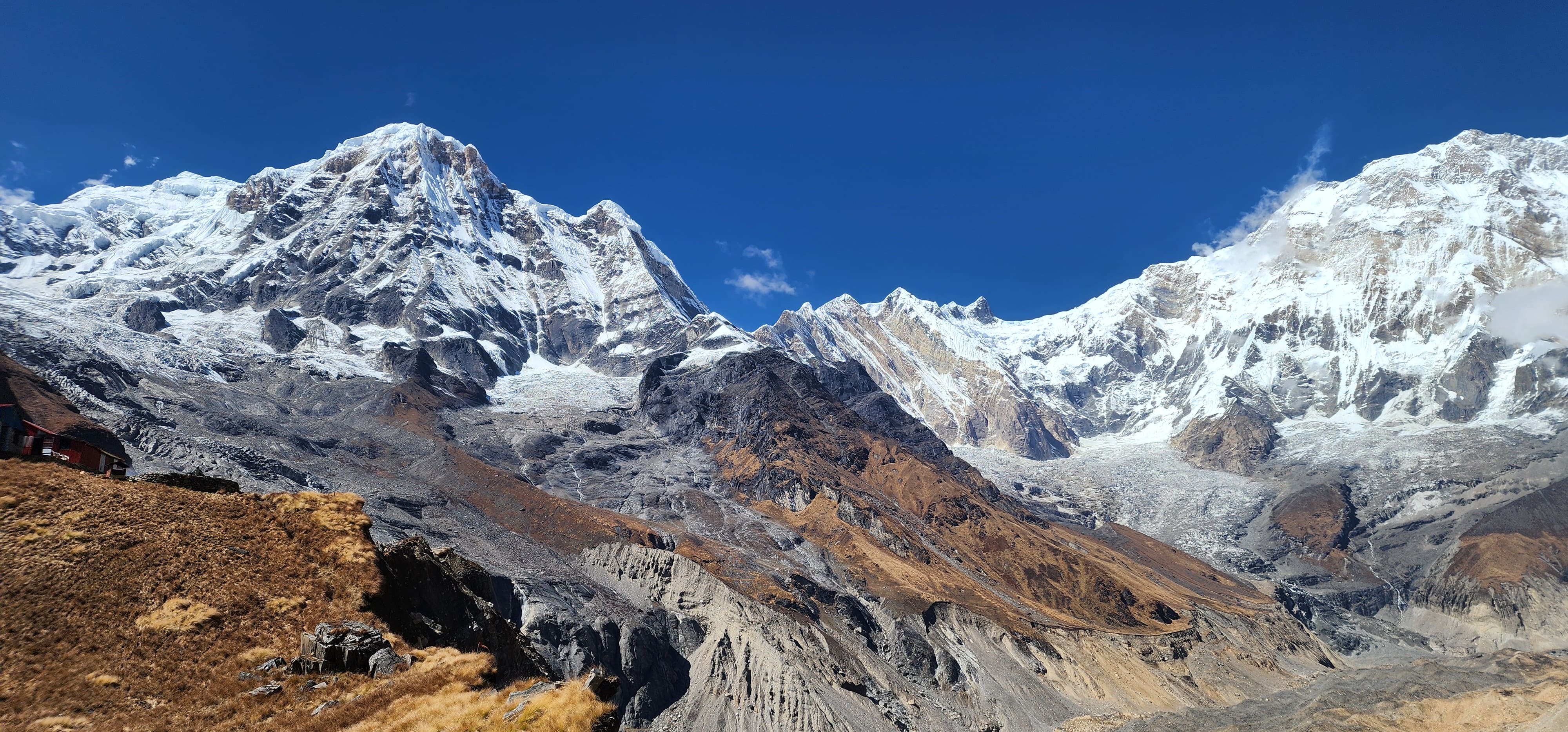
One of the most common questions people ask before this trek is whether they need a tent or camping gear. The answer is no. The Annapurna Base Camp trek is a teahouse trek. From the trailhead to base camp, accommodation comes in the form of small, family-run lodge-restaurants operated by Gurung, Magar, and Thakali families who have hosted trekkers for generations. There are no hotels on this route. Camping is neither necessary nor, in most sections, permitted within the Annapurna Conservation Area.
These are not tourist-manufactured lodges. The teahouses you stay in are working family homes that evolved from village homestays through the 1970s and 1980s as trekking tourism grew. The Annapurna Conservation Area Project (ACAP), administered by the National Trust for Nature Conservation (NTNC), monitors teahouses across the region and places strict limits on new construction inside the sanctuary. The lodges you stay in are part of a system that has been actively managed for decades.
If you are comparing this to teahouse trekking on the Everest Base Camp route, the Annapurna Base Camp is smaller in scale, warmer in climate below the sanctuary wall, and more intimate in character. The teahouse families tend to know each other, the trail is a tighter community, and the menu at the lower stops is wider than most people expect..
What every teahouse provides
Beds with a foam mattress, pillow, and blankets
A shared dining room with cooked meals
Boiled water (paid separately, not included with the room)
A common stove or heater in the dining hall
Accommodation along the trail
Rooms on this route are on a shared basis throughout. Two trekkers per room is the standard: twin beds, a foam mattress, blankets, and a pillow. No teahouse on this route heats private rooms. The dining hall stove is the only warmth in the building each evening, and your sleeping bag is what keeps you comfortable once you head to bed above Chhomrong. This is simply part of what high-altitude trekking in Nepal is, and it is completely manageable with the right gear.
Lower Villages — Nayapul to Chhomrong
1,070m to 2,170m
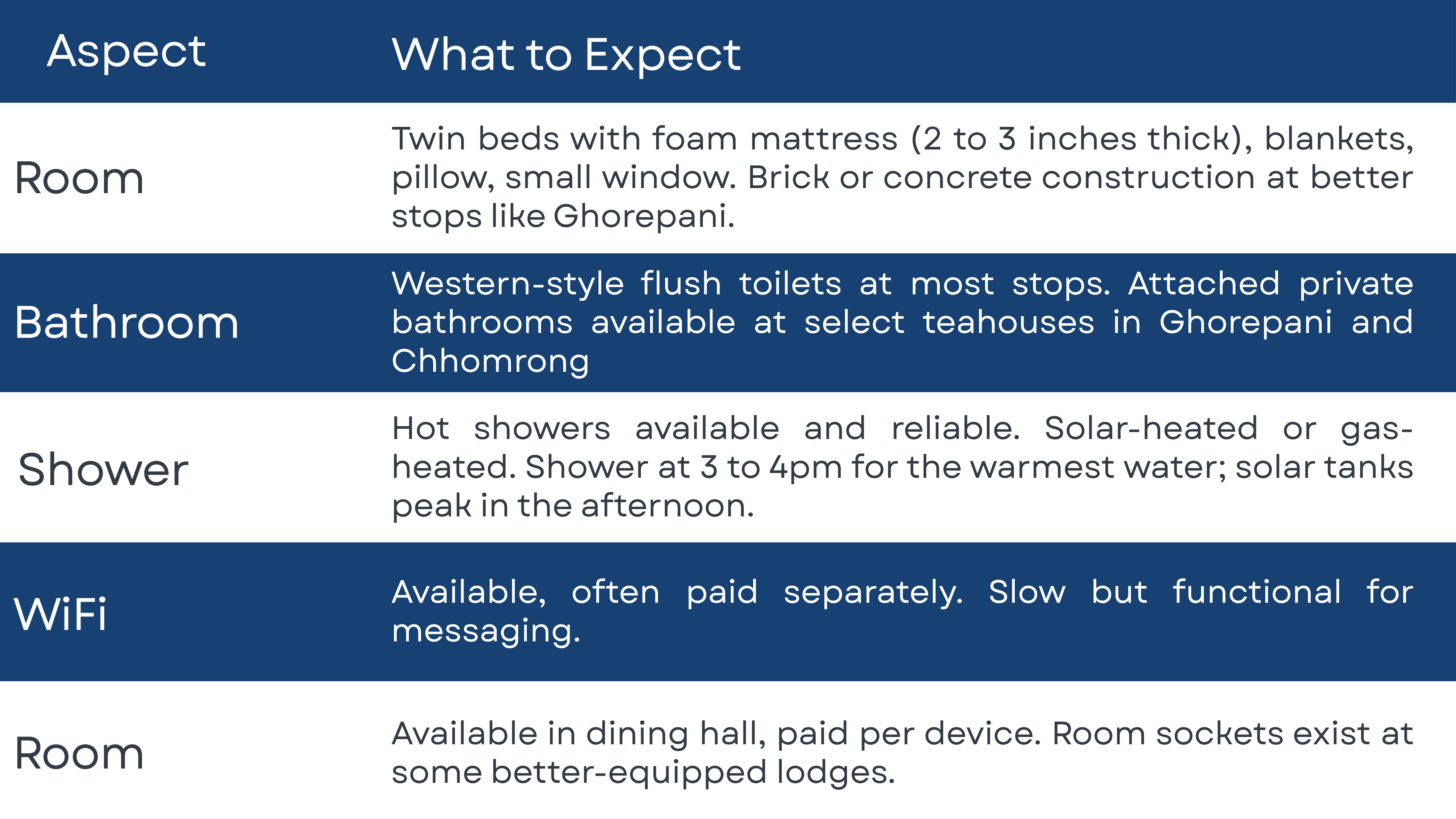
Mid-Section — Sinuwa to Himalaya Hotel
2,360m to 2,920m
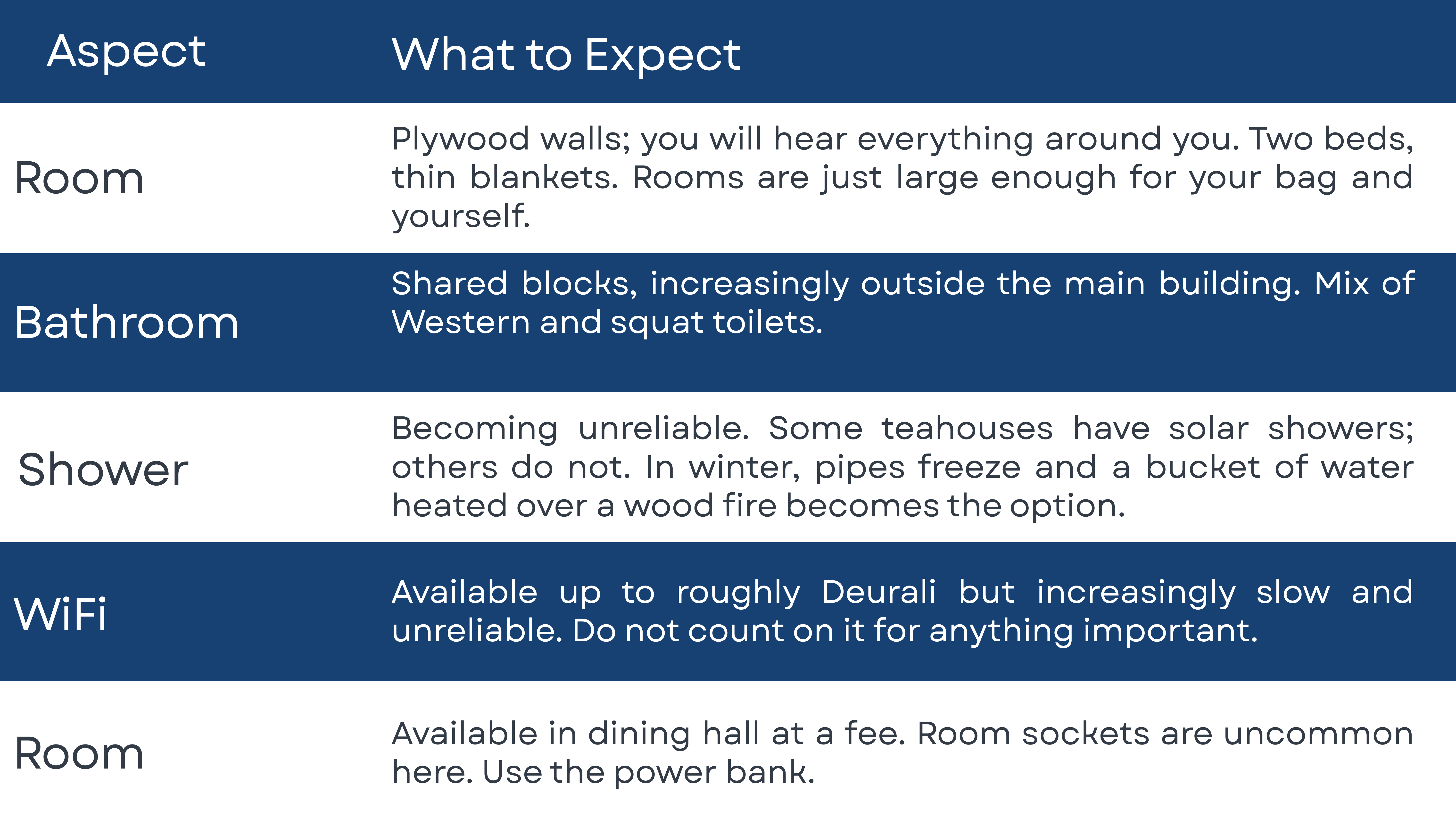
Upper Section — Deurali, MBC, and ABC
3,230m to 4,130m
On sleeping bags: Teahouse blankets at altitude are not sufficient alone. A sleeping bag rated to your season is not optional above Deurali. Sleeping bags can be rented in Pokhara before the trek. Do not assume the blankets will be enough at 4,130 metres on a November night.
See our full ABC packing list for gear recommendations by season.
Stops Worth Knowing in Detail
Ghorepani (2,860m)
Ghorepani is perhaps the most comfortable night on the entire trek. The teahouses here are well built, the mattresses are proper, WiFi is reliable, hot showers work, and on a clear morning the views of Dhaulagiri and the Annapurna range from your window are genuinely hard to describe. The pre-dawn walk to Poon Hill is cold and requires an early start, but watching the sun rise across six ranges of Himalayan peaks from that ridge is one of the moments that stays with trekkers long after they return home. For more on the best conditions for this view, see our guide to the best time to trek to Annapurna Base Camp.
Chuile (2,200m)
Chuile sits between Ghorepani and Chhomrong and rarely gets much attention in trail write-ups. It is a smaller, calmer stop with basic facilities and simple food. Freedom Adventures structures the itinerary to rest here rather than push the full distance in one day, which makes good sense given the elevation change involved. It is a gentle, unhurried night that sets you up well for the descent and climb ahead.
Chhomrong (2,170m)
Chhomrong marks the entrance to the Annapurna Sanctuary and is the last place on the trail where you will have access to the full range of facilities. The teahouses are comfortable, the food menu is still broad, there are fresh baked goods at several lodges, and reliable connectivity is available. Before moving further into the sanctuary, it is worth taking a little time here to charge all your devices fully, pick up an NTC SIM card if you need one for navigation, restock any snacks, and send any messages you need to send. From Sinuwa onwards, the trail becomes quieter in every sense.
A note for trekkers who want more of what this valley offers: some people combine the ABC approach with the Annapurna Circuit Trek, looping back out via Tatopani and Ghorepani. Chhomrong is where both itineraries share ground. If you are weighing that option, our ABC vs ACT comparison covers the tradeoffs in full.
What changes above Chhomrong
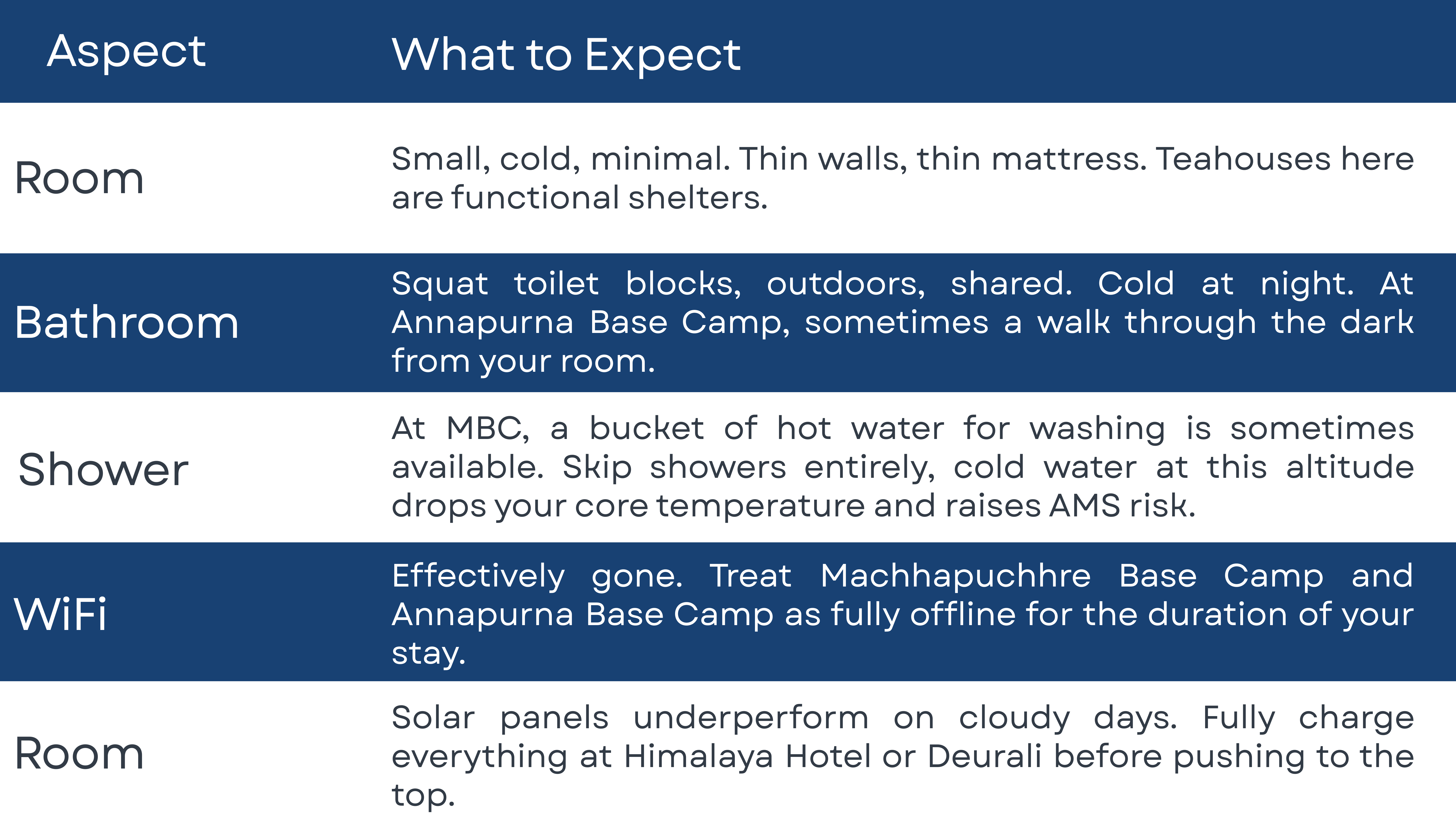
From Sinuwa onwards there are no roads, no reliable hot showers, no WiFi, no laundry, and no ATMs. The dining hall stove is the only source of warmth each evening, and it typically goes out around 9pm. The rooms stay at the ambient outdoor temperature through the night. A good sleeping bag makes all the difference here, and trekkers who arrive prepared for this find the upper trail far more enjoyable than those who are surprised by it.
Himalaya Village (2,920m)
Himalaya sits at the base of the final approach into the sanctuary and is your last realistic opportunity to top up devices before the solar-only environment higher up. A few teahouses have solar charging available in the dining hall. It is worth using this before pushing to MBC, where availability is limited and unpredictable.
Machhapuchhre Base Camp (3,700m)
MBC is where comfort takes a back seat to something much greater. The teahouses here are simple: thin walls, shared outdoor bathrooms, a dining hall stove for the evening, and blankets that genuinely need to be supplemented with your sleeping bag. There are no hot showers in any real sense at this altitude. What MBC offers instead is a position that no description quite does justice to. Machhapuchhre fills the sky directly above. The path into the sanctuary opens ahead. Trekkers who leave MBC before dawn arrive at ABC in the morning light, which is the finest way to arrive.
Annapurna Base Camp (4,130m)
There are four to five teahouses operating at ABC, depending on the season. The rooms are small and cold, with stone walls on the outside and thin plywood within. The shared bathroom block is outside. In October, nights drop to around -6°C. By November they reach -10 to -15°C. In January the temperature outside falls to around -20°C, and the room offers very little insulation above that. A sleeping bag rated for the season you are trekking is essential, not a luxury.
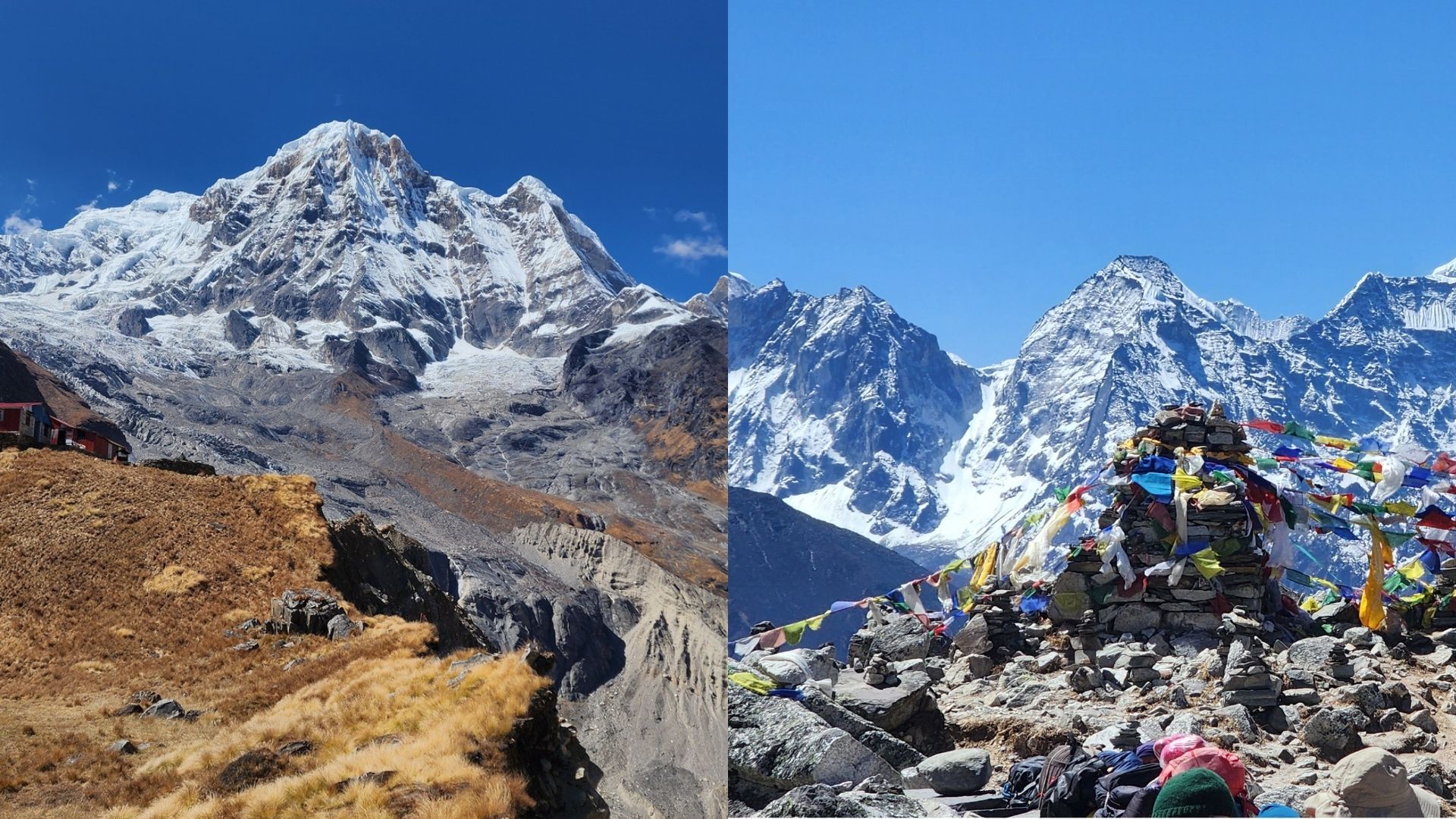
The accommodation at ABC is basic in every measurable way. But stepping outside into the full amphitheatre of Annapurna I at 8,091 metres, Annapurna South, Gangapurna, Hiunchuli, and Machhapuchhre rising in a complete ring around the glacial basin changes the frame of reference entirely. At sunrise, when the south face of Annapurna South catches the first light while the basin floor is still in shadow, nothing about the room matters at all.
The acclimatization profile here is gentler than on the Everest Base Camp trek, where altitude gain is steeper and sleep elevations are higher. The Langtang Valley trek offers another comparison; Lower maximum altitude, but a similarly intimate teahouse character. Both are worth reading about if you are choosing between routes.
Jhinu Danda (1,780m)
Jhinu Danda is the last overnight stop before the drive back to Pokhara, and for many trekkers it becomes one of the most memorable nights of the trip for a reason that has nothing to do with the teahouses. The natural hot springs beside the Modi Khola River, a 20-to-25-minute walk downhill from the village, are exactly what the body needs after eight or nine days of cold rooms and high altitude. Soaking in warm geothermal water with forest above and a river below is a genuinely lovely way to close the mountain section of the trek. The teahouses here are comfortable, WiFi is functional, the hot showers work, and the food menu is wide again.
Food on the Trail
Food on this trail is simple, warm, and cooked fresh by the family running the kitchen. The menus are wide in the lower villages and narrow considerably as you climb because everything that goes into the kitchen above Deurali was portered uphill for two or more days. Understanding why the menu shrinks makes the whole experience easier to approach, and it shifts the question from "why can't I get pasta at 4,000 metres?" to "how do these families get any food up here at all?"
Menu by elevation zone
Zone | Breakfast | Lunch & Dinner |
Lower Villages (Ghorepani, Chhomrong up to ~2,200m) | Porridge with honey or banana, muesli, granola, pancakes (plain, banana, chocolate), French toast, Tibetan bread with butter and jam, eggs any style, hash browns, toast | Dal bhat, pasta, basic pizza, veg fried rice, egg fried rice, thukpa, chow mein, Sherpa stew, momos, garlic soup, Korean ramen, macaroni soup, spring rolls, sandwiches. Beer available. |
Mid-Section (Bamboo to Himalaya ~2,300m to 2,920m) | Porridge, eggs any style, Tibetan bread, toast. Menu narrows based on what was recently portered up. | Dal bhat, thukpa, garlic soup, egg fried rice, noodles. Meat still appears on menus here but its safety is questionable |
Upper Sanctuary (Deurali, Machhapuchhre Base Camp, Annapurna Base Camp 3,230m to 4,130m) | Porridge, eggs, Tibetan bread. Order the night before if you are in a large group. one kitchen, many people. | Dal bhat, thukpa, garlic soup, noodles, eggs. The menu is short by necessity. Order simply and the kitchen handles it well. |
A word about meat above Chhomrong
There is no refrigeration above Chhomrong. Meat is porter-carried, sometimes over multiple days, without cold chain storage. At altitude, any stomach illness compounds dehydration, and dehydration in turn makes altitude sickness significantly harder to manage. Eggs are a safe and plentiful protein source above Chhomrong and are available at every stop. Most guides on this route eat eggs above Chhomrong as a matter of course. It is a sensible habit to adopt.
Why Dal Bhat Matters
Dal bhat is Nepal's staple meal: steamed rice, lentil soup, seasonal vegetable curry, fermented pickle, and papad. At most teahouses on this route, everything is refilled for free until you are finished. It is the meal that every guide, porter, and teahouse cook on this trail eats every single day, and the reason is straightforward. It works at altitude better than anything else on the menu.
Component | Why It Helps at Altitude |
Rice (complex carbohydrate) | Slow-release energy over 5 to 7 hours, which sustains you through long ascent days without the drop that comes from simpler carbohydrates. |
Dal (lentil soup) | Warm, protein-rich broth that contributes to the 3 to 4 litres of daily hydration your body needs at altitude, while providing plant protein for muscle recovery each evening. |
Tarkari (vegetable curry) | Micronutrients, fibre, and additional hydration. Well-cooked and easy to digest even where digestion slows at altitude. |
Achar (fermented pickle) | Gentle probiotic benefit for gut health, which is under extra pressure from altitude, unfamiliar water sources, and a changing diet. |
Free refills | The only meal available at every altitude, in every season, at every stop, with unlimited quantity. It is consistently the best value and best nutrition on the trail. |
"Dal Bhat Power, 24 Hours"
Every guide on this route says this, and they mean it. From Sinuwa upward, ordering dal bhat for dinner each evening makes a real difference to how you feel the following morning. Trekkers who eat dal bhat consistently through the upper trail tend to have more energy in the afternoons than those reaching for familiar western options. The food that performs at altitude is the food that the people who work here every season actually eat.
Ask for garlic soup every evening from Sinuwa upward
Garlic has been used by Himalayan communities at altitude for generations. It is believed to support circulation and help with the early symptoms of altitude adjustment. Whether the clinical evidence is complete or not, the practice is universal among guides, porters, and local residents who work above 3,000 metres every season. It is warm, it hydrates, it costs very little, and the people who know this mountain best order it every night they sleep above the treeline.
Dietary Needs and Restrictions
Dietary Need | How It Fares | Practical Notes |
Vegetarian | Very easy | Nepali cuisine is naturally vegetarian-forward. Dal bhat, fried rice, noodle soups, and vegetable curries are available at every stop without any special arrangements needed. |
Vegan | Easy with communication | Be specific when ordering: no meat, no eggs, no milk, no butter, no ghee. Dal bhat can easily be prepared vegan. Bringing some extra snacks from Pokhara helps above Deurali where egg-free options thin out further. |
Gluten-free | Manageable with care | Rice-based dishes are naturally gluten-free. Shared kitchens mean some cross-contamination risk. Saying "no wheat" tends to communicate more clearly than "gluten-free" in this context. Noodles, bread, and pasta are best avoided. |
Diabetic | Requires some planning | Dal bhat is high glycaemic from the rice. Egg dishes, vegetable curries, and lentil soup without rice are better-controlled alternatives. Bring your own glucose management supplies, as there are no pharmacies above Chhomrong. |
Lactose intolerant | Easy | Requesting dairy-free is easily accommodated. Dairy above Chhomrong is scarce regardless, so this becomes less of a concern on the upper trail. |
Nut allergy | Low risk | Nuts are not commonly used in trail cooking. Letting your guide know before the trek starts means it can be flagged at each teahouse as a routine part of meal arrangements. |
A note on communicating dietary needs
The word "vegetarian" is understood widely on this trail, but its exact boundaries vary between teahouse owners. Some interpret it to exclude eggs; others do not. The clearest approach is to name each individual item you cannot eat rather than using a category label. Your guide communicates this at each stop as part of the standard routine, and being specific yourself reinforces it further.
Approximate Food and Accommodation Costs
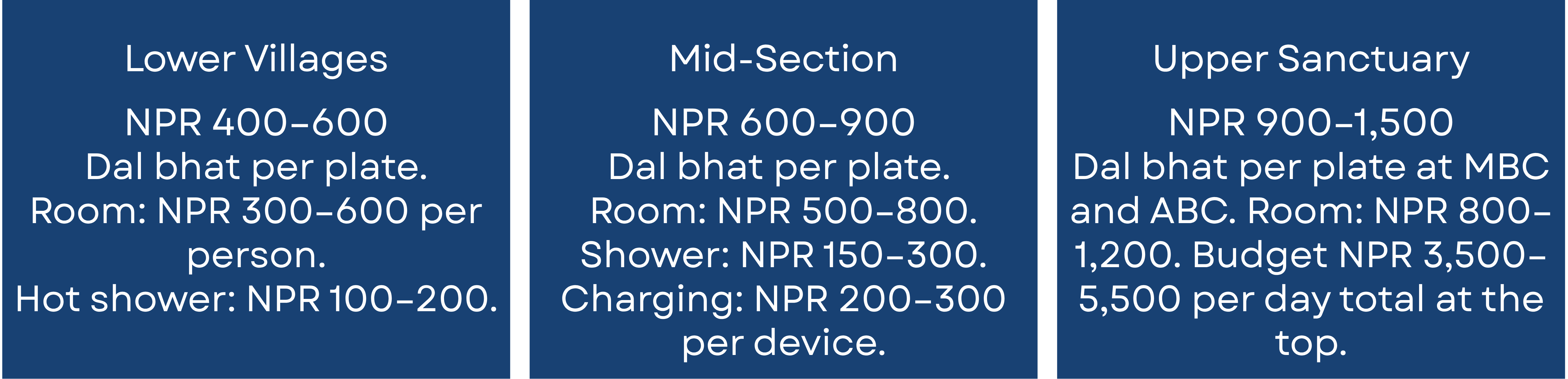
Prices on this route rise steadily with altitude, reflecting the genuine cost of porter-carrying supplies higher into the sanctuary. Below is an honest guide to what you can expect to spend. These are field-verified figures for 2026 and will fluctuate slightly by season and teahouse.
Water and Hydration
Drinking water on the trail
Tap water, stream water, and spring water along the AST route are not safe to drink without treatment. Even water that looks clean and clear can carry bacteria and protozoa in an environment with active human and animal use. This applies at every altitude from Nayapul to base camp.
Option | Safety | Practical Notes |
Filter bottle (LifeStraw, Sawyer) | Safe (removes bacteria and protozoa) | Buy in Thamel or Pokhara or before the trek. Pays for itself within a few days compared to purchasing boiled or bottled water at altitude. Also removes the plastic waste concern. Worth bringing beforehand rather than hoping to find one on the trail. |
Purification tablets (iodine or chlorine) | Safe | Lightweight and inexpensive. Adds a slight taste to the water. A good backup option to keep in your pack alongside a filter bottle. |
UV purifier (SteriPen) | Safe (kills viruses too) | The most comprehensive solution. Needs charging or batteries. Best paired with a filter for any sediment in the water. |
Bottled water | Safe if sealed | ACAP actively discourages plastic bottles inside the conservation area. Prices rise significantly with altitude. A reusable filter bottle is a kinder and more cost-effective solution for this route. |
Untreated tap, stream, or spring water | Not safe | Best left alone regardless of how it looks or where it is coming from. |
Aim to drink 3 to 4 litres of water each day at altitude, including on rest days. Dehydration is both a cause and an amplifier of altitude sickness, and it can creep up without obvious thirst signals at elevation. A simple daily check: pale yellow urine means you are hydrating well. Dark yellow is a sign to drink more.
Altitude sickness
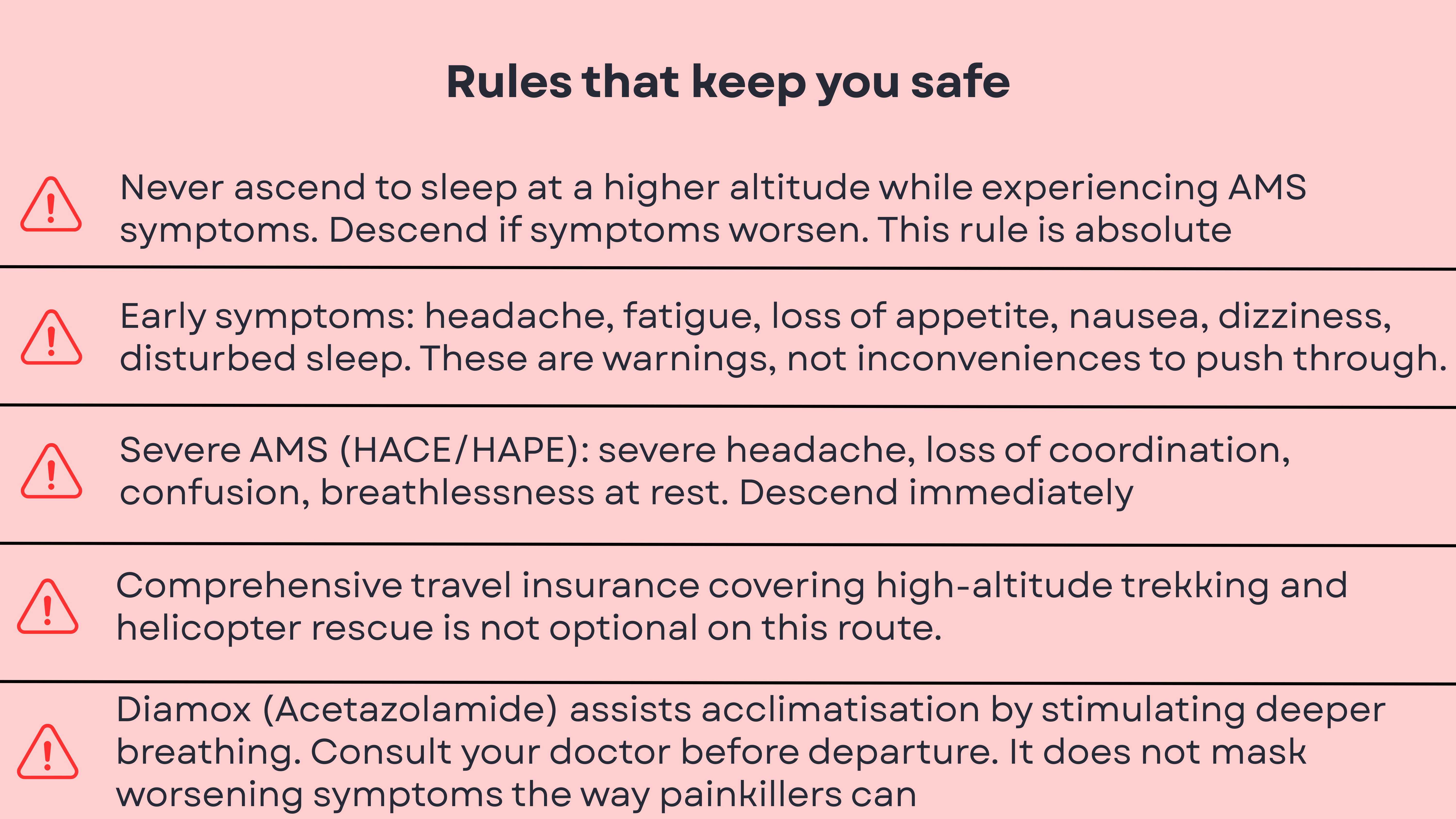
AMS risk begins above 2,500m and becomes serious above 3,000m. On this itinerary you sleep above 2,500m from Day 4 (Ghorepani) and above 3,000m from Day 7 (Himalaya). The acclimatisation built into this route, particularly the Poon Hill ascent-then-sleep-lower on Day 4, is one of its key structural health advantages.
Showers, Toilets, and Hygiene
Hot Showers
Section | Shower Information |
Ulleri to Chhomrong | Solar or gas-heated showers are reliable and warm. Best taken around 3–4 pm before dinner when solar tanks are hottest. Always ask whether the water is solar or gas heated before paying, as cloudy days may mean only lukewarm water. |
Sinuwa to Himalaya | Shower availability is unreliable. Some teahouses have solar showers while others provide bucket water heated over a fire. In winter, pipes above Bamboo may freeze overnight. Always ask first and do not expect guaranteed hot water. |
Deurali, MBC, ABC | Showering is not recommended above 3,700 m. Cold water can reduce core body temperature and increase AMS risk. If warm water is unavailable, use wet wipes instead of showering. |
Bamboo (Descent) | Showers are sometimes available, though water is often only lukewarm. Confirm availability beforehand. |
Jhinu | Reliable hot showers are available, along with natural geothermal hot springs located 20–25 minutes downhill. Both are highly recommended. |
The practical solution above Deurali: Unscented baby wipes or trekking wet wipes. A thorough body wipe-down takes five minutes, removes sweat and grime effectively, and keeps skin in good condition until a proper shower is possible again. Two to three packs per person for the full trek is a good quantity. Dry shampoo handles hair. One travel-size bottle lasts the trek.
Toilets
Section | Toilet & Comfort Information |
Ulleri/ Gorepani | Western-style flush toilets at most lodges, often inside the main building. Some upgraded lodges offer en-suite attached bathrooms at Ghorepani. |
Chhomrong / Sinuwa | Mix of Western and squat toilets. Shared toilet blocks are standard. Generally clean along this stretch. |
Himalaya and above | Mostly squat toilets in shared outdoor blocks. Squat toilets use floor-level ceramic fittings with foot platforms and either a flush handle or bucket water system. Hygienic when maintained properly. |
Toilet paper
Not provided anywhere on this trail. Carry your own at all times, including a roll accessible in your day pack for trail use between teahouses. Three to four rolls for the full trek are adequate for most people. Small rolls are available in Kathmandu/Pokhara before you leave.
Disposal, never flush: Used toilet paper, wet wipes, and sanitary products must not be flushed or placed in squat toilet holes anywhere on this trail. The plumbing and pit systems cannot handle them. Use the bin in the toilet block, or carry a sealed zip-lock bag until proper disposal is available. This is a plumbing issue at lower elevations and an environmental issue in the conservation area at higher ones.
Laundry
Laundry services are available at Ghorepani and Chhomrong for a small charge per kilogram. Above Chhomrong, laundry becomes difficult both logistically and practically: water is limited, and cold damp conditions at altitude mean clothes often do not dry reliably overnight. Packing fabrics that dry quickly, merino wool and synthetic layers, makes life noticeably easier on the upper trail. Cotton takes too long to dry and feels uncomfortable when wet and cold at elevation.
WiFi and Mobile Data
WiFi is available at teahouses from Nayapul through to Chhomrong. It is functional for sending messages, checking emails, and sharing photos when conditions are good. It is not suited to video calls or anything that requires consistent speed, and it can drop out during power fluctuations or bad weather. Above Chhomrong, WiFi availability fades quickly. Above Himalaya village, reliable connectivity of any kind is effectively gone.
For mobile data, Nepal has two main providers: Nepal Telecom (NTC) and Ncell. On the ABC route, NTC holds its signal noticeably better on the upper sections. Ncell works well in Pokhara and lower villages but tends to fade above Chhomrong. A local NTC SIM card purchased in Kathmandu or Pokhara with a data package is the most practical option for staying connected, particularly for offline map navigation once you are above the treeline.
Electricity and Charging
Electricity is available throughout the route, through hydroelectric power in the lower sections and solar at higher elevations. Charging points are in the dining hall rather than in private rooms. At MBC and ABC, solar output is limited and can be unpredictable, particularly in winter and on heavily overcast days. It is sensible not to rely on being able to charge devices above Himalaya village.
The power bank
A 20,000mAh power bank fully charged at Chhomrong is enough to carry most trekkers through to ABC and back to Bamboo without needing another charge. Himalaya village is the last reliably consistent charging point before the upper sanctuary, and topping up there before moving on is a good habit. A power bank also removes the need to wait for a dining hall charging point at MBC at the end of a long day, which is a small but genuine quality-of-life improvement at altitude.
Cash and Expenses
There are no ATMs past Nayapul
It is worth withdrawing enough Nepali rupees in Pokhara before the trek begins. Bringing a mix of smaller denomination notes is helpful, as teahouses higher on the trail sometimes have difficulty making change for very large notes. A few lodges around Chhomrong accept QR scan payments, though cash remains the most reliable option throughout the trail from Nayapul onwards.
Trail expenses cover meals, hot showers at lower stops, device charging, boiled or filtered water, snacks from small shops along the way, and any additional items you need. Prices rise steadily with altitude, reflecting the genuine cost of porter-carrying supplies to higher elevations. Planning for a daily budget that accounts for this gradient means there are no surprises along the way.
Before You Go
You have read the tables, noted the elevations, and bookmarked the packing list. That part is done. What no guide can fully prepare you for is the specific quality of silence at Base Camp on a clear night, or how a bowl of dal bhat tastes after six hours on a steep trail in the rain. Some things only make sense once you are actually there. Go find out for yourself.
KEEP EXPLORING
Uncover similar insights
Day-by-Day Demands, Training Plan, and Mental Grit