
The Pokhara Valley Guide
How to Actually Spend Your Time in Pokhara
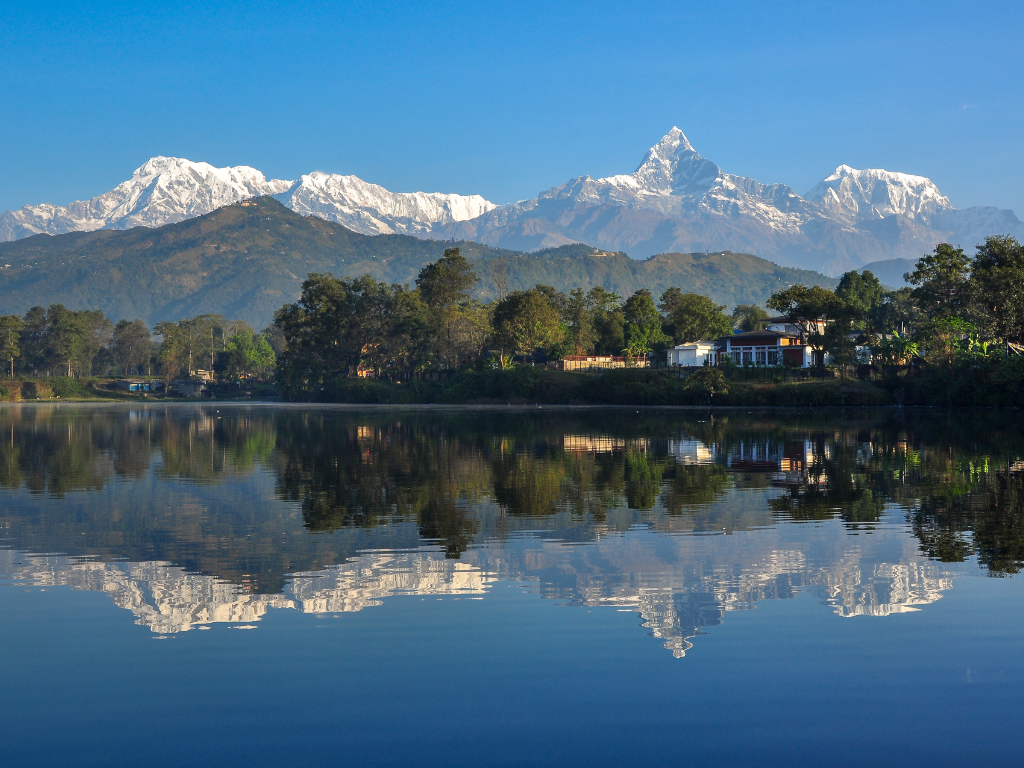
Pokhara is where the mountains stop to admire themselves in the water. The air carries a different weight than in Kathmandu. It smells of lake water, cedar, and distant snow. Hemmed in by the massive Annapurna range, this city is the pause button of Nepal.
For most, this city is either the final reward after weeks on the Annapurna Circuit or the nervous starting point for a trek to Annapurna Base Camp and Ghorepani Poonhill Trek. It serves as the gateway to the high Himalaya, yet it possesses a gravity that makes it very difficult to leave.
If you are arriving here after a trek, the soft air and level ground feel like a luxury. If you are just starting, it is the calm before the physical storm. The key to Pokhara is understanding that it is two different cities: the vibrant, caffeine-fueled lakeside and the silent, emerald hills that surround it.
Everything below is organized by what kind of experience you are after. Pick your mood, match it to your morning or afternoon, and the valley will meet you there.
Pokhara will absorb however much time you give it. The question is not what to do. It is what kind of day you want to have.
Adventure Activities in Pokhara
1. Sarangkot
Sarangkot is the classic Pokhara experience sitting on a 1,600-meter ridge just north of Phewa Lake, but it requires a specific mindset. To be honest, standing on a ridge at 5:00 AM with hundreds of other people can feel chaotic. The wind is sharp, and if you are not a morning person, the initial climb feels like an unnecessary penance.
However, there is a moment just before the sun clears the horizon when the crowd goes silent. The peaks of Machhapuchhre, Annapurna and Dhaulagiri turn a ghostly white before catching a pink glow that looks almost artificial. It is a visual reset.
2. Bungee Jump
For those who need a more visceral connection to the landscape, the bungee jump at Hemja is worth putting in the list. This is not a bridge jump but a cantilever tower that leans out over a deep river gorge.
Standing on that metal grating, you feel the height in your stomach. The jump masters are incredibly calm, focusing on the technical safety of the harness and the physics of the cord. Once you lean forward, all that technical knowledge vanishes into pure instinct. It is a quick, sharp shock to the system that clears the mind. It is an experience for anyone who feels the need to match the intensity of the landscape with their own pulse.
If you feel anxious about this, three days before you do it, that is exactly the right amount of anxiety. Do it anyway
3. Skydiving at the Pame Landing Zone
This is seasonal and reserved for those who find paragliding too tame. Falling through the thin Himalayan air toward the Pame landing zone is a sensory overload.
The door opens, the cold air rushes into the cabin, and the world below looks like a postage stamp. The backdrop of the 8,000-meter peaks makes the descent feel both incredibly fast and strangely suspended. It is a rare opportunity to skydive in one of the most dramatic landscapes on earth. If you are looking for the absolute peak of adrenaline in the valley, this is the only answer.
4. ATV All-Terrain Vehicle tours
The valley floor is soft and flat and easy. The hills immediately above it is none of those things. The ATV tour heads directly up steep red-dirt trails and dense forest from the Hemja base. The inclines these machines take you up would require an hour of determined hiking on foot.
The transition from the valley's warm, humid air to the sharp breeze of the high ridges happens within a single climb. You pass through small villages where the smell of woodsmoke sits in the trees and the locals barely look up. Then the forest opens, and Machhapuchhre fills the frame in front of you without warning.
Sky & Aerial Experiences in Pokhara
5. Paragliding
Paragliding in Pokhara is a non-motorized flight that relies on the thermal air currents of the valley. The launch site is located at the high ridge of Toripani. You take a short, determined run down a grassy incline until the wing catches the rising air and pulls you into the sky. The flight lasts twenty to thirty minutes as you track the ridge lines with a clear view into the fluted ice of the mountains. Because there is no engine, the only sound is the wind against the fabric and the distant bells of goats on the lower hills. Your pilot navigates the descent toward the Pame landing zone at the northern edge of Phewa Lake. The touchdown is a standing finish on a flat field, placing you within walking distance of the lakeside cafes.
6. Ultralight Flight over the Annapurna Range
You are seated in an open-cockpit craft that feels more like a bicycle with wings than a plane. This is for the person who wants to get closer to the peaks than any other vehicle allows. Because the aircraft is so small and maneuverable, you can fly right up to the fluted ice walls of Machhapuchhre.
The vibration of the engine feels like it is moving through your own bones. The wind is sharp against your face and the engine is a constant hum, but the perspective of the jagged ice fields is humbling. It is a visceral, noisy, and utterly brilliant way to see the scale of the sanctuary. It feels raw and exposed, exactly how the mountains should feel.
7. Hot Air Ballooning over the Pokhara Valley
This is the slow-motion version of the sky. Rising before the sun, you drift over the valley as the mist clears from the surface of Phewa Lake. Unlike the roar of an ultralight or the focus of paragliding, a balloon offers a panoramic stillness.
The only sound is the occasional, rhythmic hiss of the burner. You move with the wind, so there is no breeze against your skin, just a steady float over the patchwork of fields and rooftops waking up below. It is a 360-degree view of the valley that feels almost prehistoric. It is the best choice for those who want the view without the frantic pace of other aerial sports. It is meditative.
8. Helicopter Tour to Annapurna Base Camp
For many, the trek to Annapurna Base Camp is a life goal. If you do not have the time or the knees for it, the morning helicopter excursion is the ultimate shortcut.
You lift off from the lakeside and within fifteen minutes, the green hills turn to white rock and blue ice. Landing in the heart of the ABC sanctuary at 4,130 meters is a sensory shift. The air is suddenly thin and biting. You get to have breakfast and stand among the giants before the clouds roll in. By 10:00 AM, you are back at your hotel for coffee, having seen what takes others a week of trekking to reach. It feels like cheating, but when you are standing in that amphitheater of ice, you stop caring.
Lakes & Water Activities in Pokhara
Phewa Lake
Phewa Lake is the center of Pokhara. Every aerial activity in the valley lands beside it, every boat on the water reflects the Annapurna range in it, and every evening ends looking at it. Most people experience it from the shore. That is only half of it.
Rent a wooden rowboat and take yourself out toward the Tal Barahi island temple. On still mornings the reflection of Machhapuchhre on the surface is as sharp as the peak above it. The bells of the island temple carry across the open water and the mountains fill the entire frame to the north.
10. Begnas Lake
While Phewa Lake is the social heart of the city, it can be loud. If you want the version of Nepal that exists in old photographs, take a thirty-minute drive to Begnas Lake. It is everything you want from a mountain escape: uncrowded, emerald green, and perfectly still.
The best way to do Begnas is to head toward the area known as Majhikuna. Here, you can rent a wooden boat and row. Afterward, sit at one of the rustic shoreline shacks. They serve local fish caught that morning, seasoned with mustard oil and dry chilis. It is arguably the best meal you will have in the valley. The vibe is pure, unhurried, and exactly what a rest day should feel like.
The vibe here is pure. There is a small beer place right by the water (Tropicana by the Lake) where you can sit for hours watching the local fishermen. It is the kind of place where you intended to stay for an hour but end up staying for the whole day.
While you are out there
From the Sundari Danda viewpoint above Majhikuna, a 15-minute walk from the lakeside, you can see both Begnas and Rupa Lake simultaneously. The hike to Thulakot from here takes about 2.5 hours and gives you a panorama of three lakes in the valley at once. If you have the energy after lunch, Thulakot is the view that makes the Pokhara valley finally make sense geographically.
11. Stand- Up Paddleboarding
Paddleboarding is the most tactile way to engage with the water. While you can rent a board and head out at any hour of the day, our personal recommendation is to arrive when the morning air is still perfectly still. At that hour, the lake acts as a flawless mirror for the Annapurna range. You can paddle right across the breadth of the lake toward the quiet, forested far shore, feeling the subtle core engagement required to maintain your balance on the surface. Take the time to slowly encircle the Tal Barahi Temple. There is a deep, singular relaxation in seeing the ancient stone of the island framed by the massive mountains and the deep water.
Just a word of caution: ensure your phone and camera are securely attached to you. The lake is deep and it has a habit of keeping dropped electronics as permanent souvenirs.
Temples, Stupas & Sacred Sites in Pokhara
12. World Peace Pagoda
Across Phewa Lake sits the World Peace Pagoda (Shanti Stupa). You can see its white dome from almost anywhere in the city.
You can drive there, but taking a boat across the lake and hiking up through the forest is much more rewarding. The trail is steep in places and can be muddy after rain, so wear decent shoes. At the top, the massive white stupa offers a full view of the city, the lake, and the mountains behind it. It is a place for quiet contemplation, so remember to keep your voice low. Even the most talkative travelers tend to fall silent here. It is the best place in the city to map out your upcoming trek or reflect on the one you just finished.
13. Tal Barahi Island Temple & Aarati Ceremony
Tal Barahi is a two-story pagoda sitting on a small island in the middle of Phewa Lake. It is the only landmark in Pokhara that requires a boat to access, making it feel like a protected sanctuary. As you dock, the sounds of the water are replaced by the soft flutter of hundreds of pigeons and the steady ring of bells. It is a dense, busy little island where the smell of oil lamps never quite fades. The most impactful time to visit is during the evening Aarti ceremony on the shore, where fire and music are used to bless the water. Watching the flames reflect in the dark lake as the mountains vanish into the night is the most evocative way to end a day in the valley.
What is Aarati?
A Hindu ritual of fire and light offered as worship to a deity. This ceremony honours Goddess Barahi of the lake. The brass lamps are moved in slow circular motions by the priests, one rotation for each of the five elements.
14. Bindhyabasini Temple
Located in the heart of the Old Bazaar, Bindhyabasini Temple is the functional spiritual heartbeat of Pokhara. Unlike the more isolated stupas, this temple is woven into the daily life of the locals. The climb up the stone stairs leads to a white pagoda-style temple dedicated to the Goddess Bhagwati. The air here is thick with the scent of marigolds, camphor, and incense. Visit in the early morning to see the temple at its most active, when the ringing of bells and the murmur of prayers create a rhythmic, hypnotic energy. From the temple courtyard, you get a clear view of the mountains framed by the red brick of the old city.
15. Pumdikot Visit
Pumdikot sits on the highest point of the southern ridge, effectively looking down on the World Peace Pagoda. The drive up is a commitment of narrow switchbacks and steep inclines that eventually reward you with a sense of total detachment from the city noise below. At the summit, a massive statue of Lord Shiva anchors the landscape, surrounded by a circular gallery of 108 Shivlings. On early mornings, you often find yourself standing above a layer of dense valley mist, which makes the statue appear to be floating on a celestial island. The wind here is noticeably sharper and more aggressive than at the lakeside, so a light layer is necessary even on sunny days.
Our recommendation is to visit in the late afternoon. While the crowds focus elsewhere, the setting sun hits the statue with a heavy gold light that feels far more private and spiritual. It is a place where you are not just looking at the mountains, you are standing nearly eye to eye with the lower ridges of the Annapurna range.
Caves & Natural Wonders Near Pokhara
16. Devi’s / David's Fall (Patale Chhango)
Known locally as Patale Chhango or Hell's Falls. The name is not an exaggeration. This is where the Pardi Khola loses its footing and collapses into a deep, vertical abyss that feeds into a subterranean tunnel system deep beneath the earth.
During the tail end of monsoon, the roar is so immense that conversation becomes impossible. You stand at the metal railing and watch the river disappear into the dark. It is a sharp reminder that Pokhara's geology is as interesting below the surface as it is above.
Pair this with
The Gupteshwor Mahadev Cave directly across the road, where you can follow the same water underground through a sacred cave system. The two form a complete story about where this river goes.
17. Visiting the Bat Cave Chamere Gufa and Mahendra Cave
At the northern edge of the valley, these two caves offer very different versions of the same descent.
Mahendra Cave is wide and cooling, a cathedral of ancient limestone where the sounds of the surface world are replaced by the slow dripping of mineral-rich water. Stalactites and stalagmites that have taken millennia to form. A small shrine deep inside where incense mixes with the smell of wet earth.
The Bat Cave (Chamere Gufa) is a different matter. Narrow and dark, requiring a torch. Thousands of horseshoe bats clinging to the ceiling overhead. The social chatter of the colony is surprisingly loud. And the exit requires a physical scramble through a narrow vertical crevice that local tradition holds only those with good karma can navigate cleanly.
Hikes & Viewpoints Around Pokhara
18. Hiking to Kahun Danda View Tower
Kahun Danda is the viewpoint Sarangkot's regulars haven't found yet. The ascent is a steady climb through Brahmin and Chhetri villages where the noise of the lakeside is replaced by the rhythmic thud of hand-milled grain and the occasional call of a hilltop bird. It takes roughly two hours of consistent movement to reach the summit where a solitary view tower overlooks the entire Pokhara basin. Standing on the top deck, you see the Annapurna range laid out in a massive, horizontal sprawl that feels much more intimate than the distant views. It is the kind of place where you can sit for an hour with nothing but the mountain wind for company. Our advice is to carry your own water and a light snack as the local stalls are sparse and operate on village time. It is the ideal choice for the hiker who wants the panorama without the performance.
19. Hiking to Thulakot for Three (Lake Panoramic view)
Thulakot is the ridge where the geography of the valley finally makes sense. While most viewpoints give you one slice of the landscape, this ridge shows you all three lakes simultaneously: the blue of Phewa, the emerald of Begnas, and the wilder Rupa.
Very few people bother with this hike. That is the most compelling reason to do it. Take the route through Kalikasthan for the most authentic experience. Standing there, with three separate worlds of water reflecting the sky and the mountains above all of them, you understand something about this basin that no single viewpoint below can communicate.
The Thulakot hike combines perfectly with a Begnas Lake morning. Spend 9–11 AM on the water at Begnas, have your fish and mustard-oil lunch at Majhikuna, then take the uphill trail to Thulakot from the Sundari Danda viewpoint above the lake for a 2.5-hour ascent. Descend the same way before dark.
20. Exploring the abandoned ruins of the Kaski Kot Palace
Kaski Kot is a ridge of ghosts. Long before Pokhara was a tourist destination, this was the seat of the regional kings. The ruins are stone fragments now, partially reclaimed by moss and the roots of the forest. Reaching them requires a climb that leaves the sounds of the modern world far below. Standing among these foundation stones, you realize how small the city looks from this height. It is a place of absolute, heavy silence. Most people skip this because it lacks a shiny view tower, but the value here is in the quiet weight of the history. It feels like standing on the skeleton of a kingdom while the Annapurna range watches on, indifferent as ever.
Museums in Pokhara
21. International Mountain Museum
The International Mountain Museum is a sprawling, silent tribute to the vertical world, located just a short drive from the main lakeside hub. Its distinctive, triangular architecture mimics the very peaks it protects, housing everything from the primitive leather boots of early explorers to the intricate traditional costumes of the Gurung and Sherpa people. Walking through the halls feels like a pilgrimage before heading into the Annapurna sanctuary because it provides the historical weight of the trails you are about to walk on.
22. Visiting the Annapurna Butterfly Museum
Located within the sprawling grounds of the Prithvi Narayan Campus, the Annapurna Butterfly Museum is a quiet, scholarly sanctuary that most travelers bypass. It was established by the late Dorothy Mierow and feels like a step back into a more patient era of natural history. Inside, you are met with thousands of specimens pinned under glass, ranging from the massive, iridescent birdwings to the tiny, delicate blues that survive in the high Himalayan air. There is a specific, nostalgic smell of old wood and paper that makes the room feel more like a private library than a public attraction.

Evening in Pokhara
As the sun sets behind the hills, Pokhara shifts gears. The mountains fade, the lake catches the last of the orange light, and the Lakeside strip quietly comes to life in a way that feels nothing like the daytime rush.
When you are ready to sit down properly, the rooftop restaurants along the Phewa Lake shore are the obvious choice. Good views, good food, and a menu worth taking seriously. You have had a full day. Eat like it. After dinner, the bars on the strip are relaxed and unpretentious, mostly filled with people fresh off a trek or about to start one. Live acoustic music, cold beer, genuinely good conversation if you are in the mood for it. To finish the night, the Longest Bar Pokhara right on the shores of Lake Phewa is well worth one last stop for its cocktails and draft beers alone.
After all of that, the only decision left is which side of the bed to fall asleep on.
KEEP EXPLORING
Uncover similar insights
Day-by-Day Demands, Training Plan, and Mental Grit